Owner’s manual



What is the capacity of Kenmore 79690512900?
The Kenmore Elite dryer model 79690512900 is a full-size dryer; most Kenmore 796-series dryers of this type are about 7.0 to 7.4 cubic feet. For the exact rated capacity for your specific unit, we recommend confirming it in the 79690512900 owner’s manual.
- Check the specifications section in the 79690512900 owner’s manual.
- Look for terms like “capacity,” “drum volume,” or “cu. ft.”
- If your dryer has steam features, confirm you are reading the dryer specs (not the matching washer).
- Compare the model number on the dryer’s rating label to 79690512900 to ensure an exact match.
| Dryer type | Typical capacity | Best for |
|---|---|---|
| Compact | 3.4 to 4.4 cu. ft. | Small loads, apartments |
| Full-size (most Kenmore Elite/796) | 7.0 to 7.4 cu. ft. | Family laundry, bulky items |
| Extra-large | 7.5+ cu. ft. | Very large loads, comforters |
Capacity affects drying performance and cycle time. Overloading reduces airflow through the drum, which can cause longer dry times and higher heat stress on components like the blower wheel and thermostats.
- Fill the drum loosely; leave space for items to tumble.
- Dry heavy items (towels, jeans) separately from lightweight items.
- If loads come out damp, check lint buildup and airflow restrictions before assuming a heating problem.
- Keep the lint path clean; a clogged lint area can contribute to overheating that may trip a safety device like the dryer high-limit thermostat AGM30045804.
Last updated: January 2026
How to find Kenmore Elite dryer model number?
Your Kenmore Elite dryer model number is printed on the appliance’s rating label. On model 79690512900, we most often see that label on the door opening (cabinet frame) or on the back of the dryer near the top; match the full number exactly before ordering parts or using the 79690512900 owner’s manual.
- Open the dryer door and inspect the cabinet frame around the door opening.
- Check the back panel near the top edge.
- Look along the side of the door opening if the label is not on the front frame.
- If the label is dirty or faded, wipe it gently with a damp cloth and mild soap, then dry.
The model number is typically a long number string (for example, 79690512900). You may also see a serial number on the same label; the serial number is different and is not used to match most replacement parts.
| Label item | What it’s used for | Example |
|---|---|---|
| Model number | Identifies the exact dryer design for parts and diagrams | 79690512900 |
| Serial number | Manufacturing tracking and service history | Varies |
Using the exact model number helps us show the correct Kenmore Elite dryer parts list and prevents ordering a look-alike part that will not fit. This is especially important for common wear items like the dryer drum belt 4400EL2001F and drum support rollers.
- Check for a second label on the back of the cabinet.
- Look for the model number on purchase paperwork or service receipts.
- If you can read only part of the number, compare it carefully to 79690512900 in the 79690512900 owner’s manual to confirm the full match.
Last updated: January 2026
What is the lifespan of a Kenmore dryer?
Most Kenmore dryers, including the Kenmore Elite 79690512900, typically last 10 to 13 years with normal household use. With consistent airflow maintenance (lint and vent cleaning) and prompt repair of wear items, it’s common to reach the upper end of that range.
A dryer’s life is usually determined by heat stress, airflow restriction, and drum-drive wear. These are the biggest factors we see:
- Vent restriction (long runs, crushed flex duct, clogged exterior hood)
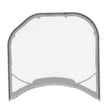
- Lint buildup in the lint screen housing and blower area
- Overloading (extra strain on the belt, idler pulley, and drum rollers)
- High heat use on every load (more wear on thermostats and igniter on gas models)
- Delayed repairs when you first notice squealing, thumping, or slow drying
Use these habits to reduce overheating and mechanical wear:
- Clean the lint screen every load; wash the screen with mild soap monthly to remove residue
- Check drying time; if loads start taking longer, inspect and clean the vent path
- Keep the dryer level to reduce drum and roller wear
- Avoid packing the drum tight; dry bulky items in smaller loads
- Once or twice a year, clean lint from the lint screen housing and around the blower inlet
For model-specific care and cleaning points, follow the 79690512900 owner’s manual.
Many dryers get noisy or stop tumbling because of normal wear parts. On the 79690512900, common examples include:
- Dryer drum belt 4400EL2001F (drum won’t tumble, burning rubber smell)
- Drum support rollers (thumping, rumbling)
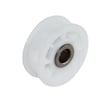
- Idler pulley (squealing)
- Thermostats (overheating, no heat, cycling issues)
| Symptom | Most common cause | What to check first |
|---|---|---|
| Dryer runs but takes too long | Airflow restriction | Venting, lint screen housing, blower area |
| Loud thump/rumble | Drum support rollers | Roller wear, flat spots |
| Squeal while running | Idler pulley or belt | Pulley bearing, belt condition |
| Drum won’t turn | Belt or motor drive issue | Belt, idler pulley, drum movement |
A dryer that is forced to run hot and long to dry clothes wears out faster. Keeping airflow strong protects key components like the motor, thermostats, and drum support system, and it also improves drying performance.
Last updated: January 2026