Installation guide
 Owner’s manual


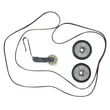
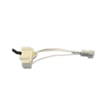
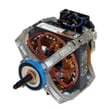
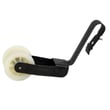
Can I replace a dryer heating element myself?
Yes; many homeowners can replace the heating element on a Kenmore dryer model 11067632600 if they’re comfortable unplugging the dryer, removing panels, and reconnecting wires exactly as found. If you’re not confident working around 240V power and sharp metal edges, use a qualified technician.
What to do before you start
- Unplug the dryer (or disconnect power at the breaker); electric dryers use 240V.
- Let the dryer cool completely.
- Take a quick photo of every wire connection before you remove anything.
- Work with gloves; cabinet edges can be sharp.
- Follow the disassembly steps and safety notes in the 11067632600 installation guide.
Parts commonly needed for this repair
For this model, the heating circuit parts most often involved are:
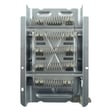
- Dryer element 279838 (the heater itself)
- Dryer heating element wire kit 279457 (if terminals are heat-damaged)
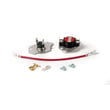
- Dryer thermal cut-off fuse kit 279816 (if the dryer overheated and opened the safety cut-off)
Quick troubleshooting: is it really the element?
A dryer can tumble with no heat even when the element is fine.
| Symptom | Common cause | What we check first |
|---|---|---|
| Drum turns, no heat | One house fuse/breaker tripped | Reset both breakers or replace both fuses |
| No heat, cycles seem normal | Airflow restriction | Lint screen and vent path for blockage |
| No heat after overheating | Safety cut-off opened | Thermal cut-off kit and venting |
Why it matters
A failed heating element stops drying, but restricted venting can also prevent proper heating and can overheat the dryer. Using rigid or manufacturer-approved venting and keeping airflow clear helps protect the heater, thermostats, and wiring.
For operating checks and “no heat” guidance specific to this dryer, use the 11067632600 owner’s manual.
Last updated: February 2026
How do I tell if my dryer heating element is bad?
On Kenmore dryer model 11067632600, a bad heating element usually shows up as no heat (or weak heat) even though the drum tumbles. The most reliable check is a multimeter test: a good element typically reads about 10 to 50 ohms; an open (no continuity) reading means the element is failed.
Quick checks before you test the element
These items can mimic a bad element and are common on electric dryers:
- Confirm the dryer is getting 240V power; many electric dryers can run the motor on 120V but won’t heat on a partial power loss.
- Check/reset both household fuses or breakers (electric dryers commonly use two).
- Make sure the door is fully closed and Start is pressed firmly.
- Inspect the vent path for crushing or blockage; restricted airflow can cause overheating and heat shutdown.
- Run a timed dry cycle (some cycles and settings can reduce heat output).
For model-specific operating and troubleshooting notes, use the 11067632600 owner's manual.
How to test the heating element (basic method)
- Unplug the dryer (and shut off gas if you have a gas model; this model family is commonly electric).
- Access the heater terminals (location varies by design).
- Set your multimeter to ohms (Ω).
- Measure across the element terminals.
What the meter results mean
| Meter reading | What it indicates | What to do next |
|---|---|---|
| 10 to 50 Ω (typical) | Element likely OK | Check thermostats, thermal cut-off, airflow, and power supply |
| OL / infinite / no continuity | Element is open (failed) | Replace the element |
| Very low Ω (near 0) | Possible shorted coil | Replace the element and inspect wiring |
If the element is failed, the correct replacement for this model is the dryer element 279838.
Why it matters
A failed heating element stops drying performance, but airflow problems and overheat protection parts can also shut heat down. Fixing the root cause (especially vent restriction) helps prevent repeat failures.
Related parts often involved in “no heat”
- Dryer thermal cut-off fuse kit 279816
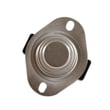
- Dryer operating thermostat WP3387134
- Dryer high-limit thermostat WP3977767
For venting and installation checks (including avoiding crushed or kinked venting), use the 11067632600 installation guide.
Last updated: February 2026
How do I tell what model my Kenmore dryer is?
Your Kenmore dryer’s model number is printed on the model and serial number label; on model 11067632600, that label is located at the top inside the dryer door well. Write down the full model number and serial number so you can match the correct parts and instructions.
Where to look on Kenmore model 11067632600
Check these common label locations in this order:
- Top inside the dryer door well (primary location for this model)
- Inside the door opening on the cabinet frame
- On the back panel (less common on this style)
- Near the lint screen housing (some designs place labels nearby)
Use the 11067632600 owner's manual to confirm the exact label location and how the model and serial number are formatted.
How to read the model number (what it tells you)
Kenmore model numbers often start with a prefix that points to the manufacturing source and parts family. For example, many Kenmore dryers beginning with 110 use a Whirlpool-built platform, which helps narrow down compatible components like a drum belt, heating element, or door switch.
Quick guide
| What you see | What to do with it | Why it helps |
|---|---|---|
| Full model number (example: 11067632600) | Use it for parts lookup | Ensures diagrams and parts match your exact dryer |
| Serial number | Keep it with your records | Helps identify production details for service |
| Only partial digits | Recheck the label for the full string | One missing digit can point to a different parts list |
Why it matters
Using the exact model number prevents ordering the wrong Kenmore dryer parts and speeds up troubleshooting. Even similar-looking dryers can use different timers, thermostats, or heater components.
Pro tip for parts matching
When you’re shopping for common wear items, match by model first, then verify the part description:
- Drum belt (example: dryer drum belt 341241)
- Heating system parts (element, thermostats, thermal cut-off)
- Door switch and latch components
- Idler pulley and blower wheel
Last updated: February 2026
How to hard reset a Kenmore dryer?
To hard reset your Kenmore dryer model 11067632600, disconnect power for 1 minute, then restore power and start a new cycle. This clears many control glitches; if the dryer still will not start, focus next on door closure, Start button operation, and home power supply checks in the 11067632600 installation guide.
Hard reset steps (safe, quick)
- Turn the cycle selector to Off.
- Unplug the dryer (or switch OFF the breaker).
- Wait 60 seconds.
- Restore power.
- Close the door firmly.
- Select a Timed Dry heated cycle and press Push to Start.
If it still will not start after the reset
The installation checks for this Kenmore dryer are the fastest way to pinpoint what is stopping the cycle.
- Confirm controls are set to a running or On position.
- Press the Start button firmly.
- Verify the dryer is plugged in and the electrical supply is connected.
- Check the household fuse or reset the circuit breaker.
- Make sure the dryer door is fully closed; a failed door switch can prevent starting.
Common “no start” causes and what to check
| What you see | Most likely cause | What we do next |
|---|---|---|
| Nothing happens at all | No power, tripped breaker | Verify outlet power, reset breaker, try a different cycle |
| Drum light works but won’t run | Door not sensed closed | Check latch alignment; test/replace dryer door switch WP3406107 |
| Starts then stops quickly | Control not latched into a cycle | Re-select cycle, press Start firmly, try Timed Dry |
Why it matters
A hard reset clears temporary electronic or control-state issues without replacing parts. If the dryer still will not start, the follow-up checks prevent unnecessary part swaps and help you zero in on power, door-switch, or control problems.
Last updated: February 2026
Is it worth replacing the heating element in a dryer?
Yes, it’s usually worth replacing the heating element when your Kenmore dryer model 11067632600 tumbles but won’t heat, because the repair restores normal drying performance for far less than the cost of a new dryer. We also check power and airflow first, since those can mimic a bad heater.
When replacing the heating element makes sense
Replace the heater when the dryer runs but clothes stay damp and you have confirmed the basics below.
- The drum turns normally, but there is no heat
- Drying times suddenly get much longer
- You have proper electrical supply (electric dryers need 240V)
- The vent path is clear and not crushed (restricted airflow can cause overheating and shutdowns)
- You are comfortable doing a repair that involves opening the cabinet and working around wiring
A common replacement for this model is the dryer element 279838.
Check these first (often faster than replacing parts)
The manual troubleshooting for this style of Kenmore dryer points to a few quick checks that can prevent unnecessary parts replacement.
- Reset both breakers or replace both fuses (many electric dryers use two)
- Confirm the dryer is plugged in and the door fully closes
- Make sure the cycle is actually selected and Start is pressed firmly
- Inspect the vent for blockage or crushed flex; use rigid or manufacturer-approved venting
Cost and outcome comparison
| Situation | Typical result | Best next step |
|---|---|---|
| Dryer tumbles, no heat, 240V supply is good | Heater circuit likely failed | Test heater and safety devices; replace as needed |
| Dryer shows airflow restriction symptoms | Overheating can trip safety cutoffs | Clear venting before replacing parts |
| Breaker/fuse issue | Drum may run but heater won’t | Restore full 240V power |
Why it matters
A weak or failed heating system wastes time and energy, and poor airflow can overheat the heater housing and trip safety devices. Fixing the root cause helps the dryer dry efficiently and helps protect internal components.
For model-specific safety, access, and troubleshooting steps, follow the 11067632600 installation guide.
Last updated: February 2026
What are common problems with Kenmore dryers?
Common problems on a Kenmore dryer like model 11067632600 include no-start issues (power supply, door not fully closed, Start not pressed), no heat (one tripped breaker or blown fuse), long dry times from restricted airflow, and noise or no-tumble from worn drive parts.
Quick checks we recommend first
- Confirm the dryer has the correct power supply; electric dryers require 240V.
- Check both household fuses or breakers; the drum can run with no heat if one trips.
- Make sure the door is firmly closed and the Start button is pressed firmly.
- Select a cycle that actually runs; some dial positions will not start until moved past Off.
- Inspect and clean the lint screen; then check the vent path for crushing or blockage.
Most common symptoms and likely causes
| Symptom | Most likely cause | What to check next |
|---|---|---|
| Dryer will not run | Power issue, door switch, control setting | Breakers/fuses, door closes fully, cycle selected |
| Drum turns but no heat | One breaker/fuse tripped, heater circuit issue | Reset both breakers, then test heat |
| Long drying times | Vent restriction, lint buildup | Venting, airflow at exterior hood |
| Loud squeal/thump | Belt or support parts worn | Belt, idler, rollers (often serviced together) |
Parts that commonly fix these problems
If troubleshooting points to a worn or failed component, these are frequent replacements for this model:
- Dryer door switch WP3406107 (if the dryer thinks the door is open)
- Dryer element 279838 (if the dryer runs but does not heat after power checks)
- Dryer thermal cut-off fuse kit 279816 (if the heater circuit is interrupted)
- Dryer drum belt 341241 (if the motor runs but the drum will not tumble)
- Dryer repair kit 4392065 (common wear items serviced together during a teardown)
Why it matters
Most “Kenmore dryer problems” trace back to power delivery (especially electric dryers needing two breakers/fuses) or airflow (lint and vent restrictions). Fixing those first prevents repeat no-heat failures and reduces drying time.
For model-specific operating and troubleshooting steps, follow the 11067632600 owner's manual.
Last updated: February 2026
What is the OEM part number 279838?
OEM part number 279838 is the dryer heating element used in Kenmore dryer model 11067632600. It is the electric heater that warms the air as it passes through the heater box so the drum can dry clothes properly; when it fails, the dryer typically runs but does not heat.
What this part does (and common symptoms)
The heating element converts electrical energy into heat inside the heater housing.
Common signs the element is the issue:
- Dryer tumbles but produces little or no heat
- Clothes take much longer than normal to dry
- Heat works intermittently (often with a failing coil)
- Burning smell from lint overheating (often paired with restricted venting)
- Element tests open (no continuity) with a multimeter
Quick checks before replacing the heating element
We recommend ruling out airflow and safety cutoffs first because poor venting can cause repeat failures.
- Clean the lint screen and confirm strong airflow at the outside exhaust hood
- Inspect the vent path for kinks, crushing, or excessive elbows
- Use rigid metal or approved flexible metal venting (avoid plastic or foil-type duct)
- Confirm the dryer is installed level; poor leveling can affect sensor cycles
- If the dryer overheated, test the thermal cut-off and high-limit thermostat
Related parts that often get replaced together
| If the dryer… | Also check/replace | Example part for this model |
|---|---|---|
| Runs but won’t heat | Thermal cut-off and high-limit protection | Dryer thermal cut-off fuse kit 279816 |
| Overheats or cycles heat oddly | Operating thermostat | Dryer operating thermostat WP3387134 |
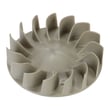
| Has weak airflow/noisy airflow | Blower wheel and venting | Dryer blower wheel WP694089 |
Why it matters
A good heating element restores normal drying performance, but correct venting and functioning thermostats help prevent overheating that can damage the new element.
For model-specific disassembly notes and installation requirements, follow the 11067632600 installation guide.
Last updated: February 2026