 Error Codes


What is the most common problem with a GE dryer?
On GE electric dryers like model DPSB613ED2WW, the most common service issue is no heat. The dryer may tumble and run normally, but clothes stay damp because the heating circuit is not producing heat (often due to a failed heating element or an airflow-related overheat condition).
- Confirm the dryer is set to a heated cycle (not Air Fluff or Timed Dry with no heat).
- Check the lint screen and clean it fully; wash off any fabric softener film.
- Verify strong airflow at the outside vent hood.
- Make sure the vent line is not crushed, kinked, or packed with lint.
- If the drum turns but there is still no heat, focus on the heating circuit parts.
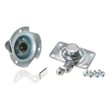
In this model’s parts list, these are the most common heat-related suspects:
| Symptom | Most likely area | Example part on this model |
|---|---|---|
| Runs, no heat at all | Heating element open | GE dryer heating element assembly WE11M23 |
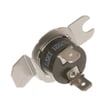
| Heats briefly, then stops | Overheat protection opening | Dryer high-limit thermostat WE4M137 |
| Heat is inconsistent or too cool | Temperature regulation issue | Dryer operating thermostat WE4M216 |
A failed heating element stops heat production, but restricted venting can also trigger safety thermostats and make the dryer act like it has a “bad heater.” Fixing airflow first prevents repeat failures and shortens dry times.
If your GE dryer is not heating, we use this walkthrough to narrow it down safely and efficiently: electric dryer wont heat troubleshooting video.
Last updated: February 2026
Is GE DPSB613ED2WW considered high end?
GE DPSB613ED2WW is a standard GE electric dryer model, not a “high-end” line. In practical terms, it is built for reliable everyday drying rather than premium styling or advanced feature sets; replacement parts and serviceability are typically straightforward.
Most customers consider a dryer “high end” when it has more premium features, quieter operation, and more advanced controls than a basic model.
Common high-end traits include:
- Larger capacity and more specialized cycles (steam, sanitize, wrinkle control)
- More advanced moisture sensing and temperature management
- Quieter drum support and reduced vibration
- More complex electronic controls and user interface
- Higher repair-part costs due to premium assemblies
For GE DPSB613ED2WW, the parts commonly replaced are typical of a conventional electric dryer design (drum support, thermostats, heating circuit, and controls).
Examples from the parts available for this model:
- GE dryer heating element assembly WE11M23
- Dryer high-limit thermostat WE4M137
- Dryer electronic control board WE4M296
- Dryer drum glide bearing (green) WE03X37317
| Category | Standard electric dryer (typical) | High-end dryer (typical) |
|---|---|---|
| Controls | Basic knobs or simple electronic | Advanced electronic, more options |
| Cycles | Core cycles | More specialty cycles |
| Repair complexity | Moderate | Often higher |
| Common wear items | Glides, bearings, thermostats | Same, plus more sensors/features |
Knowing whether a dryer is “high end” helps set expectations for features, noise level, and repair costs. With DPSB613ED2WW, most performance issues (no heat, long dry times, squealing) usually trace to standard wear parts like drum glides, thermostats, airflow restrictions, or the heating circuit.
Last updated: February 2026
How do I read my GE model number?
Your GE model number (for example, DPSB613ED2WW) is the exact identifier we use to match the correct parts and diagrams to your dryer. Read it character-by-character from the appliance ID tag, then use that full model number when selecting replacement parts like thermostats, a heating element, or a lint screen.
On most GE electric dryers, the model and serial tag is typically located in one of these spots:
- Inside the door opening on the front panel
- On the door itself (edge or inner surface)
- On the cabinet frame just inside the door opening
- On the rear panel (less common)
We recommend copying the model number exactly as shown, including any letters at the end.
- Write it down exactly (example: DPSB613ED2WW)
- Keep all letters and numbers in the same order
- Do not drop the last 2 to 4 characters; they often identify a specific design revision
- If a character is unclear, compare it to others on the tag (for example, 0 vs O, 1 vs I)
- Use the full model number when choosing parts such as a heating element, control board, or drum support parts
GE model numbers are a code; the exact meaning varies by product line, but this is the common structure:
| Section | What it often indicates | Example from DPSB613ED2WW |
|---|---|---|
| Prefix letters | Product family/series | DP |
| Middle numbers | Size/features/platform | SB613 |
| Suffix letters/numbers | Engineering revision, color, or configuration | ED2WW |
Even small model-number differences can change which heating circuit, thermostat, drum bearing, or door parts fit. Using the full model number helps prevent ordering the wrong component and avoids repeat disassembly.
Once you have the model number, you can confidently pick common wear items for DPSB613ED2WW, such as:
- GE dryer heating element assembly WE11M23
- Dryer high-limit thermostat WE4M137
- Trap lint WE18X25100
- Dryer drum glide bearing (green) WE03X37317
Last updated: February 2026
What causes a dryer heating element to fail?
A heating element in your GE DPSB613ED2WW electric dryer typically fails when it overheats from restricted airflow (most often a clogged lint screen or vent), or when the element coil shorts, breaks, or grounds out after years of heat cycling.
- Blocked venting or poor airflow: lint buildup in the vent duct, wall cap, or internal air path traps heat
- Clogged or damaged lint filter housing: airflow drops even if the screen looks clean
- Thermostat failure: a bad operating or high-limit thermostat can allow unsafe temperatures
- Element coil damage: the coil can sag and touch the housing (grounding) or simply break
- Power issues: loose connections at the terminal block can cause overheating and component stress
- Unplug the dryer (or switch off the breaker) and let it cool.
- Clean the lint screen and inspect the lint chute for buildup.
- Check the vent run for kinks, crushing, or heavy lint; confirm strong airflow outside.
- If you have a multimeter, test the element for continuity and check for a short to the heater housing.
- Inspect wiring for heat damage, especially at the heater and thermostats.
| Symptom | Common airflow or heat-control suspect | Example part for this model |
|---|---|---|
| No heat, drum runs | Failed heater circuit | GE dryer heating element assembly WE11M23 |
| Dryer overheats, shuts off | High-limit protection opening | Dryer high-limit thermostat WE4M137 |
| Heat is inconsistent | Temperature regulation issue | Dryer operating thermostat WE4M216 |
Restricted airflow is the #1 driver of repeat heater failures. Fixing the venting problem first helps the new heating element and thermostats run at normal temperatures, improves dry times, and reduces nuisance shutdowns.
For step-by-step help diagnosing an electric dryer that will not heat, use our electric dryer wont heat troubleshooting video.
Last updated: February 2026





