Owner’s manual
 Error Codes




What is a refrigerator bottom mount?
A bottom-mount refrigerator (like KitchenAid model KFCS22EVMS4) has the freezer compartment on the bottom and the fresh-food section on top, so the items you use most often stay at eye level while frozen foods are stored below.
How a bottom-mount layout is set up
Most bottom-mount refrigerators follow this basic layout:
- Top section: fresh-food compartment (shelves, crisper drawers, door bins)
- Bottom section: freezer drawer or swing door with baskets
- Airflow system: cold air is circulated between compartments to maintain set temperatures
- Optional features: ice maker and water filtration depending on configuration
For model-specific features and compartment details, use the KFCS22EVMS4 owner's manual.
Bottom mount vs. top mount: quick comparison
| Feature | Bottom mount | Top mount |
|---|---|---|
| Fresh-food access | Easier (less bending) | More bending |
| Freezer access | More bending | Easier |
| Typical freezer style | Pull-out drawer/baskets | Swing door/shelf |
| Best for | Frequent fresh-food use | Frequent freezer use |
Why it matters
A bottom-mount design is mainly about convenience and organization. Keeping refrigerated groceries at eye level can reduce door-open time and make it easier to spot items, which helps the refrigerator maintain stable temperatures.
Tips to get the most from a bottom-mount refrigerator
- Keep frequently used items on the middle shelves for fastest access
- Avoid blocking air vents with large containers or bags
- Let hot foods cool before loading to reduce temperature swings
- Keep freezer baskets organized so the drawer closes fully
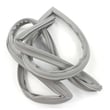
- Clean door gaskets regularly so the doors seal tightly
Last updated: January 2026
How to remove bottom grill from KitchenAid refrigerator?
On KitchenAid refrigerator model KFCS22EVMS4, the bottom grill (toe kick plate) typically snaps onto the lower frame. We remove it by gripping the grill at the ends and pulling it straight forward to release the retaining clips, then lifting it away.
Steps to remove the bottom grill (toe kick)
- Unplug the refrigerator or switch off power at the breaker if you will be working near wiring.
- Open both fresh food doors for better access.
- Grip the grill firmly near the left and right ends (not in the center).
- Pull the grill straight toward you to pop it off the lower frame clips.
- If it feels stuck, work one end loose first, then the other; avoid twisting to prevent cracking.
Reinstalling the grill
- Align the grill tabs and clip points with the slots on the lower frame.
- Press evenly along the ends until it snaps fully into place.
- Confirm it sits flush and does not rub the doors or freezer drawer.
Quick checks if it will not come off
| What you notice | What to do |
|---|---|
| Grill flexes but will not release | Pull from the ends and use short, firm tugs straight outward |
| One side releases, other side stays locked | Re-seat the loose side, then release the stuck side first |
| Grill is loose after reinstall | Make sure all clips are aligned, then press until you hear/feel a snap |
Why it matters
The bottom grill helps direct airflow across the condenser area and protects components from dust and bumps. Removing it correctly prevents broken clips and helps you access cleaning and service areas.
For model-specific illustrations and clip locations, use the KFCS22EVMS4 manual.
Last updated: January 2026
What is the most common problem with a KitchenAid refrigerator?
For KitchenAid refrigerators like model KFCS22EVMS4, the most common issues we see are ice maker problems (no ice, slow ice, small cubes) and cooling complaints (warm refrigerator section, frost buildup, or noisy running). These are usually tied to airflow, water supply, or basic maintenance.
Most common symptoms and what they usually point to
- No ice or slow ice production: water supply restriction, frozen fill tube, or a failing ice maker
- Refrigerator not cold enough: dirty condenser coils, weak evaporator fan airflow, or control/temperature sensing issues
- Freezer cold but fresh food warm: evaporator fan or air damper/airflow blockage
- Water under the refrigerator or in the freezer: defrost drain restriction
- Unusual humming, buzzing, or rattling: fan blade interference, failing fan motor, or compressor start components
For model-specific operating checks and settings, use the KFCS22EVMS4 manual.
Quick checks we recommend first (before replacing parts)
- Confirm temperatures: set freezer near 0°F and refrigerator near 37°F.
- Check airflow: do not block vents with food packages.
- Clean condenser coils (typically under or behind the unit) to improve cooling efficiency.
- Verify ice maker basics: ice maker switch on, bin seated correctly, and water line fully open.
- Listen for the evaporator fan: it should run when the compressor is running (door switch closed).
Parts that commonly relate to these problems on KFCS22EVMS4
| Problem area | Commonly involved part | What it affects |
|---|---|---|
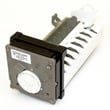
| Ice production stops or is inconsistent | Refrigerator ice maker D7824706Q | Harvesting and filling ice molds |
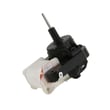
| Warm temps, poor airflow, noise from freezer | Refrigerator evaporator fan motor WPW10128551 | Circulating cold air through compartments |
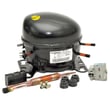
| Frost patterns, weak cooling, sealed-system symptoms | Refrigerator compressor W10233960 | Refrigeration cycle and cooling capacity |
Why it matters
Ice maker and cooling problems often start as maintenance or airflow issues; catching them early helps prevent food spoilage, excessive frost buildup, and longer compressor run times (higher energy use).
Last updated: January 2026
What is the average lifespan of a KitchenAid refrigerator?
KitchenAid refrigerators typically last 14 to 17 years on average, and a realistic overall range is 10 to 20 years with normal household use. For your KitchenAid KFCS22EVMS4 bottom-mount refrigerator, consistent cleaning, good airflow, and prompt repairs are what most often push lifespan toward the high end.
Typical lifespan range (what to expect)
Most freestanding refrigerators like the KFCS22EVMS4 land in this range:
| Usage and care level | Typical lifespan | What usually limits life |
|---|---|---|
| Light use, strong maintenance | 16 to 20 years | Sealed system wear, control issues |
| Average household use | 14 to 17 years | Fan motors, icemaker, defrost issues |
| Heavy use, poor airflow/dirty coils | 10 to 14 years | Compressor strain, warm temps |
What extends the life the most
We see the biggest payoff from these habits:
- Keep condenser area clean and maintain airflow behind/under the refrigerator
- Set stable temps (about 37°F fresh food, 0°F freezer) and avoid frequent large swings
- Keep door seals clean and sealing evenly; warm air leaks drive longer run times
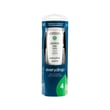
- Replace water filters on schedule and purge air after filter changes (helps dispenser and icemaker reliability)
- Fix small issues early (noisy fan, slow ice production, water leaks) before they stress other parts
Parts that commonly affect longevity
These are common wear items that can shorten lifespan if they fail and go unaddressed:
- Evaporator fan motor (circulates cold air): refrigerator evaporator fan motor WPW10128551
- Ice maker (ice production and fill issues): refrigerator ice maker D7824706Q
- Electronic control board (cooling logic and defrost control): refrigerator electronic control board WPW10120827
Why it matters
A refrigerator that runs longer than it should (dirty coils, air leaks, weak fan) puts extra load on the sealed system. Reducing run time and keeping temperatures steady is the most reliable way to protect the compressor and extend overall service life.
Helpful reference
For model-specific care, cleaning intervals, and operating guidance, use the KFCS22EVMS4 owner's manual.
Last updated: January 2026