Owner’s manual
 View engine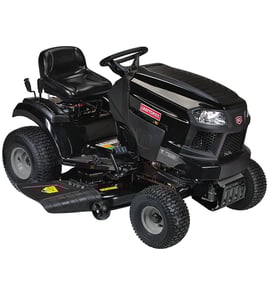



How do I find out the year of my Husqvarna riding mower?
To find the year your Husqvarna riding mower was built, use the serial number on your tractor. On the Husqvarna YTH1842-917223810, the serial number is typically on the product ID label under the seat; the first four digits of the serial number indicate the manufacturing year.
Where to find the model and serial number
On most Husqvarna lawn tractors, the product ID label is easiest to access by lifting the seat. Use the label to confirm you have model YTH1842-917223810 and to record the full serial number for date decoding.
- Park on a flat surface, set the parking brake, and remove the key
- Lift the seat and look for the product ID label (often on the fender pan or frame area under the seat)
- Write down both the model number and the full serial number
- If the label is dirty, wipe it gently so all digits are readable
- Keep a photo of the label for future parts lookups and service
How to decode the year from the serial number
For Husqvarna riding mowers and tractors, the manufacturing year is commonly encoded in the first four digits of the serial number.
| Serial number starts with | Manufacturing year |
|---|---|
| 2017xxxxxx | 2017 |
| 2020xxxxxx | 2020 |
| 2023xxxxxx | 2023 |
Why it matters
Knowing the build year helps us match the correct parts and service procedures for your exact tractor configuration, especially when Husqvarna makes mid-series changes to items like belts, blades, and safety interlock components. For operating and identification details specific to this tractor, use the YTH1842-917223810 operator’s manual.
Last updated: January 2026
Does Husqvarna use Kawasaki engines?
Yes, Husqvarna does use Kawasaki engines on some lawn and garden equipment models. For the Husqvarna YTH1842-917223810 tractor specifically, the engine brand is not identified in the model-specific information we have here, so you will need to confirm it from the engine ID label on your tractor and the specifications section in the YTH1842-917223810 operator’s manual.
How to confirm the engine brand on your YTH1842-917223810
We recommend verifying the engine make using the tractor’s engine label (most reliable) and then matching it to the manual’s specs.
- Look for an engine ID label on the engine shroud or valve cover area.
- Record the engine model and type/spec numbers (not just “18 HP”).
- Compare those numbers to the specifications and maintenance sections in the YTH1842-917223810 operator’s manual.
- If you are ordering engine-related maintenance items, match by engine model, not by tractor model alone.
- If the label is missing or unreadable, use the tractor’s parts diagrams to narrow down compatible components.
Common engine brands you may see on Husqvarna tractors
Husqvarna has used multiple engine suppliers across different tractor series and production runs, so it is normal for the brand to vary.
| Engine brand | What it means for you | Typical ID label clue |
|---|---|---|
| Kawasaki | Often has “Kawasaki” branding and a model like FR/FS/FX series | Kawasaki model code on shroud |
| Briggs & Stratton | Common on many residential tractors | “Briggs & Stratton” plus model/type/code |
| Kohler | Also used on some tractors | “Kohler” plus Command/Courage/7000 series |
Why it matters
Engine brand and engine model determine the correct tune-up parts and service specs (spark plug type, oil capacity, filter style, and fuel system parts). Confirming the engine ID first helps prevent ordering the wrong maintenance parts.
Last updated: January 2026
How many hours should a Husqvarna riding mower last?
A Husqvarna riding mower like model YTH1842-917223810 typically lasts 600 to 1,500 hours. Expect the lower end with heavy weekly mowing and rough conditions; expect the higher end with lighter use, good storage, and on-time maintenance from the YTH1842-917223810 operator’s manual.
What drives mower life the most
- Maintenance schedule: oil changes, air filter service, blade and belt inspections
- Operating conditions: dusty mowing, steep slopes, sandy soil, wet grass, heavy towing
- Storage habits: fuel care during off-season, clean deck and cooling fins, dry storage
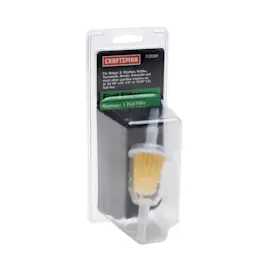
- Wear items replaced on time: blades, belts, idlers, battery, fuel filter
- How it’s driven: avoiding impacts, not overloading the deck, using proper ground speed
Hour ranges you can plan around
| Usage pattern | Typical life | What it looks like |
|---|---|---|
| Heavy use | 600 to 800 hours | Large yard, long season, frequent towing, dusty conditions |
| Moderate use | 800 to 1,200 hours | Regular mowing with routine maintenance |
| Light use | 1,200 to 1,500 hours | Smaller yard, careful operation, strong off-season storage |
Maintenance checkpoints that protect engine and drive
We recommend using these intervals as your baseline for YTH1842-917223810:
- Check engine oil before use and regularly during the season
- Change engine oil about every 50 hours (or at least yearly)
- Inspect belts and replace if slipping or cracked (ground drive and deck drive)
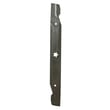
- Replace blades when bent, badly nicked, or no longer hold an edge (example: lawn tractor 42-in deck high-lift blade 532138971)
- Replace the fuel filter once each season to help prevent fuel starvation
Why it matters
Hours are a better “life” measure than years because two tractors the same age can have very different wear. Following the maintenance schedule and replacing common wear parts early usually adds hundreds of hours of reliable mowing.
Last updated: January 2026