Owner’s manual
 Error Codes



Which is better, top mount or bottom mount refrigerator?
A bottom-mount refrigerator like the KitchenAid KFIS20XVMS2 is better when you want fresh-food items at eye level and a wider refrigerator section; a top-mount is better when you want the lowest upfront cost and don’t mind bending more for everyday foods. Your best choice depends on how you use the refrigerator most.
| Feature | Top-mount (freezer on top) | Bottom-mount (freezer drawer on bottom) |
|---|---|---|
| Everyday access | More bending for fresh food | Less bending for fresh food |
| Freezer access | Easier to reach shelves | Drawer can be heavier when full |
| Organization | Simple, fewer drawers | Often better fresh-food layout |
| Space needs | Typically similar | Needs room for drawer pull-out |
| Typical price | Usually lower | Usually higher |
- Choose bottom-mount if you use the refrigerator section far more than the freezer.
- Choose top-mount if you want a simpler layout and typically lower purchase cost.
- If you have tight clearance next to a wall, plan for door swing and drawer clearance.
- If you have an ice maker or water line, leave extra space behind the cabinet for connections.
- Leveling matters for either style; a properly leveled cabinet helps doors close and seal correctly.
We follow the KitchenAid guidance for ventilation and placement: allow about 1/2 inch of space at the top and behind the refrigerator for airflow, and if installed next to a fixed wall, allow about 2 3/4 inches so the door can swing open. For the exact placement notes for KFIS20XVMS2, use the owner's manual.
Choosing the right mount style affects daily comfort (bending and reaching), how well you can organize groceries, and whether doors and drawers can open fully in your kitchen. Good clearance and leveling also help prevent warm spots, moisture, and gasket sealing problems.
Last updated: February 2026
What is the most common problem with KitchenAid refrigerators?
The most common issues we see with KitchenAid refrigerators like model KFIS20XVMS2 are ice maker problems, cooling/temperature swings (fresh food warm or freezer too warm), and water leaks or frost buildup. These symptoms usually trace back to airflow problems, dirty condenser areas, or water-supply and drain issues; use the owner's manual troubleshooting section to narrow it down fast.
- Ice maker not making ice or slow ice: water supply restriction, frozen fill tube, or a failing ice maker
- Fridge not cooling well: blocked vents, evaporator fan issue, heavy frost on evaporator cover
- Freezer too warm: poor airflow, door not sealing, condenser fan or condenser coil issues
- Water leaking inside or onto the floor: clogged/iced defrost drain, loose water line connection
- Noisy operation: fan blade hitting ice, condenser fan motor wear, compressor start components
- Confirm the controls are set correctly and doors close fully.
- Check for blocked air vents (overpacked shelves can cause warm spots).
- Clean dust from the condenser area and make sure the unit has airflow behind it.
- If you have an ice maker or dispenser issue, verify household water supply is on and the line is not kinked.
- Look for frost buildup behind the rear freezer panel (a strong clue of a defrost or airflow problem).
| Symptom | Common cause | Example part on this model |
|---|---|---|
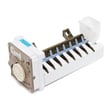
| Ice maker not working | Failed ice maker module/assembly | Refrigerator ice maker assembly WPW10300024 |
| Warm temps, noisy fan area | Condenser fan motor problem | Refrigerator condenser fan motor W11613295 |
| Door not sealing, frost | Torn or warped gasket | Refrigerator gasket panel (gray) W10830055 |
Ice production, stable temperatures, and leak prevention all depend on proper airflow and a reliable water path. Catching a weak fan, poor door seal, or restricted water supply early helps prevent food spoilage, ice clumps, and recurring frost.
Last updated: February 2026
What's the life expectancy of a KitchenAid refrigerator?
Most KitchenAid refrigerators typically last 14 years. For your KitchenAid KFIS20XVMS2 bottom-mount refrigerator, good maintenance (clean airflow paths, tight door seals, and prompt repairs) is what most directly determines whether you land closer to 10 years or closer to 17 years.
A refrigerator’s life is mainly driven by compressor run time, heat removal, and how hard the sealed system has to work.
- Maintenance and cleaning: keeping condenser areas clean reduces heat stress
- Door seal condition: leaks force longer run times and can shorten life
- Room temperature and ventilation: hot garages and tight cabinets increase workload
- Ice maker and water system use: heavy use can add wear and create leak risks
- Repair timing: fixing small issues early prevents compressor overwork
Your KFIS20XVMS2 owner’s manual describes a 1-year limited warranty, plus extended coverage on the sealed refrigeration system (compressor, evaporator, condenser, dryer, and connecting tubing) for multiple years. That extended sealed-system coverage is a strong indicator those components are designed for long service life when the refrigerator is maintained.
| Component group | Why it matters for lifespan | Common warning signs |
|---|---|---|
| Sealed system (compressor, evaporator, condenser, dryer) | Core cooling; most expensive failures | Warm temps, constant running, clicking, poor cooling |
| Airflow system (fans, vents) | Moves cold air; prevents hot spots | Noisy fan, uneven temps, frost buildup |
| Door sealing system (gaskets, alignment) | Prevents moisture and heat intrusion | Condensation, frost, doors not closing easily |
- Set temps to typical targets: 37°F fresh food, 0°F freezer
- Keep food from blocking interior vents
- Clean spills quickly to prevent odors and gasket damage
- Inspect gaskets for gaps, tears, or hardened sections
- If cooling is uneven or noisy, troubleshoot airflow early
If you’re seeing symptoms that shorten lifespan (warm temps, long run times, poor sealing), these model-matched parts are often involved:
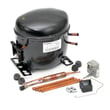
- Refrigerator compressor W10160407 (sealed-system cooling)
- Refrigerator condenser fan motor W11613295 (removes heat at the condenser)
- Refrigerator gasket panel (gray) W10830055 (helps the door seal tightly)
A refrigerator that runs longer than it should (because of dirty condenser airflow, weak door seals, or fan problems) puts extra strain on the sealed system. Reducing run time and heat load is the most reliable way to extend service life.
Last updated: February 2026
What are the disadvantages of a bottom freezer refrigerator?
Bottom-freezer refrigerators like the KitchenAid KFIS20XVMS2 make fresh food easier to reach, but the tradeoffs are real: you bend more for frozen items, large freezer drawers can be harder to organize, and some designs are more sensitive to door-seal and defrost-drain issues that can lead to frost or water puddles.
- More bending and lifting: frozen foods, ice, and heavy items sit low in the cabinet.
- Deep drawer organization: items can stack and get buried, especially in a full-width freezer drawer.
- Heavier drawer handling: a loaded freezer drawer can feel awkward to pull out and push in.
- Potential for moisture and sealing issues: worn gaskets or misalignment can cause condensation or frost.
- Defrost and drain clogs can show up as water: some bottom-freezer layouts make puddles more noticeable at the bottom.
If the “disadvantage” you are experiencing is performance related (warm temps, frost, leaks, or door not closing), these are the first practical checks:
- Confirm doors fully close and the door alarm is not sounding after 3 minutes (feature described in the owner's manual).
- Adjust temperatures one setting at a time, then wait 24 hours for stabilization.
- Look for gaps, tears, or warping in the door seals; a bad seal can mimic cooling problems.
- If ice production is low, allow 24 hours after changes; the manual notes typical output is about 8 to 12 batches per day under normal conditions.
| Symptom | Common cause | What to do first |
|---|---|---|
| Frost buildup in freezer | Door not sealing, frequent openings | Inspect/clean gasket, confirm drawer closes squarely |
| Water puddles | Defrost drain restriction, door left ajar | Check door closure, clear visible ice, review care steps |
| Warm freezer, soft ice cream | Temp set too warm, airflow blocked | Lower freezer 1°, wait 24 hours |
| Door not lining up well | Hinge/door alignment shifted | Follow alignment guidance in the manual |
Most “bottom freezer disadvantages” are usability issues, but sealing, alignment, and temperature stability directly affect energy use, ice production, and food safety. Keeping doors aligned and seals clean helps the refrigerator run efficiently and prevents moisture problems.
Last updated: February 2026