Owner’s manual
 Error Codes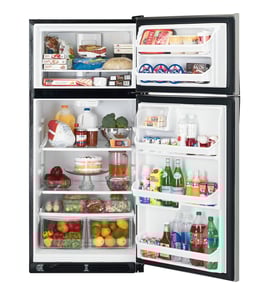


What model Kenmore fridge do I have?
Your Kenmore refrigerator’s model number is printed on the serial plate inside the fresh food (refrigerator) compartment. On Kenmore model 2537419240R, the Use and Care information directs you to record the model and serial numbers from the plate located inside the refrigerator compartment; once you have that number, you can match parts and instructions to your exact unit using the 2537419240R owner’s manual.
Where to find the model number (fast checklist)
Look for a sticker or metal tag that includes both Model and Serial:
- Inside the refrigerator compartment on a side wall
- Near the top (ceiling area) of the fresh food section
- Around the crisper drawer area (side wall or frame)
- On the door frame when the refrigerator door is open
- Behind the lower kick plate (less common on top-mount units)
What the model number looks like
Kenmore model numbers for this style often start with a 3-digit prefix. For this refrigerator family, you may see a prefix like 253 (and sometimes 970) followed by additional digits/letters.
| What you see on the tag | What it means | What to do next |
|---|---|---|
| Model number (example: 2537419240R) | Identifies the exact refrigerator design | Use it to select correct parts and diagrams |
| Serial number | Identifies your specific unit | Keep it for service history and warranty records |
Why it matters
Using the exact model number prevents ordering the wrong Kenmore refrigerator parts (like a door gasket, light bulb, or ice maker components) and ensures troubleshooting steps match your control layout and features.
Tip for reading the tag accurately
- Copy the model number exactly as printed (include all letters)
- Use a phone photo and zoom in to confirm characters like 0/O and 1/I
- Record both model and serial for future reference
Last updated: February 2026
How to tell if a Kenmore refrigerator compressor is bad?
On Kenmore refrigerator model 2537419240R, a bad compressor usually shows up as poor or no cooling even though the unit has power, often with repeated clicking (start attempts) or a compressor that runs but never brings temperatures down. First confirm the refrigerator is getting proper power and the controls are set correctly using the 2537419240R owner's manual.
Quick checks we recommend first (before blaming the compressor)
- Make sure the temperature control is not set to “0” (that setting turns the compressor off but leaves lights powered).
- Plug the refrigerator into its own dedicated 115V, 60 Hz grounded outlet (no extension cord or adapter).
- Verify the outlet is not controlled by a wall switch.
- Confirm the room temperature is between 55°F and 110°F; outside that range the compressor cannot maintain proper temps.
- Check that the toe grille is not blocked and airflow around the cabinet meets clearance guidance.
Symptoms that point strongly to a compressor problem
These symptoms are common when the compressor or its start components are failing:
- Fridge and freezer both warm, and the compressor is very hot to the touch after trying to run.
- Repeated clicking every few minutes (compressor tries to start, then trips off).
- Compressor runs with a steady hum, but temperatures never recover (especially after 24 hours).
- You have good airflow and clean condenser area, but cooling is still weak.
What you can safely test at home vs. what needs a pro
| Check | What it tells us | DIY-safe? |
|---|---|---|
| Control not set to “0” | Rules out “compressor intentionally off” | Yes |
| Dedicated outlet, no extension cord | Low voltage can damage compressor and mimic failure | Yes |
| Listen for clicking/humming | Helps separate “not starting” vs “running but not cooling” | Yes |
| Electrical tests (amperage, start device, winding continuity) | Confirms compressor or start circuit failure | No (technician) |
Why it matters
A compressor diagnosis is expensive and easy to misread. Power supply issues, incorrect control settings, blocked airflow, or a failed defrost system can all cause warm temperatures and compressor stress. Ruling out the basics first prevents unnecessary parts and repeat failures.
Last updated: February 2026
How many cubic feet is my Kenmore refrigerator by model number?
For Kenmore model 2537419240R, the most accurate way to get cubic feet (capacity) is to read the refrigerator’s rating plate and then confirm the listed “capacity” or “total volume” in the 2537419240R owner's manual. This avoids mix-ups with similar 253-series models.
Fast ways to find the cubic feet
Use these options in order; the first two are the most reliable.
- Check the rating plate inside the fresh food compartment (the manual notes the model and serial plate is located inside the refrigerator compartment).
- Look up the specifications section in the 2537419240R owner's manual for capacity wording such as “total capacity” or “cu. ft.”
- Search by the full model number (2537419240R) when comparing listings; avoid using only “253” because many Kenmore refrigerators share that prefix.
- Measure and estimate only as a last resort; interior shapes, insulation thickness, and ducting make estimates inaccurate.
What the model number tells you (and what it does not)
Kenmore model numbers often identify a platform or series (for example, “253” is a common prefix), but the digits do not consistently encode cubic feet in a way you can reliably decode at home.
| Method | Accuracy | What you need |
|---|---|---|
| Rating plate + manual specs | Highest | Flashlight, model number |
| Manual specs only | High | Manual access |
| Online listings by model number | Medium | Exact model number |
| Measuring interior and calculating | Low | Tape measure, time |
Why it matters
Capacity affects how you shop for replacement shelves, bins, and door storage, and it also helps when comparing energy use and organizing airflow for consistent cooling in your Kenmore top-mount refrigerator.
Last updated: February 2026
Where is the temperature sensor on a Kenmore refrigerator?
On Kenmore model 2537419240R, the temperature sensor (thermistor) is typically clipped to the evaporator tubing or mounted in the airflow path behind the rear panel inside the freezer compartment; some versions also use a sensor in the fresh food control housing. For the exact sensor location and access steps for your configuration, use the 2537419240R owner's manual.
Common sensor locations on top-mount refrigerators
Most top-mount (freezer-on-top) refrigerators place sensors in one or more of these spots:
- Freezer evaporator area: behind the inside rear freezer panel, clipped to tubing or positioned in the air stream
- Refrigerator control box: near the temperature control and light switch housing
- Air return or air tower: where cold air moves from freezer to refrigerator section
- Near the defrost components: in the same service area as the evaporator fan and defrost thermostat
How we recommend accessing it safely
Before removing panels or unplugging connectors, we recommend these steps:
- Unplug the refrigerator (turning the control to “0” stops cooling but does not remove power)
- Empty the freezer section enough to remove the rear interior panel
- Use a towel to protect shelves and catch any frost or water
- Take a photo of wire routing and connector positions before disconnecting anything
- Reinstall panels fully before testing; airflow and clearances affect cooling performance
Quick “where to look first” guide
| Symptom | Most likely sensor area to check first | What you may notice |
|---|---|---|
| Freezer too warm, refrigerator warm | Freezer evaporator area | Frost buildup or weak airflow |
| Refrigerator too cold or freezing food | Refrigerator control box / air tower | Damper area icing or uneven temps |
| Temps swing a lot | Evaporator area and wiring | Intermittent readings, loose connector |
Why it matters
The temperature sensor tells the control when to run the compressor and fans. If it is out of position, iced over, or has a poor connection, you can get warm temperatures, freezing in the fresh food section, or long run times.
If you are troubleshooting airflow at the same time, the how to fix your evaporator cooling fan guide pairs well with sensor checks.
Last updated: February 2026
What is the top part of a fridge called?
On a Kenmore 2537419240R top-mount refrigerator, the top section is the freezer compartment (often just called the freezer). It’s the coldest area of the appliance and is designed to keep foods frozen and support ice-making features when equipped.
What the freezer compartment does
The freezer is built to maintain temperatures low enough for long-term frozen storage and to help the refrigerator run efficiently when airflow is not blocked.
Common freezer functions include:
- Freezing and storing meats, vegetables, and prepared foods
- Keeping ice cream and other temperature-sensitive items stable (best on interior shelves)
- Supporting an automatic ice maker on models that have one
- Circulating cold air so both compartments cool properly
Quick terminology guide
| What you see | Common name | What it means |
|---|---|---|
| Top door/upper compartment | Freezer | Frozen-food storage area |
| Bottom door/lower compartment | Fresh food section | Refrigerator (non-freezing) area |
| Slots/openings on back wall | Air vents | Pathways for cold air circulation |
Why it matters
When we know the correct compartment name, it’s easier to follow troubleshooting steps, order the right parts, and use the right temperature and loading practices. For example, keeping packages spaced out helps cold air circulate and improves freezing performance.
Helpful related parts for freezer issues
If you’re troubleshooting ice production or cooling, these model-compatible parts are commonly involved:
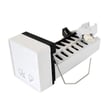
- Ice maker 5304458371
- Refrigerator evaporator fan blade 5308000010
- Refrigerator defrost bi-metal thermostat 5303918202
For model-specific operating details (temperature settings, airflow tips, and care instructions), use the 2537419240R owner’s manual.
Last updated: February 2026
Who makes Kenmore refrigerator model 2537419240R?
Kenmore is a brand name, and model 2537419240R is part of Kenmore’s 253 model prefix family, which is widely associated with Frigidaire (Electrolux) manufacturing for Kenmore refrigerators. You can confirm the exact model and serial details on the rating plate inside the fresh food compartment using the 2537419240R owner's manual.
How to confirm the manufacturer for your exact unit
Use these quick checks on your Kenmore refrigerator:
- Look at the model number prefix: 253 is the key identifier.
- Find the rating plate inside the refrigerator compartment (fresh food section).
- Record both the model and serial number for parts lookup and service.
- Compare the parts style and labeling; many components cross-reference to Frigidaire-built designs.
- Use the manual’s identification section to match where the model/serial label is located.
What the “253” prefix means
Kenmore model numbers often start with a 3-digit prefix that points to the original manufacturer.
| What you see on the label | What it indicates | Why it matters |
|---|---|---|
| 2537419240R (starts with 253) | Commonly Frigidaire (Electrolux) built | Helps match the correct parts diagrams and replacement parts |
| Model/serial plate location (inside fresh food compartment) | Confirms you are using the correct ID | Prevents ordering the wrong door gasket, shelf, or ice maker part |
Why it matters when ordering parts
The manufacturer family affects fit and compatibility for common refrigerator parts such as door gaskets, shelves, and ice maker components. For example, if you are troubleshooting ice production, matching the correct ice maker assembly for this platform is critical (see ice maker 5304458371 if you are replacing the complete unit).
Common parts that are manufacturer-sensitive
- Ice maker assembly and related components
- Door gasket and door alignment parts
- Shelf trim and shelf frame pieces
- Evaporator fan and defrost components
Last updated: February 2026
What's the average lifespan of a Kenmore refrigerator?
Most Kenmore refrigerators last 10 to 15 years. For a Kenmore top-mount refrigerator like model 2537419240R, lifespan depends most on basic upkeep (airflow, clean seals, stable power) and fixing small cooling or ice maker issues before they strain the sealed system.
Typical lifespan and what affects it
A refrigerator’s life is usually determined by how hard the compressor and fans have to work day to day.
- Condenser coil cleanliness (dirty coils raise run time and heat)
- Door gasket condition (air leaks cause constant cycling and frost)
- Stable electrical supply (use a dedicated outlet; avoid extension cords)
- Proper temperatures (fresh food about 37°F, freezer about 0°F)
- Timely repairs (fan noise, warm temps, or ice buildup should be addressed early)
Quick maintenance schedule (simple but effective)
| Task | How often | What it prevents |
|---|---|---|
| Clean condenser area | Every 6 to 12 months | Overheating, long run times |
| Check door seal grip (paper test) | Every 3 months | Warm temps, frost, high energy use |
| Keep vents clear inside compartments | Ongoing | Uneven cooling, freezing in fridge |
| Confirm outlet is grounded and dedicated | Once | Nuisance shutoffs, electrical issues |
When “end of life” is approaching
These symptoms often show up in the last stretch of service life, especially on top-mount units:
- Fridge warms up but freezer seems “almost OK”
- Heavy frost on the freezer back wall (defrost system trouble)
- Evaporator fan noise or weak airflow (cooling can’t circulate)
- Door seals won’t stay closed or you see condensation around the frame
- Ice maker stops producing consistently (water supply or ice maker wear)
If you’re troubleshooting airflow or fan noise, our guide on how to fix your evaporator cooling fan can help you narrow it down.
Why it matters
A well-sealed, well-ventilated refrigerator runs fewer hours per day. That reduces wear on the compressor, evaporator fan, and defrost components, which is the difference between a fridge that reaches 10 years and one that reaches 15.
For model-specific operating and electrical guidance (including dedicated outlet and safe shutdown details), follow the 2537419240R owner's manual.
Last updated: February 2026
What size is a Kenmore refrigerator model 2537419240R?
The most accurate way to get the size of Kenmore refrigerator model 2537419240R is to measure the cabinet and doors directly; the 2537419240R owner's manual focuses on operation and installation steps, not a dimension spec sheet. For planning purposes, most Kenmore top-mount refrigerators are about 30 to 33 in. wide, 65 to 69 in. tall, and 28 to 34 in. deep (including handles).
How to measure (so you get the right “fit”)
Measure in inches with a tape measure:
- Width: widest point across the cabinet or doors
- Height: floor to the top hinge cover (or highest point)
- Depth: back of cabinet to the front of the door or handle
- Door swing: space needed for doors to open fully
- Clearance: room behind, above, and on the hinge side for airflow and service
What to plan for: cabinet size vs. installation space
Even if the refrigerator body fits, you still need room for ventilation, leveling, and door swing.
| Check | What you measure | What you plan for |
|---|---|---|
| Width | Cabinet/door width | Add side clearance for door swing |
| Height | Floor to top hinge area | Add top clearance for airflow |
| Depth | Cabinet to handle | Add rear clearance for cords and optional ice maker line |
Why it matters
Correct sizing prevents doors from hitting walls or cabinets, keeps airflow open for steady cooling, and leaves space to connect an optional ice maker water line (the manual specifies typical water supply needs such as 20 to 120 psi and 1/4-in OD tubing).
Last updated: February 2026