Owner’s manual
 View engine



Are lawn tractors good?
Yes; for many yards, lawn tractors are a solid choice because they offer stable traction, controlled speed, and the ability to handle uneven ground when operated correctly. For Craftsman model 247204100, safe operation on slopes and proper mowing technique matter as much as the machine type, so we recommend following the guidance in the owner's manual.
When a lawn tractor is a good fit
A lawn tractor typically works well when you need steady control and versatility for routine mowing.
- Your yard has gentle slopes or uneven areas and you want more stability than a walk-behind mower
- You mow larger areas regularly and want to reduce fatigue
- You want compatibility with common attachments (bagger, mulch kit, etc.)
- You prefer a familiar steering-wheel style layout and seated operation
When a zero-turn can be better (and what to watch for)
Model 247204100 is a zero-turn riding lawn mower, which is excellent for trimming around obstacles and mowing efficiently, but it demands extra care on slopes.
- Avoid turning on slopes unless necessary; turn slowly uphill
- Do not mow on wet grass; reduced traction can cause sliding
- Stay away from drop-offs, ditches, and embankments
- Do not tow heavy attachments on slopes greater than 5 degrees
Quick comparison
| Feature | Lawn tractor | Zero-turn (like 247204100) |
|---|---|---|
| Best at | Straight-line mowing, general versatility | Fast trimming around trees, tight turns |
| Slope handling | Often feels more predictable | Requires careful technique on slopes |
| Learning curve | Lower | Higher |
| Typical yard | Mixed terrain, open areas | Flat to gently rolling with obstacles |
Why it matters
Choosing the “better” machine is really about matching your yard and habits to safe operation. On this Craftsman mower, the manual’s slope and traction rules help prevent loss of control and tip-over situations, especially when grass is wet or terrain changes suddenly.
Last updated: February 2026
What type of engine is in a Craftsman lawn mower?
For Craftsman model 247204100 (a zero-turn riding lawn mower), the mower uses a gasoline, 4-cycle small engine designed to run on clean, fresh unleaded regular gasoline (87 octane or higher). The exact engine make and displacement are listed in the engine section of the 247204100 owner's manual.
What we can confirm for this model
From the operating and fuel guidance for the Craftsman 247204100:
- Uses unleaded regular gasoline, 87 octane or higher
- E10 gasohol (up to 10% ethanol) is approved
- Fuel should be fresh (avoid last-season fuel to reduce gum deposits)
- Engine oil level must be checked before operation (it ships with oil, but you still must verify level)
Common engine types you will see on Craftsman riders
Craftsman riding mowers and tractors commonly use engines from major small-engine manufacturers. The exact brand varies by model and production run, so the manual and engine ID label are the best match points.
| Engine detail | Where to find it | Why it matters |
|---|---|---|
| Engine brand (example: Kohler) | Engine shroud label or manual | Ensures correct tune-up parts |
| Displacement (cc) / horsepower | Engine label or manual | Helps match filters and specs |
| Fuel and oil requirements | Manual | Prevents hard starting and overheating |
How to identify the exact engine on your mower
Use these quick checks on your 247204100:
- Look for the engine ID label on the blower housing or valve cover area
- Record the engine model and spec numbers (not just the mower model)
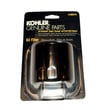
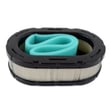
- Match maintenance parts by engine type, such as the lawn & garden equipment engine oil filter kh-12-050-01-s1 and lawn & garden equipment engine air filter KH-32-883-09-S1
- Follow the fuel guidance in the 247204100 owner's manual (especially for ethanol limits and fresh fuel)
Why it matters
Engine type drives the correct maintenance schedule and parts selection. Using the right oil filter, air filter, and fuel filter helps prevent issues like overheating, poor idle, and hesitation at high RPMs.
Last updated: February 2026
What is the best month to buy a riding lawn mower?
October is typically the best month to buy a riding lawn mower because it is the start of end-of-season clearance, when many sellers discount remaining inventory to make room for winter storage and next-year models. For the newest selection, March and April are best, but prices usually run higher.
Best timing by what you care about
- Lowest price: October through December (clearance and closeouts)
- Best selection: March through April (new model-year inventory)
- Solid deal window: August through September (late-season promos)
- Accessory bundles: November (holiday promotions often include add-ons)
What to check before you buy (so you do not overpay later)
Even if you buy at the right time, total cost depends on maintenance items and wear parts for your specific mower. For Craftsman model 247204100 (a zero-turn riding lawn mower), plan for routine service parts like filters and belts.
- Confirm the exact model number and serial number you will maintain
- Review the maintenance schedule in the owner's manual
- Price out common service parts (oil filter, air filter, fuel filter)
- Inspect the deck and drive system for belt wear and pulley noise
- Make sure the battery and charging system are healthy (especially if stored seasonally)
Common maintenance parts you will replace over time
These are typical, high-frequency items for this model family:
| Maintenance item | What it affects | Example part for this model |
|---|---|---|
| Engine oil filter | Oil cleanliness, engine life | Engine oil filter kh-12-050-01-s1 |
| Engine air filter | Power, fuel use, starting | Engine air filter KH-32-883-09-S1 |
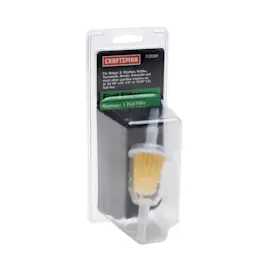
| Engine fuel filter | Fuel flow, stalling prevention | Engine fuel filter KH-25-050-22-S1 |
| Ground drive belt | Drive performance | Ground drive belt 954-04317A |
Why it matters
Buying in October to December can save money up front, but a mower that needs immediate service can erase those savings. Our best approach is to time the purchase for clearance, then budget for the first oil change and filter replacements so your 247204100 is ready for the next season.
Last updated: February 2026
What is the best tractor riding mower?
The “best” tractor riding mower depends on your yard size, terrain, and how you want to cut. For most homeowners, the best choice is the mower that matches your property (flat vs. slopes), has the right deck size, and is easy to maintain; use the owner's manual to confirm safe operation limits and maintenance needs for Craftsman model 247204100.
How to choose the best riding mower for your yard
- Yard size: Larger lawns benefit from wider decks and higher ground speed.
- Terrain: If you have slopes, stability and traction matter more than speed.
- Cut quality goals: Side discharge vs. mulching vs. bagging.
- Maintenance time: Easy access to oil, air filter, and belts saves time.
- Parts availability: Common wear items (filters, belts, blades) should be easy to source.
Tractor vs. zero-turn: quick comparison
Your Craftsman 247204100 is a zero-turn riding lawn mower, which is usually chosen for maneuverability around trees and landscaping.
| Feature | Lawn tractor | Zero-turn mower (like 247204100) |
|---|---|---|
| Turning | Wider turns | Tight, fast turns |
| Best for | Open lawns, towing | Obstacles, faster trimming |
| Learning curve | Easier | Takes practice |
| Typical maintenance | Belts, blades, filters | Belts, blades, filters (often more frequent checks) |
What “best” means for most homeowners
For a typical residential lawn, “best” usually means:
- Starts reliably and runs smoothly
- Cuts cleanly without leaving uncut strips
- Handles your slopes safely (or you avoid mowing slopes that feel unsafe)
- Has straightforward upkeep (oil checks, air filter cleaning, tire pressure)
The manual for this mower emphasizes safe setup before starting (parking brake engaged, PTO off) and highlights that slopes are a major tip-over risk; choosing a mower you can operate confidently on your terrain is a key part of “best.”
Maintenance items that keep performance high
If you already own model 247204100, these common service parts help keep it cutting and running right:
- Lawn & garden equipment engine oil filter KH-12-050-01-S
- Lawn & garden equipment engine air filter KH-32-883-09-S1
- Lawn & garden equipment engine fuel filter KH-25-050-22-S1
- Lawn tractor ground drive belt 954-04317A
Why it matters
Matching the mower type to your yard reduces scalping, missed grass, and operator fatigue; it also improves safety, especially on slopes and around obstacles.
Last updated: February 2026
What year is the Craftsman 247204100?
The Craftsman model 247204100 is a zero-turn riding mower in the 247.20400* and 247.20410* model family; the exact build year is determined by the serial number on your mower, not the model number alone. Use the serial tag on the machine to identify the manufacture date, then match it to the correct parts list.
Where to find the build date on your mower
Check the model/serial number label (commonly under the seat area or on the frame near the operator position). The serial number format varies by production run, but it typically includes a date code.
- Locate the model/serial label and write down the full serial number
- Look for a date code or a sequence that indicates year and month
- Compare the serial number to the identification section in the owner's manual
- Use the confirmed model and serial to select the correct diagrams and parts
Why the model number does not equal a single year
Craftsman model numbers like 247204100 identify a configuration and parts platform. That same platform can be produced across multiple seasons with small running changes (wiring, switches, belts, or deck hardware), so the serial number is what pins down the exact production period.
What we can confirm from the manual
The operator’s manual covers Model Nos. 247.20400* & 247.20410* and describes features like Smart Lawn Technology and Bluetooth connectivity, which helps confirm you are in the correct model family. Use it to verify identification details and maintenance specs.
Quick checklist to avoid ordering the wrong parts
- Confirm the full model number: 247204100
- Confirm the serial number from the mower’s ID tag
- Verify deck and drive configuration before ordering wear items
- Match the part to the correct diagram callout
Common parts that vary by production run
Even within the same model family, these items are the most likely to differ:
| Part type | Why it can vary | Example from this model’s parts list |
|---|---|---|
| Ground drive belt | Length and routing can change | Ground drive belt 954-04317A |
| Ignition components | Switch/key style can change | Ignition switch and key (varies by run) |
| Filters | Engine spec determines filter fit | Oil, air, and fuel filters |
Why it matters
Using the correct build date and serial number helps ensure the replacement part fits the first time, especially for drive system parts, electrical parts, and deck components.
Last updated: February 2026