Owner’s manual



How do I tell what model my Kenmore dryer is?
Your Kenmore dryer’s model number is printed on the appliance ID label; for model 79681283310, it will match the number you use to look up the correct parts, diagrams, and specifications. The label is usually easiest to spot when the dryer door is open.
Where to find the model number label
Check these common locations on Kenmore dryers:
- Inside the door opening on the cabinet frame (most common)
- On the back panel of the dryer
- Around the lint filter opening or under the lint screen area
- On the side panel near the door opening
If you see a model format like 796.8128# in documentation, the # typically indicates a color code, while the core model family stays the same. For exact identification, use the full model number from the label (example: 79681283310) and match it to the parts list.
What to write down (so you get the right parts)
Record these details from the label before ordering parts or troubleshooting:
- Model number (example: 79681283310)
- Serial number (helps with production date and revisions)
- Power type (electric or gas, if listed)
- Any suffixes or extra digits/letters shown on the label
Quick check: model number vs. serial number
| Item | What it’s used for | Example format |
|---|---|---|
| Model number | Identifies the exact dryer design for parts and manuals | 79681283310 |
| Serial number | Identifies the specific unit and production run | Letters and numbers |
Why it matters
Kenmore dryers often share similar styling across multiple series, but internal parts (like a heating element, thermistor, or belt routing) can differ by model. Using the exact model number helps ensure you get the correct replacement parts and the right procedures from the 79681283310 owner’s manual.
Last updated: February 2026
What does AF mean on my Kenmore Elite dryer?
On Kenmore model 79681283310, AF means the dryer is detecting restricted airflow through the exhaust venting. Drying times can increase and the dryer may run hotter than normal until the lint filter and vent system are cleaned and the airflow is restored.
What to check first (fast fixes)
- Clean the lint filter before the next cycle and make sure it seats fully.
- Check the vent hood outside; remove lint buildup and confirm the damper opens freely.
- Inspect the entire vent run for kinks, crushed flex duct, or long runs with too many elbows.
- If you use foil or plastic duct, replace it with rigid or semi-rigid metal duct.
- Make sure the dryer is not pushed too close to the wall and pinching the vent.
What the dryer is telling you
Your dryer uses a duct blockage sensing system that can illuminate a vent warning when it senses a serious restriction in the home exhaust system. See the vent and indicator details in the 79681283310 owner’s manual.
Common symptoms that go with AF
| Symptom | What it usually points to |
|---|---|
| Clothes take 2+ cycles to dry | Vent restriction or clogged lint path |
| Top feels very hot | Poor exhaust flow trapping heat |
| Lint around door or cabinet | Lint screen not sealing or lint housing buildup |
| AF comes and goes | Partial blockage, bird nest, or vent flap sticking |
Parts that can contribute (if airflow is still poor)
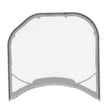
If the venting is clear but airflow remains weak, lint can build up inside the lint duct area. On this model, a damaged or loose lint housing can also leak air and lint; the lg dryer lint screen housing MCK49049101 is the related assembly.
Why it matters
Restricted airflow wastes energy, increases drying time, and can overheat components like thermostats and the heating system. Restoring proper venting protects fabrics and helps the dryer run efficiently.
Last updated: February 2026
How to take off the front panel of a Kenmore dryer?
To remove the front panel on Kenmore dryer model 79681283310, we first disconnect power, then remove the top panel so we can access the front-panel mounting screws and any door-switch wiring. Once the screws are out, we lift the front panel up and off the lower retaining tabs.
Before you start (safety and prep)
- Unplug the dryer (or switch off the breaker) before removing any panels.
- If the dryer was running, let the heater and drum area cool.
- Pull the dryer forward enough to work comfortably without crushing the vent duct.
- Keep a small container for screws so none get lost.
- Take a quick photo of wire connections before disconnecting anything.
Step-by-step: removing the front panel
- Remove the lint screen (if it’s in the top opening) and set it aside.
- Release and lift the top panel: on most Kenmore 796-style dryers, the top is held by spring clips near the front corners. Slide a putty knife under the front edge to release the clips, then tilt the top up.
- Remove screws securing the front panel: look along the inside top edge and around the door opening.
- Remove the door switch connector (if it’s attached to the front panel) and note its routing.
- Lift the front panel up to unhook it from the bottom tabs, then pull it forward and off.
What you can access once the front is off
| Area you’re servicing | Common reason to remove the front panel | Example part for this model |
|---|---|---|
| Drum drive | Squealing, thumping, drum not turning | Dryer drum belt 4400EL2001F |
| Drum support | Rumbling or uneven drum movement | Dryer drum support roller |
| Heating/airflow | No heat or poor drying | Lint housing, blower area |
Why it matters
Removing the front panel the right way prevents bent cabinet edges, broken plastic tabs, and pinched wiring. It also makes belt, idler pulley, and drum support roller repairs much smoother.
For diagrams, screw locations, and wire routing details specific to 79681283310, use the 79681283310 owner’s manual.
Last updated: February 2026