 Owner’s manual
 Error Codes



What does DH mean on Kenmore Elite refrigerator?
On Kenmore Elite refrigerator model 59675533400, DH commonly indicates a defrost-heater related problem (the refrigerator is not heating properly during the defrost cycle), which can lead to frost buildup and warm temperatures. Use the troubleshooting steps in the 59675533400 owner's manual to confirm the symptom and checks.
What DH usually points to
A DH message is typically tied to the defrost system, which includes the heater, sensors, and electronic control that manages defrost.
Common signs you may also notice:
- Frost or ice buildup on the freezer back wall
- Reduced airflow, warmer fresh food section
- Fan noise changes as ice builds up
- Longer run times (compressor running more often)
Quick checks we recommend first
Before testing parts, rule out simple causes that can mimic a defrost issue.
- Make sure doors close and seal fully (gasket sealing problems can cause heavy frost)
- Reduce frequent door openings and long door-open times
- Check for blocked vents (packages against the rear wall)
- Verify the refrigerator is level (helps doors close consistently)
- If you recently added a lot of warm food, allow 24 hours to stabilize
What to test next (defrost system basics)
If the DH message returns after a power reset, the next step is usually checking the defrost circuit.
| What to check | What it affects | Typical result when failed |
|---|---|---|
| Defrost heater circuit | Melts frost off the evaporator | Heavy frost, warm temps |
| Temperature sensor/thermistor | Tells control when to defrost/stop | Erratic temps, repeat errors |
| Electronic control | Sends power during defrost | No defrost even with good heater |
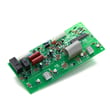
If you suspect the main control is not managing defrost correctly, a common replacement part for this model is the refrigerator control board WPW10503278.
Why it matters
A defrost-heating problem can quickly restrict airflow through the evaporator, so the refrigerator may look like it is running normally but cannot move cold air where it is needed.
Last updated: January 2026
What are the common problems with Kenmore Elite refrigerators?
Common problems on the Kenmore Elite refrigerator model 59675533400 include weak cooling, frost buildup, water leaks, slow water dispensing, and ice maker issues. In many cases, the fix is basic maintenance (cleaning, clearing obstructions, improving water supply) or replacing a failed component listed in the 59675533400 owner's manual.
Most common symptoms and what usually causes them
- Not cooling or warm temperatures: dirty condenser coils, airflow blocked by overpacked shelves, evaporator fan issues, or a control problem.
- Frost or ice buildup: door not sealing, drawers/bins preventing full closure, or a defrost system issue.
- Water leaking: poor water line connection, kinked tubing, or a clogged drain path.
- Slow water flow or small/hollow ice cubes: low household water pressure, clogged water filter, or a restrictive valve type.
- Ice maker not making ice: freezer temperature too warm, low water pressure, or an ice maker failure.
Quick checks we recommend first (no parts required)
- Confirm doors close fully; remove items that block closure (bins, ice bucket, oversized containers).
- Inspect and clean door gaskets so they seal evenly.
- Verify freezer temperature is cold enough for ice production.
- Check the water supply line for kinks and confirm the shutoff valve is fully open.
- If you use reverse osmosis, expect lower pressure; that can cause slow dispensing and hollow cubes.
Water line and valve guidance (helps prevent leaks and low flow)
The manual guidance for this style of refrigerator favors copper tubing and warns that plastic tubing and self-piercing or saddle valves can contribute to leaks, clogs, and low water pressure.
| Issue | Most common cause | Best next step |
|---|---|---|
| Slow dispenser flow | Low pressure or clogged filter | Check pressure, replace filter if due |
| Hollow/small cubes | Low pressure (including RO systems) | Improve supply pressure, verify valve type |
| Leaks at connection | Plastic line, kink, loose fitting | Reconnect with proper tubing and fittings |
When a part is the likely fix
If basic checks do not help, these model-matched parts are common solutions:
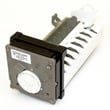
- Ice production problems: refrigerator ice maker D7824706Q
- Intermittent cooling or odd behavior: refrigerator control board WPW10503278
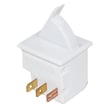
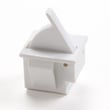
- Light or door-activated functions not working: refrigerator switch W11396033
Why it matters
Cooling, sealing, and water pressure problems can cascade; a door that does not seal can create frost, reduce cooling performance, and make the ice maker struggle. Fixing the root cause early helps protect food temperatures and reduces wear on the sealed system.
Last updated: January 2026
Why is my Kenmore Elite refrigerator leaking water out of the bottom?
Water leaking from the bottom of your Kenmore Elite 59675533400 refrigerator is usually caused by a defrost drain problem (meltwater cannot flow to the drain pan) or a leak in the water supply/ice maker tubing. We use the troubleshooting steps in the 59675533400 owner's manual to pinpoint whether the leak is from defrost water or the water line.
Quick checks to identify the source
- If the leak happens after defrosting (often a puddle under the front): suspect a clogged or frozen defrost drain.
- If the leak happens when dispensing water or making ice: suspect the water supply connection, tubing, or ice maker fill line.
- If you see ice in the freezer floor: defrost drain is the top suspect.
- If water is behind the unit: check the household supply line and fittings.
- If the leak is slow and constant: check for a seeping connection or cracked tubing.
Step-by-step troubleshooting (safe and effective)
- Unplug the refrigerator before servicing (power off first).
- Inspect the freezer floor and rear panel for ice buildup that can indicate a drain issue.
- Check the water connection type: this model’s manual guidance favors copper tubing; plastic lines are more prone to leaking.
- Inspect the shutoff valve: self-piercing/saddle valves commonly restrict flow and can contribute to problems.
- Look for kinks or loose fittings on the 5/16-inch water line; a simple fitting leak can track forward and drip out the bottom.
Common causes and what to do
| What you notice | Most likely cause | What we recommend |
|---|---|---|
| Puddle under front, freezer has ice sheet | Clogged/frozen defrost drain | Clear the drain path and remove ice so meltwater reaches the drain pan |
| Leak only during ice making | Ice maker fill line or connection leak | Inspect tubing and fittings; replace damaged connectors |
| Slow water flow plus leaking | Restricted supply or clogged filter path | Verify valve type, pressure, and check for restrictions |
Parts that can help (when the leak is from the water line)
If you find a drip at a tubing connection, a correct union can stop the leak without replacing the whole line: refrigerator water supply tube union, 5/16 x 5/16-in WP2300868.
Why it matters
Bottom leaks can lead to ice buildup in the freezer, poor cooling airflow, and water damage around the refrigerator. Fixing the source early also helps prevent repeat ice maker and dispenser problems.
Last updated: January 2026





