Installation guide
 Owner’s manual


How do I fix error code E1 F9 on my Whirlpool dishwasher?
Error code E1 F9 on a Whirlpool WDT710PAHZ1 typically points to a drain problem (water is not leaving the tub fast enough). We fix it by clearing the drain path (filter, sump area, hose, disposer connection) and then running a reset per the WDT710PAHZ1 user guide.
Quick fixes to try first (in order)
- Cancel the cycle and let the dishwasher attempt to drain.
- Confirm the cycle actually finished (many drain complaints are mid-cycle pauses).
- Check the bottom of the tub for standing water and remove any debris.
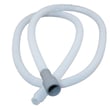
- Inspect the drain hose routing for kinks or crushing under the cabinet.
- If connected to a garbage disposer, confirm the disposer inlet knockout plug was removed.
- Clean the filter area; a clogged filter can slow drain flow.
Parts that commonly solve E1 F9 (when cleaning is not enough)
If the drain path is clear but the unit still will not drain, these model-matched parts are common fixes:
| Symptom | Most likely cause | Model-matched part to check |
|---|---|---|
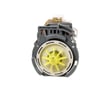
| Hums but won’t pump water out | Drain pump jammed or failed | Dishwasher drain pump W10876537 |
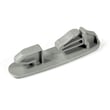
| Drains slowly, debris keeps returning | Filter clogged or damaged | Dishwasher filter WPW10463906 |
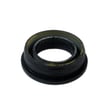
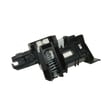
| Won’t drain and leaks at sump area | Sump seal issue or restriction | Dishwasher sump and seal assembly WPW10455268 |
Reset and verification steps
- After clearing the drain path, run a reset using the steps in how to reset a Whirlpool dishwasher.
- Start a short cycle and listen for a strong drain sound at the end.
- Recheck for water left in the tub after the drain portion.
Why it matters
A dishwasher that cannot drain can stop mid-cycle, leave dirty water in the tub, and trigger repeat error codes. Fixing the restriction early also helps protect the pump and reduces odors.
Last updated: February 2026
What is the average lifespan of a Whirlpool dishwasher?
A Whirlpool dishwasher typically lasts 10 to 12 years with normal household use. For your Whirlpool WDT710PAHZ1, consistent cleaning, correct detergent and rinse aid use, and fixing small problems early are the biggest factors that help you reach (or beat) that average.
What affects dishwasher lifespan most
- Maintenance habits: Monthly interior cleaning helps prevent residue buildup that can hurt performance.
- Drying system care: Using rinse aid improves drying and helps reduce hard-water deposits.
- Cycle expectations: Many newer, energy-efficient models run longer cycles (often 2 to 5 hours) to clean well while using less energy.
- Water quality: Hard water can cause mineral deposits that stress components over time.
- How it’s loaded and used: Overloading and blocking spray paths increases wear on pumps and wash components.
Simple maintenance that extends life
Use these habits to reduce strain on the motor, pump, and heating system:
- Clean the filter area regularly and remove food debris.
- Run a monthly dishwasher cleaner cycle as recommended in the WDT710PAHZ1 user guide.
- Keep rinse aid filled for better drying and less buildup.
- Avoid blocking the spray arm; make sure it spins freely.
- If you won’t use the dishwasher for an extended time, shut off water and power as outlined in the user guide.
Common “wear” symptoms and what they usually point to
| Symptom | What it often indicates | Parts commonly involved |
|---|---|---|
| Poor drying | Low rinse aid, heater issue, long eco cycles | Heating circuit, venting, rinse aid system |
| Not draining | Clog, air gap issue, drain pump problem | Drain path, drain pump |
| Not cleaning well | Blocked spray, filter buildup, circulation issue | Spray arm, filters, circulation system |
If you’re troubleshooting a drain problem, a frequent repair is replacing the dishwasher drain pump W10876537 after confirming the drain path is clear.
Why it matters
Dishwashers are designed to run longer, lower-energy cycles; that efficiency is great for utility use, but it makes clean filters, clear spray paths, and rinse aid more important than ever for long-term reliability.
Last updated: February 2026
What is the most common problem with a Whirlpool dishwasher?
The most common Whirlpool dishwasher problem is poor wash performance (dishes still dirty) caused by restricted water flow through the filter and spray arms, or weak circulation. On the Whirlpool WDT710PAHZ1, the next most common complaints are not draining and not starting, which are often tied to the drain path, door latch, or control.
Quick checks we recommend first
- Clean the filter area and remove any debris that can block circulation (see the WDT710PAHZ1 owner’s manual).
- Inspect the spray arm holes for clogs and confirm the arm spins freely; replace if cracked or warped.
- Use rinse aid and a quality detergent; the manual notes residue can build up and affect performance.
- If there is standing water, check the drain hose for kinks and clear the sink/disposer connection.
- If the dishwasher will not start, confirm the door closes and latches firmly.
Common symptoms and the parts that usually fix them
| Symptom | Most likely cause | Part to consider for WDT710PAHZ1 |
|---|---|---|
| Dishes not clean | Clogged spray arm or weak wash action | Dishwasher spray arm WPW10491331 |
| Not draining | Blocked drain path or failed drain pump | Dishwasher drain pump W10876537 |
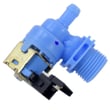
| Not filling | Water supply issue or failed inlet valve | Dishwasher water inlet valve W11175771 |
| Not drying well | Heater circuit issue (also check rinse aid use) | Element assembly W10518394 |
| Won’t start | Door not latching or control not sensing closed door | Dishwasher door latch WPW10653840 |
Why it matters
Most “big” dishwasher problems start as simple restrictions (filter, spray arm, drain hose). Fixing those early restores cleaning, prevents odors and standing water, and reduces strain on the pump and heater.
When an error code is involved
If the control is flashing an error or beeping, match the code to the symptom before replacing parts. Use our Whirlpool dishwasher error codes reference to narrow it down.
Last updated: February 2026
Why is my Whirlpool dishwasher running but not washing?
If your Whirlpool WDT710PAHZ1 dishwasher sounds like it is running but the dishes stay dirty, the problem is usually low or no water flow, poor spray action, or a wash system issue (filter, spray arm, or circulation components). Start with simple checks, then move to parts.
Quick checks (most common fixes)
- Confirm the water supply valve under the sink is fully open.
- Make sure the door is closing tightly and latching; some cycles pause if the door is not fully latched.
- Use a high-quality detergent pack and rinse aid; residue buildup can reduce wash performance over time.
- Clean the filter area and remove debris from the sump.
- Check the spray arms for clogs and verify they spin freely.
What to inspect on WDT710PAHZ1
Water fill problems
If the tub is not filling enough, the dishwasher can “run” but not actually wash.
- Listen early in the cycle for water entering.
- If fill is weak, check household water pressure and the inlet screen.
- A failing inlet valve can also restrict fill; see dishwasher water inlet valve W11175771.
Spray and circulation problems
If the dishwasher fills but water is not blasting the dishes:
- Remove and rinse the spray arm holes; replace if cracked or warped (see dishwasher spray arm WPW10491331).
- If you hear a hum but little spray, the circulation system may be struggling; check for obstructions and leaks around the sump and hose connections.
Symptoms to likely cause (fast guide)
| What you notice | Most likely cause | What to do next |
|---|---|---|
| Little or no water in tub | Water supply or inlet valve issue | Verify supply valve; consider inlet valve |
| Water present, weak spray | Clogged/damaged spray arm or filter restriction | Clean filter and spray arm |
| Loud buzzing/humming, poor wash | Circulation restriction or pump issue | Check sump for debris; inspect hoses |
| Detergent not dissolving | Low water temp or weak circulation | Run hot water at sink first; check spray |
Why it matters
A dishwasher can complete a cycle timer even when wash pressure is low. Restoring proper fill level, clean filtration, and strong spray action prevents redepositing soil and helps the heater and detergent work correctly.
For model-specific operating and maintenance steps, follow the WDT710PAHZ1 user manual.
Last updated: February 2026