Installation guide
 Owner’s manual
 Error Codes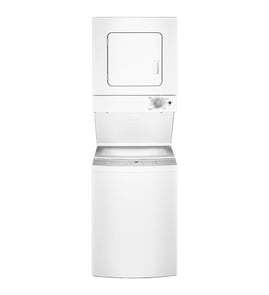




How to reset a Frigidaire stackable washer and dryer?
To reset the Frigidaire stacked laundry center model FEX831FS0, unplug the unit (or turn off the breaker) for about 5 minutes, then restore power and set the cycle controls back to OFF before starting a new cycle. This clears many “stuck” control conditions.
- Turn both the washer and dryer controls to OFF.
- Unplug the laundry center, or switch OFF the dedicated breaker.
- Wait 5 minutes.
- Restore power.
- Select a simple cycle (for example, a timed dry or a basic wash) and start.
For model-specific operating details and control behavior, follow the steps in the FEX831FS0 owner’s manual.
A “reset” helps when the control is confused, but it will not correct a failed component or a safety condition. Check these common causes:
- No power: tripped breaker, blown fuse, loose outlet connection.
- Washer will not start/spin: lid not fully closed or lid lock issue.
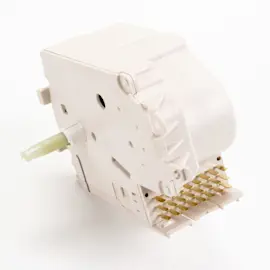
- Dryer will not start: door not fully closed, timer not advancing, or a safety device has opened.
- Dryer runs but won’t heat: vent restriction or a heat safety device has tripped.
| Symptom | What to check first | Why it matters |
|---|---|---|
| Washer won’t start | Lid fully closed, cycle knob pulled out | Prevents agitation/spin with lid open |
| Dryer won’t start | Door fully closed, cycle set correctly | Door switch must be made |
| Dryer won’t heat | Lint screen and venting | Restricted airflow can overheat and shut down heat |
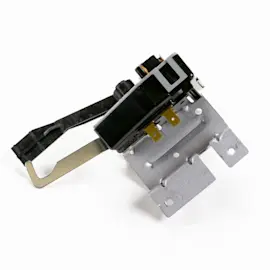
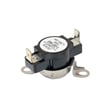
If the dryer overheated and stopped heating, a safety device such as a thermal limiter can open and may need replacement after the root cause (often airflow) is corrected. For compatible replacement options for this model, see the dryer thermal limiter 134120900.
Resetting is a fast way to clear minor control glitches and get your Frigidaire FEX831FS0 running again, but repeated “needs a reset” behavior usually points to an underlying issue like power supply problems, airflow restrictions, or a failing switch or timer.
Last updated: January 2026
Is a Frigidaire a good washer and dryer?
Frigidaire laundry centers like model FEX831FS0 are a solid choice when you need a reliable, space-saving washer and dryer in one unit. In our experience, owners tend to value their straightforward controls, decent cleaning and drying performance, and easier installation in tight laundry areas.
A laundry center is often judged on day-to-day usability more than premium features. For this Frigidaire stacked laundry center, focus on:
- Fit and venting: correct exhaust ducting and outdoor venting are critical for drying performance.
- Load habits: avoiding overloads helps cleaning, spinning, and drying.
- Routine maintenance: lint screen cleaning and periodic vent cleaning prevent long dry times.
- Noise and vibration: leveling and balanced loads make a big difference.
- Serviceability: common wear items (belts, glides, bearings) are replaceable.
For operating tips and care guidance specific to this unit, use the FEX831FS0 owner’s manual.
| Category | What you typically get | What to watch for |
|---|---|---|
| Space | One footprint for washer + dryer | Less flexibility than separate units |
| Ease of use | Simple, familiar cycles | Fewer specialty cycles |
| Drying | Good results when venting is correct | Poor venting causes long dry times |
| Maintenance | Straightforward upkeep | Lint and vent neglect hurts performance |
Most “bad washer/dryer” complaints come from installation and maintenance issues, not the brand itself. With the FEX831FS0, correct venting, proper leveling, and consistent lint removal are the biggest factors in getting strong drying results and long-term reliability.
These resources can help you evaluate performance quickly:
- Installation instructions for venting, electrical, and leveling requirements
- Frigidaire laundry center -washer error codes if the washer is acting up
- Frigidaire laundry center -dryer error codes if the dryer is not running or heating correctly
Last updated: January 2026
Why is my stackable dryer not drying?
If your Frigidaire FEX831FS0 stacked laundry center dryer runs but clothes stay damp, the most common cause is restricted airflow (lint screen, vent hose, or outside hood). Less often, the dryer is not heating due to an electrical or heating component issue.
- Clean the lint screen before every load; a coated screen can look clean but still block airflow.
- Confirm the exhaust is vented outdoors and the outside hood flap opens freely.
- Check the vent hose behind the unit for kinks, crushing, or loose connections.
- Avoid overloading; the drum should typically be about 1/3 to 1/2 full for proper tumbling.
- Use the right cycle and heat setting for the fabric load.
If you want the model-specific venting rules and maximum duct lengths, use the FEX831FS0 installation guide.
Use this quick comparison to narrow it down:
| What you notice | Most likely issue | What to do next |
|---|---|---|
| Dryer feels hot but takes a long time | Vent restriction | Clean lint screen, inspect ducting and hood, verify metal 4-inch duct |
| Dryer runs but there is little or no heat | Heating circuit problem | Check power supply (electric), gas supply (gas models), then test heating safety parts |
| Outside of dryer feels very hot or smells hot | Severe restriction or overheating | Stop using until venting is corrected and lint is cleared |
If airflow is good but drying is still poor, these model-compatible parts are often involved:
- Dryer lint filter 5304516871: A damaged or poorly fitting screen can let lint into the duct path and reduce airflow.
- Dryer thermal limiter 134120900: If it trips, the dryer can run but not heat properly.
- Heater housing 131475320: On electric versions, heating element issues can prevent proper heat.
Poor drying is usually an airflow issue; restricted venting can dramatically increase dry times and can overheat the dryer. Fixing airflow first is the fastest way to restore normal performance and protect key components.
Last updated: January 2026
How long does a Frigidaire take to wash?
On the Frigidaire FEX831FS0 stacked laundry center, the exact minutes for a full wash cycle cannot be confirmed from the model-specific information we have because this style uses a mechanical timer and cycle times vary by knob setting and household conditions. Use the FEX831FS0 owner’s manual to match your selected cycle steps.
Even without a single published “normal cycle time,” most FEX831FS0 wash cycles are made up of the same timed segments.
- Fill time depends on water pressure and hose screens
- Wash (agitation) time depends on the cycle you select
- Rinse fill and rinse agitation add additional time
- Final spin includes a lid-lock delay (the lid can stay locked 2 to 3 minutes after the tub stops)
- Slow draining can extend the end of the cycle
If your washer suddenly seems to run much longer than usual, focus on fill and drain performance first.
- Confirm both hot and cold faucets are fully open
- Make sure inlet hoses are not kinked
- Check the drain hose for kinks and correct standpipe setup
- Listen for slow draining or repeated attempts to drain
- If the washer will not drain, inspect the pump 137221600
| Segment to time | What “normal” looks like | What suggests a problem |
|---|---|---|
| Fill | Steady water flow | Very slow flow or long pauses |
| Drain | Strong, continuous discharge | Weak flow, gurgling, or stopping |
| Spin end | Lid unlocks after a short delay | Lid stays locked much longer than a few minutes |
Long wash times are often the first sign of restricted water flow or a draining issue; fixing that early helps prevent poor cleaning, wet loads after spin, and extra wear on belts and the drive system.
Last updated: January 2026