Owner’s manual
 Error Codes


Are side by side or bottom freezers better?
For most households, a bottom-freezer refrigerator like the Kenmore Elite 79576093600 is the better everyday choice because fresh foods are at eye level and the freezer stays colder and more stable when opened. Side-by-side models can be better when you want narrow door swing and easy access to frozen items.
| Feature | Bottom freezer | Side-by-side |
|---|---|---|
| Fresh food access | Best (most-used items up top) | Good (but shelves are narrower) |
| Freezer organization | Great for bulky items in a drawer | Great for frequently used frozen foods |
| Door swing clearance | Needs more front clearance | Often better in tight kitchens |
| Temperature stability | Typically strong | Typically strong |
- You use the refrigerator section more than the freezer.
- You want wide shelves for platters, pizza boxes, and meal prep containers.
- You prefer a pull-out freezer drawer for bulk storage.
- You want fewer bends and less reaching for everyday items.
- Your kitchen has limited aisle space and you need narrower doors.
- You want frozen foods at mid-height (less bending than a bottom drawer).
- You like having multiple freezer shelves for sorting smaller items.
- You use the in-door ice and water dispenser frequently (common on side-by-sides).
Layout affects how often doors stay open, how easy it is to keep food organized, and how consistently temperatures hold. Your habits and kitchen space usually matter more than the freezer location.
Use the temperature controls the way Kenmore recommends: let temperatures stabilize after changes and wait about 24 hours between adjustments for best results. See the 79576093600 owner's manual for control-setting guidance and care tips.
Last updated: January 2026
What does DH mean on Kenmore Elite refrigerator?
On Kenmore Elite refrigerator model 79576093600, DH typically indicates a defrost heater (defrost) problem. The refrigerator is detecting that the defrost system is not warming the evaporator as expected, which can lead to frost buildup and poor cooling.
- Power reset: Unplug the refrigerator for 5 minutes, then restore power and watch for the code returning.
- Cooling symptoms: Check for warm fresh food section, weak airflow, or heavy frost on the freezer back wall.
- Door sealing: Make sure doors close fully; air leaks can increase frost and trigger defrost-related issues.
- Condenser coil condition: Dirty coils can worsen cooling performance and make defrost issues more noticeable.
- Listen for fans: You should typically hear the evaporator fan running when the compressor is running.
| Likely cause | What you may notice | What to do next |
|---|---|---|
| Defrost sensor problem | Frost buildup, temperature swings | Test/replace the defrost sensor circuit; see defrost sensor assembly 6615JB2005C |
| Temperature sensing issue | Erratic temps, defrost timing problems | Check the sensor wiring and consider refrigerator thermistor 6500JB2002T |
| Control/board issue | Code returns quickly after reset | Inspect connections; board diagnosis may be needed |
| Door not closing or gasket leak | Frost near door edges, moisture | Clean/inspect gasket and alignment; use 79576093600 owner’s manual for door alignment guidance |
A defrost system problem can let frost build up on the evaporator, blocking airflow. That reduces cooling in both compartments and can eventually cause the refrigerator to run longer, warm up, or stop maintaining safe food temperatures.
Last updated: January 2026
What size is Kenmore refrigerator model 79576093600?
Kenmore Elite refrigerator model 79576093600 is a bottom-freezer design in the Kenmore 795.7608/7609/7628/7629 model family; the exact exterior dimensions (height, width, depth) vary by the specific configuration, so we recommend confirming the measurements in the 79576093600 owner's manual before planning a fit.
Use the manual’s installation and leveling sections to confirm the published dimensions and required clearances.
- Measure the width at the widest point (often the door or hinge area)
- Measure the height from floor to top of hinge cover (if present)
- Measure the depth two ways: cabinet-only and door/handle included
- Confirm rear clearance for power cord and water line routing
- Confirm door swing clearance so doors and freezer drawer open fully
Most Kenmore bottom-mount refrigerators in this class are close to these ranges:
| Measurement | Typical range (approx.) | What can change it |
|---|---|---|
| Width | 29 to 33 inches | door/hinge geometry |
| Height | 67 to 70 inches | hinge cover, leveling legs |
| Depth | 33 to 36 inches | handles, door thickness |
Getting the size right prevents delivery surprises and helps avoid airflow and water-line issues. This model family commonly uses a 1/4-inch water supply line and needs enough space behind the cabinet to route tubing without kinks.
If you are troubleshooting door alignment, rubbing, or closing problems after moving the refrigerator, these parts are commonly involved:
- Refrigerator door hinge bushing 4984JJ3003A (hinge wear can change door position)
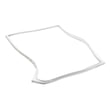
- Refrigerator gasket assembly ADX73350922 (a warped seal can prevent proper closing)
- Refrigerator door push-button switch 6600JB1010A (door not fully closing can affect light and cooling)
Last updated: January 2026
What are the common problems with Kenmore Elite refrigerators?
Common problems on the Kenmore Elite refrigerator model 79576093600 include warm temperatures from airflow or control-setting issues, doors that do not seal or close fully, water leaks tied to defrost drainage, and ice maker complaints like slow ice production or bad-tasting ice. For model-specific checks and settings, use the 79576093600 owner's manual.
- Refrigerator or freezer too warm: frequent door openings, blocked air vents, or controls not set correctly
- Refrigerator too cold: control settings too high for your conditions
- Doors will not close completely: unit not level, food packages blocking, bins or shelves out of position, or sticky gaskets
- Water in the defrost drain pan: normal during defrost; evaporation takes longer in hot or humid conditions
- Ice tastes bad or smells: old ice, unwrapped food odors, dirty ice bin, or water minerals (a filter can help)
- Confirm control settings and adjust gradually; wait 24 hours between temperature changes.
- Check airflow: keep items from blocking vents in both compartments.
- Inspect door closing: push doors firmly shut; verify shelves, pans, and the ice bin are fully seated.
- Clean the condenser coils if cooling is weak or the unit seems to run hard.
- Address gasket issues: clean the gasket and the surface it touches; a thin coat of paraffin wax can reduce sticking.
| Symptom | Part that can contribute | Example from this model |
|---|---|---|
| Interior light issues, door-ajar behavior | Door switch | Refrigerator door push-button switch 6600JB1010A |
| Door not sealing well, warm temps | Door gasket | Refrigerator gasket assembly ADX73350922 |
| Puddles or drain issues | Drain tube | Refrigerator drain tube 5251JA3003D |
Temperature swings, poor door sealing, and restricted airflow can cause food spoilage, heavy frost, and longer run times. Fixing the basics first (settings, vents, door closure, coil cleaning) prevents unnecessary part replacement.
Last updated: January 2026