Owner’s manual



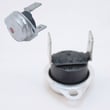
Is it worth replacing a heating element in a Samsung dryer?
Yes, it’s usually worth replacing the heating element in a Samsung dryer like model DV405ETPAWR when the dryer is otherwise in good shape; the part cost is typically far less than replacing the whole dryer. The key is confirming the no-heat problem is truly the element and not airflow, a thermal cut-off, or a thermostat (see the DV405ETPAWR manual).
Quick decision checklist
- The drum turns normally and the dryer runs, but clothes stay cold or barely warm.
- You’ve cleaned the lint screen and checked the vent path for restrictions.
- The dryer is under about 10 years old and has no major drum or control issues.
- You’re not seeing repeated overheating symptoms (burning smell, very hot cabinet).
- You’re willing to test parts with a multimeter before buying.
What to test first (most common “looks like a bad element” causes)
Before replacing the heater, we recommend checking these heat-related safety parts because they can open and stop heat even when the element is fine:
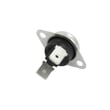
- Dryer thermal cut-off thermostat DC47-00016A
- Dryer high-limit thermostat DC47-00018A
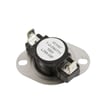
- Dryer thermal cut-off fuse, 320-degree f DC47-00015A
- Venting and blower airflow (a clogged vent can trip thermal protection)
Cost and value comparison
| Option | Typical parts cost | Typical outcome |
|---|---|---|
| Replace heating element | Moderate | Restores heat if the element is open/burned |
| Replace thermal cut-off/high-limit parts | Low to moderate | Restores heat if safety parts opened from overheating |
| Replace dryer | High | Best if multiple major failures or very old unit |
Why it matters
A DV405ETPAWR that “runs but won’t heat” often has an airflow or overheat-protection issue. Fixing the root cause (lint buildup, crushed vent, weak airflow) helps prevent the new heating part from failing again.
Helpful tip for Samsung dryers
If your dryer is showing an error code, use our Samsung dryer error codes guide to narrow the problem before ordering parts.
Last updated: February 2026
How to tell if a Samsung dryer heating element is bad?
A bad heating element in your Samsung DV405ETPAWR dryer typically shows up as no heat (or weak, inconsistent heat) even though the drum tumbles. We confirm it by unplugging the dryer, inspecting the coil for breaks, then testing the element for proper resistance and for a short to the metal heater housing.
Quick checks before you test parts
- Make sure the lint screen is clean.
- Check that the exhaust vent is not crushed, kinked, or clogged.
- Verify strong airflow at the outside vent hood.
- Try a timed dry cycle (some sensor cycles reduce heat if airflow is poor).
- If the dryer overheats then shuts heat off, suspect restricted venting first.
How to test the heating element (multimeter)
- Unplug the dryer (electric shock hazard).
- Access the heater terminals (follow the disassembly steps in the DV405ETPAWR owner's manual).
- Set your multimeter to ohms (Ω) or continuity.
- Element continuity test: probe the two heater terminals.
- A good element shows measurable resistance (not infinite/open).
- Ground fault test: probe one heater terminal and the metal heater housing.
- A good element shows no continuity to the housing.
What your readings mean
| Test result | What it indicates | What we usually do next |
|---|---|---|
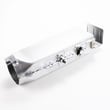
| Infinite/open between terminals | Broken coil (no heat) | Replace the heater (often the Samsung dryer heating element DC47-00019A) |
| Continuity from terminal to housing | Shorted element (unsafe, can trip breaker) | Replace the heater and inspect wiring |
| Resistance looks normal but still no heat | Heat circuit issue | Check thermal cut-off, high-limit thermostat, wiring, control |
Related parts that commonly fail with “no heat”
If the element tests good, these are the next most common heat-related parts on this model:
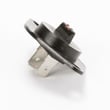
- Dryer thermal cut-off thermostat DC47-00016A (opens if overheating occurs)
- Dryer high-limit thermostat DC47-00018A (protects against high temperatures)
- Dryer thermistor DC32-00007A (temperature sensing for control)
Why it matters
A heating element that is open causes no heat, but a heating element that is shorted to the housing can trip the breaker or overheat wiring. Confirming the failure with a meter prevents replacing the wrong part and helps you catch airflow problems that can repeatedly blow thermal cut-offs.
Last updated: February 2026
What is the average lifespan of a Samsung dryer?
A Samsung dryer typically lasts 10 to 15 years with normal household use. For your Samsung DV405ETPAWR, consistent airflow maintenance (lint screen and venting) and avoiding overloads are the biggest factors that push life toward the high end.
Typical lifespan range (what to expect)
Most modern residential dryers, including Samsung models like DV405ETPAWR, fall into this range:
| Usage pattern | Typical lifespan | What usually limits life |
|---|---|---|
| Light (few loads/week) | 12 to 15 years | Wear parts, minor electrical issues |
| Average (most households) | 10 to 13 years | Heat and airflow stress, belt/roller wear |
| Heavy (daily loads) | 8 to 11 years | Motor wear, drum support wear, overheating events |
Maintenance that extends dryer life
These habits reduce overheating, shorten dry times, and protect key components:
- Clean the lint screen every load.
- Check and clean the exhaust vent path regularly (especially long runs).
- Avoid overloading; heavy loads strain the drum belt and motor.
- Keep the dryer level to reduce drum and roller wear.
- Stop using the dryer if you smell burning or notice weak airflow; correct venting issues first.
For model-specific care and cleaning guidance, follow the DV405ETPAWR owner's manual.
Parts that commonly wear before the dryer “dies”
A dryer often becomes noisy, slow to dry, or stops tumbling due to normal wear items, not because the whole appliance is at end-of-life. On DV405ETPAWR, common examples include:
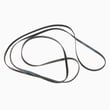
- Drum belt (tumbling issues): Samsung dryer drum belt 6602-001655
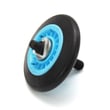
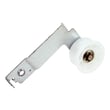
- Drum support roller (thumping/squealing): Samsung dryer drum support roller DC97-16782A
- Thermistor (temperature sensing problems): dryer thermistor DC32-00007A
Why it matters
Knowing the 10 to 15 year lifespan helps you decide whether to maintain and repair (often cost-effective for airflow or wear-part fixes) or plan replacement if you are seeing repeated heating, control, or motor problems.
Last updated: February 2026