 Owner’s manual
 Error Codes


What is the code F4E1 on a dishwasher?
F4E1 typically points to a communication problem between the main control and the circulation pump motor circuit. On a Kenmore dishwasher, this usually means the dishwasher is not getting the expected feedback from the wash pump, so it may stop mid-cycle, drain, or fail to wash properly.
- Reset power: turn the dishwasher off at the breaker for 1 minute, then restore power.
- Start a cycle and listen: if you hear draining but no wash action, the circulation pump side is the likely issue.
- Confirm the door is fully latched; some models will not run the wash motor if the latch is not made.
- Run hot water at the sink until it is hot before starting; low water temperature can make symptoms look like a wash problem.
- Review your model’s troubleshooting section for the exact sequence and symptoms in the 36314582100 owner's manual.
In many dishwashers, F4E1 is triggered by a wiring/connection issue or a failing circulation pump/motor assembly.
| What you observe | Most likely area | What we recommend |
|---|---|---|
| F4E1 appears quickly after start | Harness/connector issue | Inspect and reseat connectors at the control and pump (power off) |
| Unit fills and drains but does not wash | Circulation pump/motor | Check for a seized pump or replace the pump/motor assembly |
| Intermittent F4E1 | Loose connection or failing motor | Check wiring first; replace motor if wiring is solid |
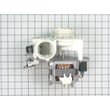
If you determine the circulation pump/motor is the problem on this Kenmore 36314582100, the model’s pump and motor assembly is commonly replaced as a unit, such as the mechanism WD26X10013.
The circulation pump is what actually moves water through the spray arms. When the control cannot communicate with, or properly drive, that motor circuit, the dishwasher may fill and drain but never clean.
Last updated: January 2026
Do dishwashers have a one-way valve?
Yes. Kenmore dishwasher model 36314582100 uses a one-way anti-backflow function (often called a check valve) in the drain or pump system to help prevent dirty drain water from flowing back into the tub during draining.
A dishwasher’s one-way valve is designed to keep water moving in the correct direction.
- Helps prevent sink or disposer water from backing up into the dishwasher
- Helps the dishwasher drain efficiently at the end of wash and rinse portions
- Reduces the chance of dirty water re-entering the tub after the pump stops
- Works together with the drain hose routing (high loop) and, if present, an air gap
On many Kenmore-built dishwashers like 36314582100, the anti-backflow function is typically integrated into the pump and drain path (not a separate, easy-to-spot “flapper” at the sink).
| Symptom | Common related area | What to check first |
|---|---|---|
| Water left in tub | Drain path | Kinked hose, clogged hose, disposer inlet plug |
| Dirty water returns after draining | Check valve/anti-backflow | Debris in pump area, drain restriction |
| Slow drain | Drain hose or drain valve | Hose routing, drain valve operation |
If you suspect a drain restriction, the drain hose is a common service item to inspect or replace: dishwasher drain hose WD24X10014.
Your manual notes that an air gap (if installed) should be kept clean; the air gap is separate from the dishwasher but strongly affects backflow protection. For cleaning and care details, use the 36314582100 manual.
Backflow protection is one of the key reasons a dishwasher can drain without leaving dirty water behind. When the drain path, air gap, or anti-backflow/check-valve area gets blocked by food debris, you can see standing water, odors, or re-depositing soil.
Last updated: January 2026
What are the common problems with Kenmore dishwashers?
Common problems on the Kenmore 36314582100 dishwasher are no-start or no-fill, poor cleaning, leaks, drainage trouble, and dishes not drying. Most of these trace back to power or water supply issues, loading and detergent choices, or a few wear parts such as seals, valves, and spray components.
- Reset power: check the house breaker or fuse, then try starting a cycle again.
- Confirm water supply: make sure the shutoff valve under the sink is fully open.
- Start correctly: set the dial to START without turning it past the start point (a short delay before filling is normal).
- Improve cleaning: load so spray arms can spin freely; avoid overloading.
- Improve drying: use rinse aid and avoid the AIR DRY option when you want heated drying.
| Symptom | Most likely causes | What we recommend first |
|---|---|---|
| Won’t start | No power, dial not set correctly | Check breaker/fuse; set dial to START per the 36314582100 owner's manual |
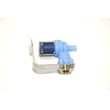
| Won’t fill | Water valve closed, inlet valve/supply line sediment | Verify shutoff valve; inspect/clean supply line; consider dishwasher water inlet valve WD15X10003 |
| Poor cleaning | Improper loading, blocked spray action, detergent issues | Re-load for clearance; check spray arm holes; consider spray arm WD22X155 |
| Leaks | Not level, suds, worn door sealing surfaces | Level the unit; use only automatic dishwasher detergent; inspect dishwasher door seal insert WD08X10015 |
| Dishes not dry | Water not hot enough, AIR DRY selected, rinse aid empty | Run hot water at sink first; set water heater to about 140°F; fill rinse aid |
Catching the root cause early prevents repeat cycle failures, reduces water on the floor, and improves wash and dry performance without replacing unnecessary parts.
If your dishwasher is showing an error code, use our Kenmore 363 electronic control model dishwasher error codes guide to match the code to the most likely failure.
Last updated: January 2026
How to clear code on Kenmore dishwasher?
On the Kenmore 36314582100 dishwasher, most “codes” clear by resetting the control and restarting a cycle. The quickest reset is to stop the current cycle, return the control to an idle state, then start a fresh cycle using the normal start steps in the 36314582100 owner's manual.
- Press Cancel/Drain (if your model has it) and let the dishwasher pump out.
- Turn the cycle selector Dial to OFF.
- Wait 1 minute.
- Start a new cycle: select the cycle, turn the dial to START, then latch the door to begin.
- If the display or lights still show a code, disconnect power for 5 minutes (unplug or switch off the breaker), then restore power and start a cycle again.
Some codes return immediately because the dishwasher is still detecting the same problem (drain, fill, heating, or door latch).
- Drain issue: Make sure the sink/disposer is clear and the drain path is not restricted.
- Fill issue: Confirm the hot water supply valve is open and household water pressure is normal.
- Door/latch issue: Close the door firmly; a weak latch can interrupt the cycle.
- Water not circulating: A failed pump/motor can trigger repeating faults.
| Symptom you see | What it usually points to | What to check first |
|---|---|---|
| Won’t start after reset | Door not latching or control not reset | Dial at OFF, door fully latched |
| Standing water in tub | Drain restriction or drain component problem | Drain hose routing, sink/disposer |
| Hums but no wash action | Circulation problem | Listen for pump, check for blockage |
If the dishwasher repeatedly stops and drains or won’t fill after a reset, these model-matched parts are common suspects:
- Dishwasher water inlet valve WD15X10003 (no/slow fill)
- Dishwasher drain hose WD24X10014 (poor draining, leaks, kinks)
- Mechanism WD26X10013 (wash circulation issues depending on symptom)
Clearing the code without fixing the underlying condition usually means the code comes right back. Resetting first helps you confirm whether it was a one-time control glitch or an active problem like draining, filling, or circulation.
Last updated: January 2026





