Owner’s manual
 Error Codes


Is there a reset button on a Kenmore upright freezer?
Most Kenmore upright freezers, including model 25322442410, do not have a dedicated “reset” button. If the freezer is acting up, we reset it by restoring power (unplugging briefly) and then confirming the temperature control is set correctly per the 25322442410 owner's manual.
Quick reset steps we recommend
- Unplug the freezer (or switch off the breaker) for 5 minutes.
- Plug it back in and keep the door closed.
- Set the temperature control back to your normal setting (many models use an internal control knob).
- Allow 24 hours for temperatures to fully stabilize after changes.
- If you recently loaded warm food, avoid turning the control colder; load gradually instead.
What “reset” usually means on this model
On the 25322442410, “reset” typically means one of these actions:
| Situation | What we do | Why it helps |
|---|---|---|
| Control seems unresponsive | Power-cycle for 5 minutes | Clears a temporary control glitch |
| Not cold enough after loading food | Keep door closed, wait 24 hours | Normal pull-down time |
| Frost buildup affecting performance | Defrost and clean when frost reaches 1/4 to 1/2 inch | Restores airflow and cooling efficiency |
If the freezer still will not cool
These checks narrow down the most common causes:
- Make sure the door closes and seals fully (gasket not torn or warped).
- Listen for the evaporator fan; if it is not running, cooling will be weak.
- Watch for heavy frost on the back wall; that points to a defrost system problem.
- Confirm the temperature control knob is not loose or cracked.
If you suspect a failed component, these model-matched parts are commonly involved:
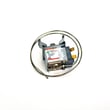
- Freezer defrost timer 5304518034
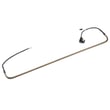
- Freezer defrost heater 5304496687
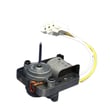
- Freezer evaporator fan motor 297309000
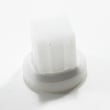
- Freezer temperature control knob 216707200
Why it matters
A true “reset button” is rare on upright freezers; most issues come down to power interruptions, temperature control settings, airflow restrictions from frost, or a defrost or fan failure. Resetting the right way prevents unnecessary part replacement.
Last updated: February 2026
What causes an upright freezer to stop freezing?
An upright freezer like Kenmore model 25322442410 usually stops freezing because airflow or heat removal is compromised (dirty condenser area, failed fan), the defrost system is stuck in defrost, or the door is leaking warm air. Use the 25322442410 owner's manual to confirm normal operation and care steps.
Quick checks we recommend first
- Make sure the temperature control is set colder and the door closes fully.
- Keep the door closed as much as possible; frequent openings add warm, moist air.
- Look for heavy frost buildup (about 1/4 to 1/2 inch) that can block airflow.
- Verify the freezer has power and is running (lights, fan sound, compressor hum).
- Check that shelves and packages are not blocking interior vents.
Most common causes (and what they look like)
| What’s wrong | Typical symptoms | What to do next |
|---|---|---|
| Dirty condenser area or poor ventilation | Runs a lot, weak freezing | Clean dust, improve clearance around cabinet |
| Evaporator fan not running | Warm freezer, little airflow | Test/replace freezer evaporator fan motor 297309000 |
| Defrost system problem (timer or heater) | Frost blanket on back wall, warming | Check freezer defrost timer 5304518034 and freezer defrost heater 5304496687 |
| Door gasket leaking | Frost near door, sweating, temp swings | Inspect/replace freezer door gasket 5304506126 |
| Sealed system/compressor issue | Very warm, may click on/off | Professional diagnosis recommended |
Why frost and door leaks matter
Your manual notes that frost should be removed and that defrosting and cleaning is important when 1/4 to 1/2 inch of frost accumulates. Excess frost acts like a blockage; it reduces airflow across the evaporator so the freezer cannot pull temperatures down efficiently. See the defrost and cleaning guidance in the 25322442410 owner's manual.
Safety and handling notes
- Unplug the freezer before defrosting or servicing internal components.
- Use a plastic scraper for frost; never use metal tools.
- Avoid touching cold interior metal surfaces with wet hands.
Last updated: February 2026
What is the average lifespan of an upright freezer?
Most upright freezers last about 12 to 20 years with normal home use and basic maintenance. For your Kenmore 25322442410, keeping the door sealing well, cleaning periodically, and managing frost buildup helps the sealed system and controls run longer (see the 25322442410 owner's manual).
Typical lifespan and what affects it
A freezer’s life depends less on brand and more on operating conditions and upkeep.
- Average range: 12 to 20 years
- Heavy use (frequent door openings, warm garage): tends toward the lower end
- Stable indoor temps and good airflow: tends toward the higher end
- Frost management: excessive frost can reduce efficiency and increase run time
- Door seal condition: air leaks add moisture and force longer compressor cycles
Quick “is it worth repairing?” guide
Use this as a practical rule of thumb for a Kenmore upright freezer.
| Freezer age | Common approach | Why |
|---|---|---|
| 0 to 7 years | Repair is usually worthwhile | Most failures are single-part fixes |
| 8 to 12 years | Case-by-case | Balance repair cost vs. remaining life |
| 13+ years | Often replace unless repair is minor | Higher chance of multiple wear items |
Maintenance that extends life
These steps match what we see most often in the field and align with safe care guidance in the manual.
- Defrost and clean when frost reaches about 1/4 to 1/2 inch (manual guidance)
- Keep the door closed during outages; food stays frozen at least 24 hours if the door stays shut
- Avoid scraping ice with metal tools; use a plastic scraper
- Keep shelves and bins seated correctly so the door closes fully
- If the freezer is stored unused for months, clean and dry it, then leave the door slightly open to prevent odors
Why it matters
A freezer that runs longer than necessary (from frost buildup or air leaks) puts extra wear on the compressor, evaporator fan motor, and defrost components, which can shorten overall lifespan and increase energy use.
Last updated: February 2026
What is the size of Kenmore upright freezer model 25322442410?
The Kenmore upright freezer model 25322442410 is part of the Kenmore “253” model family, and overall dimensions and capacity vary by the exact sub-model. For the exact size for 25322442410, we use the specifications listed in the 25322442410 owner's manual.
What “size” usually means (and what to check)
When customers ask for “size,” they typically need one of these:
- Capacity (cubic feet) for storage planning
- Overall dimensions (width, height, depth) for fit in a space
- Door swing clearance for opening the door fully
- Shelf/basket layout for organization
The most reliable place to confirm all of these for your specific Kenmore model is the spec section of the 25322442410 owner's manual.
Typical upright freezer size ranges (helpful for planning)
Most freestanding upright freezers in this Kenmore category commonly fall into these ranges:
- Width: about 28 to 33 inches
- Height: about 60 to 72 inches
- Depth: about 28 to 33 inches (often more with handle)
- Capacity: about 14 to 21 cubic feet
Quick planning table
| What you’re measuring | What to include | Common gotcha |
|---|---|---|
| Width | cabinet side-to-side | trim or hinge side clearance |
| Height | floor to top of cabinet | leveling feet can change height |
| Depth | front to back | handle adds depth |
| Door swing | space in front/side | needs extra clearance to remove bins |
How we recommend measuring your space
Use a tape measure and record in inches:
- Measure width at the narrowest point (walls, cabinets, doorway)
- Measure height to the lowest overhead obstruction
- Measure depth to ensure the door can open without hitting anything
- Leave airflow space around the cabinet for proper cooling
Why it matters
Getting the correct dimensions prevents delivery and installation surprises, and it also helps avoid airflow restrictions that can lead to warm temperatures, frost buildup, or longer run times.
Last updated: February 2026
Where is the model number on a Kenmore upright freezer?
On Kenmore upright freezer model 25322442410, the model and serial number are printed on the serial plate located inside the appliance compartment. We recommend recording both numbers for parts lookup and future service; clean the serial plate with soap and water only (see the 25322442410 owner's manual).
Common places to check on an upright freezer
Look for a paper or metal label in these typical spots:
- Inside the cabinet on a side wall (often near the upper section)
- On the ceiling area inside the freezer compartment
- Behind the toe grille or kick plate at the bottom front
- Along the door opening (door jamb) near the hinge side
- On the back exterior panel (less common for uprights)
How to find it quickly (and avoid damaging the label)
- Unplugging is not required; just keep the door open briefly.
- Use a flashlight and look for a rectangular “Model/Serial” plate.
- Wipe frost or dust lightly; use only soap and water on the serial plate.
- Write down the full model number and serial number exactly as shown.
- Take a clear photo; it helps when ordering parts like a freezer door gasket 5304506126 or diagnosing cooling issues.
Why it matters
The model number ensures we match the correct Kenmore freezer parts and diagrams for 25322442410. Even small design changes within a product line can affect fit, wiring, and defrost components.
What you should record
| Item | What it’s used for |
|---|---|
| Model number (25322442410) | Correct parts list and diagrams |
| Serial number | Production details that can affect part compatibility |
| Purchase date | Maintenance history and service reference |
Last updated: February 2026
Why is my Kenmore freezer leaking water onto the floor?
Water on the floor around your Kenmore freezer model 25322442410 is usually caused by defrost water not draining correctly, most often from an iced-over or clogged drain path or a missing/loose drain plug after defrosting. The fix is to clear the drain and confirm the drain plugs are fully seated.
Quick checks that solve most leaks
- Unplug the freezer before working around water or panels.
- Look for ice blocking the drain opening on the inside floor.
- Confirm the inside drain plug is installed tightly after defrosting.
- If your unit has a base panel, remove it and check the external drain tube location.
- Make sure the drain pan you used during defrosting did not overflow.
How the drain system works on this model
During defrosting, meltwater is supposed to exit through the drain opening and out the external drain tube. The manual notes that on upright models with a defrost drain, you remove the drain plug inside the freezer floor, and on models with a base panel you access the external drain tube by removing two base-panel screws; the drain tube is near the left center under the freezer. See the 25322442410 owner's manual.
What to do (safe, effective steps)
- Unplug the freezer.
- Remove food, open the door, and let any ice around the drain melt (use hot water in pans if needed).
- Pull the inside drain plug straight out, then clear slush/debris from the drain opening.
- Remove the base panel (if equipped) and verify the external drain tube is clear and positioned to drain into a shallow pan.
- Reinstall the drain plug(s) firmly; leaving the drain open lets warm air enter and can create more frost and water.
Symptoms and likely causes
| What you see | Most likely cause | What to check first |
|---|---|---|
| Puddle after defrosting | Drain plug left out or not seated | Inside drain plug fit |
| Slow dripping for days | Ice clog in drain opening/tube | Ice at drain opening |
| Water only when door opened often | Excess frost melt, drain can’t keep up | Frost level (1/4 to 1/2 inch) |
Why it matters
Standing water can refreeze into a drain blockage, increase frost buildup, and lead to warmer cabinet temperatures. Keeping the drain clear and reinstalling the plug after defrosting helps the freezer hold temperature and reduces repeat leaks.
Last updated: February 2026