Owner’s manual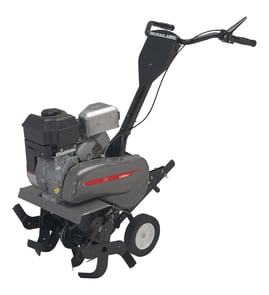






Where is the model number on a tiller?
On the Craftsman front-tine tiller model 316292640, the model number is typically printed on a product label (model tag) attached to the unit. Common spots include the tine guard area, near the fuel tank, or on the front of the frame; confirm the exact location using the 316292640 operator's manual.
Where to look first (fast checklist)
- Check the tine guard/tine shield area (near the rotating tines).
- Look around the fuel tank and fuel cap area.
- Inspect the front of the frame (especially on larger or revised builds).
- Check the handlebar support/frame tube area.
- Wipe dirt off labels; soil and oil film can hide the print.
What the label usually looks like
Most tiller model tags are a small sticker or plate that includes a model number and sometimes a serial number.
| What you see on the tag | What it’s used for | Example for this unit |
|---|---|---|
| Model number | Matching parts and manual info | 316292640 |
| Serial number | Identifying production run | Varies by unit |
Why it matters
We use the model number to match the correct Craftsman parts diagrams and maintenance information. Even small model-number differences can change items like tines, wheel bracket hardware, or engine-related service parts.
Tips if the tag is missing or unreadable
- Clean the area with a damp rag and mild cleaner; avoid harsh solvents on plastic.
- Use a flashlight at an angle; raised or faded printing shows up better.
- Check for a second label on the opposite side of the tine guard.
- If you find multiple numbers, use the one labeled Model (not a patent number or casting number).
Last updated: January 2026
Can a front tine tiller break new ground?
Yes, a front-tine tiller like the Craftsman 316292640 can break new ground, but it is not the most efficient choice for hard, never-tilled soil. Expect more bouncing and slower progress; we recommend working in shallow passes and letting the tines gradually chew the soil.
Best way to break new ground with model 316292640
We follow the same approach we use for most gas mini tillers: start shallow, control tine bite, and make multiple passes.
- Clear the area first (rocks, wire, roots, debris) to protect the tines and tine shield.
- Set a shallow tine depth for the first pass; then deepen on later passes.
- Make short, controlled passes; pull back slightly so the tines can penetrate.
- If the unit “walks” or hops, reduce depth and slow your pace.
- For sod, cut and remove strips first when possible; then till what remains.
- Keep the engine maintained (clean air filter, good spark plug, clean spark arrestor) so it does not bog down.
What to expect (front-tine vs rear-tine)
Front-tine tillers can do the job, but rear-tine models usually bite and pull through tough ground more easily.
| Feature | Front-tine tiller (316292640) | Rear-tine tiller (typical) |
|---|---|---|
| Breaking new ground | Possible, slower | Best choice, faster |
| Tendency to bounce | Higher | Lower |
| Best use | Light to medium soil, garden beds | Hard soil, sod, larger areas |
Why it matters
Breaking new ground is where tine depth control and technique matter most. Starting too deep can make a front-tine tiller jump, reduce traction, and increase wear on tines and the clutch system.
Model-specific tips from the manual
- The manual recommends adjusting tine depth and generally targeting about 4 to 6 inches for most gardens once soil is workable.
- Use the correct 40:1 fuel/oil mix and keep fuel fresh to maintain power under load.
For operating steps, tine depth adjustment, and maintenance intervals, use the 316292640 operator’s manual.
Last updated: January 2026
Which is better, front tine or rear tine tiller?
For the Craftsman 316292640 front-tine tiller, a front-tine design is “better” when you want a lighter, more affordable machine for maintaining an existing garden bed and doing light-to-medium soil work. A rear-tine tiller is typically better for breaking new ground, tougher soil, and larger areas.
How the two types compare
Front-tine and rear-tine tillers do the same basic job (mixing and loosening soil), but they feel very different in use.
- Front-tine tiller (like model 316292640): good for routine cultivating, weeding, and mixing compost into already-worked soil
- Rear-tine tiller: better traction and control in hard soil; usually digs deeper with less effort from the operator
- Cost and weight: front-tine is usually lighter and less expensive; rear-tine is heavier and costs more
- Maneuverability: front-tine is easier to turn and store; rear-tine is better for long, straight passes
Model-specific notes for Craftsman 316292640
Your Craftsman 316292640 is a compact 2-cycle front-tine unit designed for smaller garden tasks. From the operator guidance, it is intended for cultivating sod and light-to-medium soil, and it uses a wheel bracket adjustment to change tine depth.
- Recommended cultivating depth range for typical gardens is about 4 to 6 inches (adjusted using the wheel bracket)
- Maximum cultivating path width is about 9 inches
- Maximum cultivating depth is about 5 inches
For operating and depth adjustment steps, follow the 316292640 operator’s manual.
Quick decision guide
| If your main job is... | Better choice | Why |
|---|---|---|
| Maintaining an existing garden bed | Front-tine | Lighter, easier to maneuver, plenty of power for worked soil |
| Breaking new ground or hard-packed soil | Rear-tine | More traction and stability; less “pulling” and bouncing |
| Tight spaces, raised beds, around plants | Front-tine | Narrower working width and easier handling |
| Large plots and long rows | Rear-tine | Faster coverage and more consistent depth |
Why it matters
Choosing the right tine layout affects control, fatigue, and results. A front-tine tiller like the Craftsman 316292640 can do excellent work in maintained soil, but a rear-tine machine usually saves time and effort when the soil is tough or the area is large.
Last updated: January 2026
What are the common problems with lawn tillers?
Common problems we see on the Craftsman 316292640 gas mini tiller are no-start or hard-start conditions, stalling under load, weak tilling power, and tines that stop or bind. Most issues trace back to fuel mix quality, air flow, ignition (spark plug), or debris around the tines; see the troubleshooting chart in the 316292640 operator’s manual.
Most common symptoms and likely causes
- Won’t start / hard to start: old or improperly mixed 2-cycle fuel, primer bulb not pressed enough, fouled spark plug
- Starts then stalls: stale fuel, restricted air filter, clogged spark arrestor screen
- Runs but lacks power: dirty air filter, spark arrestor restriction, incorrect fuel/oil ratio (40:1)
- Tines won’t turn or stop in soil: tines bound with debris, cultivating depth set too deep for conditions
- Overheats or smells hot: debris buildup around engine/muffler area, restricted exhaust through spark arrestor
Quick checks we recommend first (fastest wins)
- Confirm fresh fuel mix: use clean unleaded gas mixed at 40:1 with 2-cycle oil; remix if fuel is older than about 60 days.
- Prime correctly: press the primer bulb 10 times slowly before starting.
- Inspect the spark plug: this model uses a Champion RDJ7Y (or equivalent); set gap to 0.025 in.
- Clean the air filter: wash, dry, then lightly oil (SAE 30) per the manual.
- Check the spark arrestor screen: clean with a wire brush if clogged.
Specs that help with diagnosis (model-specific)
| Item | Craftsman 316292640 spec |
|---|---|
| Fuel/oil ratio | 40:1 |
| Fuel tank capacity | 13 oz (384 ml) |
| Max cultivating width | 9 in |
| Max cultivating depth | 5 in |
Why it matters
A 2-cycle tiller like the Craftsman 316292640 depends on the correct fuel mix and unrestricted air and exhaust flow. When fuel is stale or the air filter or spark arrestor is restricted, the engine can start poorly, bog down in soil, and carbon up faster.
Last updated: January 2026