Installation guide
 Owner’s manual
 Error Codes


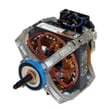
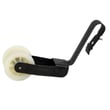
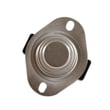
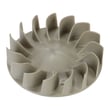
How to tell if a dryer thermal fuse is blown?
On an Inglis IGD4400VQ1 dryer, a blown thermal fuse is confirmed with a continuity test: a good fuse reads near 0 ohms (or the meter beeps), and a blown fuse reads OL or no continuity. Replace the fuse and correct the airflow problem that caused it.
How to test the thermal fuse (safe, accurate method)
- Unplug the dryer (or shut off power at the breaker) before opening any panels.
- Access the thermal fuse (commonly on the blower housing or exhaust duct area).
- Pull the wire connectors off the fuse terminals (do not tug the wires).
- Set a multimeter to continuity or the lowest ohms setting.
- Touch one probe to each terminal.
- Read the result and decide next steps.
What the meter reading means
| Multimeter result | What it means | What to do |
|---|---|---|
| Beep or ~0 to 1 ohm | Fuse is good | Keep troubleshooting other causes |
| OL, infinite, no beep | Fuse is blown (open) | Replace the thermal fuse |
Symptoms that often point to a blown thermal fuse
- Dryer will not start (common on many models)
- Dryer runs but stops unexpectedly
- No heat (some designs interrupt heat circuit)
- Burning smell or very hot cabinet before failure
Why thermal fuses blow (and what to fix so it does not happen again)
A thermal fuse is a one-time safety device; it opens when the dryer overheats. Overheating is most often caused by restricted airflow. After replacing the fuse, we recommend:
- Cleaning the lint screen and checking it for residue buildup
- Inspecting and cleaning the vent duct from dryer to outside
- Making sure the vent is not crushed or kinked behind the dryer
- Checking the outside vent hood for a stuck flap or blockage
- Confirming the dryer is installed and vented as shown in the installation guide
Related parts that commonly get serviced during airflow or no-heat repairs
If you are already opening the cabinet, these model-compatible parts are commonly replaced when symptoms overlap:
- Dryer blower wheel WP694089 (damaged wheel reduces airflow)
- Dryer lint screen W11778253 (torn or missing screen can cause lint buildup)
Why it matters
A blown thermal fuse is a safety shutdown that prevents overheating. Replacing the fuse without fixing the venting restriction often leads to repeat failures and longer dry times.
Last updated: February 2026
What is the most common problem with the dryer?
For the Inglis IGD4400VQ1 dryer, the most common problems we see are airflow restrictions (lint buildup or a poor vent run) that cause long dry times or overheating, and basic “won’t run” issues such as a tripped breaker, an open door, or the Start button not being engaged correctly. See the owner's manual for model-specific troubleshooting checks.
Most common issues (and what they look like)
- Clogged vent or lint restriction: clothes take too long to dry, dryer runs hot
- Power supply problem: dryer will not run, or runs but has no heat (electric models can lose one leg of power)
- Door not fully closed or switch not made: dryer will not start
- Start switch issue: pressing Start does nothing (see dryer push-to-start switch WP3977456)
- Drum not turning: motor runs but drum does not move (often a belt issue; see dryer drum belt 341241)
Quick checks we recommend first
- Clean the lint screen and check for lint buildup at the exhaust outlet.
- Inspect the venting: use a 4-inch heavy metal vent, keep the run as straight as possible, and avoid plastic or foil vent.
- Confirm the cycle and Start action: a cycle must be selected and the Start button pressed as described in the manual.
- Check power: reset the breaker(s) or replace fuses as needed.
- Listen for symptoms: thumping after long non-use can be normal for the first few minutes.
Symptom-to-likely-cause guide
| Symptom | Most likely cause | What to do next |
|---|---|---|
| Long dry times | Vent restriction | Clean venting; verify proper vent material and routing |
| Won’t start | Door not closed, Start not engaged, power issue | Check door closure, cycle selection, breaker/fuse |
| Drum won’t turn | Broken belt or drive system wear | Inspect belt; consider dryer repair kit 4392065 for common wear parts |
| No heat (gas) | Gas supply valve closed or ignition components | Verify gas valve is open; then diagnose ignition system |
Why it matters
Airflow problems are the root cause behind many dryer complaints because restricted venting reduces drying efficiency and can overheat the dryer. Proper venting also helps protect key components like the motor, belt, and heating system.
Last updated: February 2026
How much does it cost to replace drum bearings on a dryer?
Replacing drum bearings on an Inglis IGD4400VQ1 dryer typically costs $40 to $120 in parts if you do it yourself, and about $200 to $450 total if you hire service (parts plus labor). The exact total depends on whether the noise is from the front drum bearing, rear support, or drum rollers.
What you usually pay for (parts vs. labor)
Drum support repairs often involve opening the cabinet and removing the drum, so labor is usually the biggest cost.
- DIY parts cost: commonly $40 to $120
- Service labor: commonly 1 to 2 hours
- Total with service: commonly $200 to $450
- Extra cost risk: seized fasteners, worn belt, or multiple worn supports found during teardown
| Scenario | Typical parts you replace | Typical total cost |
|---|---|---|
| DIY repair | Bearing or support parts only | $40 to $120 |
| Service call repair | Bearing/support parts + labor | $200 to $450 |
| “While you’re in there” refresh | Bearing/support + belt/rollers/idler | $250 to $500 |
Parts on this model that are commonly replaced with bearing-type noises
On the IGD4400VQ1, a squeal, scrape, or rumble is often tied to drum support components. If you already have the dryer opened up, it can be cost-effective to replace multiple wear items at once.
- Dryer drum front bearing W11035878 (front support wear can cause scraping or squealing)
- Bearing ring 279441 (often replaced with the front bearing surface)
- Dryer drum belt 341241 (replace if glazed, cracked, or stretched)
- Dryer repair kit 4392065 (common “refresh” kit for multiple wear items)
How to confirm it is a bearing (quick checks)
Before buying parts, we recommend a few simple checks to avoid replacing the wrong component.
- Unplug the dryer before inspecting.
- Spin the drum by hand; listen for a steady scrape (front bearing) versus a rhythmic thump (roller area).
- Check for black rubber dust under the drum (belt or pulley wear).
- Look for a loose, wobbling drum at the front opening (front bearing wear).
- If the dryer runs but is loud only under load, suspect drum support wear.
For safe access steps and cabinet handling guidance, follow the installation guide and the safety and service precautions in the owner's manual.
Why it matters
Worn drum bearings and supports can damage the drum, belt, and blower housing over time. Fixing the noise early usually keeps the repair limited to wear parts instead of major assemblies.
Last updated: February 2026