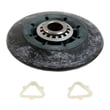


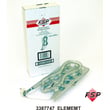
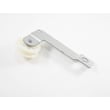
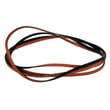
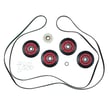
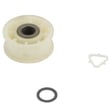
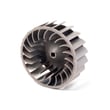
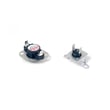
Where can I get Maytag replacement parts?
You can get Maytag replacement parts for your Maytag MED6230RHW1 dryer right from the parts list for this model, which helps ensure the part fits your exact dryer. Common replacements include wear items like rollers, idler parts, fuses, and heating components.
Best way to buy the right part for MED6230RHW1
Using the model-specific parts list reduces ordering mistakes because parts can vary by series and production run.
- Match the full model number MED6230RHW1 from your dryer’s ID tag
- Identify the failed system (heat, drum turning, airflow, controls)
- Choose the exact part by name and part ID
- Replace related wear parts together when you have the cabinet open
- Keep your old part until the repair is complete (for visual match)
Popular Maytag MED6230RHW1 parts customers replace
These are commonly ordered parts for noise, no-heat, and no-tumble symptoms:
- Dryer drum support roller WPW10314173
- Dryer idler pulley W10837240
- Thermal fuse W10909685
- Element, heater 5400w WP3387747
- Dryer blower wheel WP697772
Quick symptom-to-part guide
| Symptom | What it often points to | Example part on this model |
|---|---|---|
| Loud rumbling or thumping | Worn drum support rollers | Dryer drum support roller WPW10314173 |
| Squealing or belt slipping | Idler pulley or spring wear | Dryer idler pulley W10837240 |
| Runs but no heat | Heating circuit issue | Element, heater 5400w WP3387747 |
| Won’t run or stops mid-cycle | Overheat protection opened | Thermal fuse W10909685 |
Why it matters
Ordering by model number and part ID helps you get the correct Maytag dryer parts the first time, which saves time and prevents repeat tear-downs. It also helps you spot related maintenance needs, like airflow restrictions that can overheat a thermal fuse.
Last updated: February 2026
What's the life expectancy of a Maytag dryer?
Most Maytag dryers, including model MED6230RHW1, typically last 10 to 15 years with normal household use. Reaching the high end of that range depends mainly on airflow (venting and lint control) and keeping wear parts like rollers and the idler system in good shape.
Typical lifespan and what affects it
A dryer’s life is usually limited by heat stress and moving-part wear. These factors make the biggest difference:
- Vent restriction (long runs, crushed duct, clogged hood) increases heat and run time
- Lint buildup inside the cabinet or blower housing reduces airflow
- Overloading strains the drum support system and drive components
- High-heat cycles used constantly accelerate wear on thermostats and fuses
- Delayed repairs (squeals, thumps, weak heat) can cause secondary damage
Maintenance that helps you hit 15 years
We recommend these habits for MED6230RHW1:
- Clean the lint screen after every load; replace a damaged screen such as screen W10120998
- Check airflow at the outside vent hood; strong flow helps prevent overheating
- Keep the vent run short and smooth (rigid metal duct is best)
- Don’t overload; the drum should tumble freely
- Address noises early (squeal, rumble, thump) before parts wear through
Common “wear items” that often decide the lifespan
If the dryer is noisy or the drum feels rough, these parts are frequent fixes:
| Symptom | Common cause | Example part on this model page |
|---|---|---|
| Rumble or thump | Worn drum rollers | Dryer drum support roller WPW10314173 |
| Squeal or intermittent chirp | Idler pulley or spring wear | Dryer idler pulley W10837240 |
| No heat or overheating shutdown | Heating or safety components | Element, heater 5400w WP3387747 or thermal fuse W10909685 |
Why it matters
A dryer that takes longer to dry runs hotter and longer, which shortens the life of the heater, thermostats, and motor. Keeping airflow strong is the simplest way to protect performance and extend the service life.
For more maintenance and efficiency tips, use our DIY guide: how to keep a dryer clean and economical.
Last updated: February 2026
How to tell if a dryer thermal fuse is blown?
On your Maytag dryer model MED6230RHW1, a blown thermal fuse usually shows up as a dryer that will not run at all (or runs with no heat on some setups). The sure way to tell is a continuity test with a multimeter; a good fuse reads near 0 ohms, and a blown fuse reads OL or no continuity.
Quick symptoms that point to a blown thermal fuse
- Dryer will not start even though the control panel lights up
- Motor hums briefly then stops (some cases)
- Dryer runs but does not heat (depends on design and which safety opened)
- Problem happened after a long dry time or very hot cabinet
- Vent hood outside has weak airflow
How we test a thermal fuse (basic method)
- Unplug the dryer (or switch off the breaker).
- Access the fuse (commonly on the blower housing or exhaust duct area).
- Pull the wire connectors off the fuse terminals (do not pull on the wires).
- Set the meter to continuity or lowest ohms.
- Touch a probe to each terminal.
What the meter reading means
| Meter result | What it means | What to do next |
|---|---|---|
| Beep or ~0 to 1 ohm | Fuse is good | Check venting, thermostat, heater circuit |
| OL, infinite, or no beep | Fuse is blown | Replace the fuse and fix the overheating cause |
Parts that are commonly involved on MED6230RHW1
If the thermal fuse is blown, we treat it as an overheating warning and address airflow first.
- Replace the fuse with the correct part for this model: thermal fuse W10909685
- If you are also chasing an overheating condition, inspect the heater safety parts such as the dryer high-limit thermostat WP3391914
Why it matters
A thermal fuse is a one-time safety device. If you replace it without correcting restricted airflow (lint buildup, crushed vent, blocked outside hood), the new fuse can blow again quickly and the dryer can keep overheating.
Prevent it from happening again
- Clean the lint screen every load; replace a damaged screen if needed (example: screen W10120998)
- Verify strong airflow at the outside vent hood
- Clean the full vent run (dryer outlet to outside)
- Avoid long, kinked, or crushed flexible venting
- Do not overload; heavy loads reduce airflow through the drum
Last updated: February 2026