Installation guide
 Owner’s manual



How much to replace a whirlpool dryer motor?
Replacing the drive motor in a Whirlpool dryer like model WED8500DC4 typically costs $250 to $700 total (parts plus labor). The biggest swing is whether you hire service and whether other worn drive components (belt, idler, rollers) are replaced during the same teardown.
These are common ranges for Whirlpool electric dryers; your final total depends on local labor rates and the exact motor used in WED8500DC4.
| Cost item | Typical range | Notes |
|---|---|---|
| Drive motor (part only) | $120 to $300 | Price varies by OEM motor version and supplier |
| Labor (install) | $130 to $350 | Often 1 to 2.5 hours plus setup/testing |
| Service call/diagnostic | $0 to $120 | Sometimes credited toward the repair |
- Motor price for your exact model: confirm the correct motor by model lookup and diagram.
- Access and installation: tight laundry closets, stacked installs, or long vent runs add time.
- Extra parts replaced “while it’s open”: prevents repeat noise or belt issues.
- Root cause: a no-start symptom is often a thermal fuse, door switch, or control issue, not the motor.
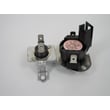
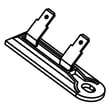
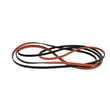
If the dryer is already opened up, we recommend inspecting these wear items and replacing any that are noisy, loose, or worn:
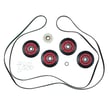
- Dryer repair kit 4392067
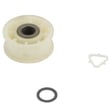
- Dryer idler pulley W10837240
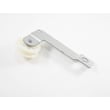
- Dryer drum support roller WPW10314173
- Belt-4 rib W10849499
A motor replacement is labor-heavy; replacing worn rollers, belt, or idler at the same time reduces the chance of paying for a second teardown soon after the motor is installed.
Use the parts diagrams and safety guidance in the WED8500DC4 owner’s manual to identify the correct drive motor for your exact configuration and to review safe disassembly basics.
Last updated: February 2026
What are the common problems with whirlpool dryers?
Common Whirlpool dryer problems include a dryer that will not start, no heat, long dry times from venting issues, unusual noises (thumping or rattling), and a drum that will not tumble. For Whirlpool model WED8500DC4, our WED8500DC4 owner's manual covers the most common symptoms and quick checks.
- Dryer will not heat (often power supply, fuses/breakers, or gas valve issues)
- Long dry times (restricted or incorrect venting, too many turns, or wrong vent size)
- Unusual noise (thumping after sitting, rattling from small items in the drum area)
- Poor automatic drying results (dryer not level or clothes not contacting moisture sensors)
- Steam cycle noises (humming/whining from the water pump during Steam functions)
- Confirm power: Electric dryers typically need a 240-volt supply; a tripped breaker can leave the drum turning with no heat.
- Check venting: Use 4 in. (102 mm) vent material; keep the run as short and straight as possible.
- Level the dryer: An unlevel dryer can affect automatic cycles and sensor contact.
- Listen to the noise type:
- Thumping after long storage is normal and usually fades.
- Rattling often points to a small object caught near the drum edges.
- Steam cycle setup: If using Steam features, verify the water inlet hose is connected and the water supply is on.
| Symptom | Common suspect part | Example part for WED8500DC4 |
|---|---|---|
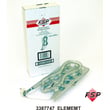
| No heat | Heating circuit component | Dryer heating element WP3387747 |
| No heat or shuts off | Overheat protection | Thermal fuse W10909685 |
| Squealing, rumbling, poor tumbling | Drum support wear | Dryer drum support roller WPW10314173 |
| Squeal, belt slack, no tumble | Belt tension issue | Dryer idler pulley W10837240 |
Heat and airflow problems (like a long or restricted exhaust vent) can cause slow drying, overheating, and repeated shutdowns. Catching venting and leveling issues early helps protect key components such as the heating element, thermistor, and thermal fuse.
Last updated: February 2026
What is the capacity of the WED8500DC4?
The Whirlpool WED8500DC4 is a dryer; its capacity is measured in cubic feet (cu. ft.) and is listed in the model’s literature and specifications. For the exact capacity for your unit, we use the specifications shown in the WED8500DC4 owner's manual.
Check these common places where Whirlpool lists dryer capacity:
- The specifications section in the WED8500DC4 owner's manual
- The model/serial tag (capacity is sometimes listed with other ratings)
- The product description/spec sheet for the exact model number (WED8500DC4)
The number 5.3 cu. ft. is a very common washer capacity figure and is often associated with Whirlpool top-load washers, not dryers. For WED8500DC4, treat it as a dryer model and confirm the cu. ft. rating in the manual.
| Appliance type | Capacity is usually shown as | Typical range |
|---|---|---|
| Electric dryer (like WED8500DC4) | cu. ft. drum volume | ~6.5 to 9.0 cu. ft. |
| Top-load washer | cu. ft. tub volume | ~3.5 to 6.0 cu. ft. |
Dryer capacity affects load size, drying time, and airflow. Overloading a dryer can reduce drying performance and increase wear on drum support parts like the dryer drum support roller WPW10314173 and the belt system.
Last updated: February 2026
What is the life expectancy of a Whirlpool Cabrio washer?
A Whirlpool Cabrio washer has a life expectancy of 10 to 14 years with normal household use and routine care. This model page is for the Whirlpool WED8500DC4 Cabrio dryer, so use the washer’s own care guide for washer-specific maintenance; the WED8500DC4 owner’s manual covers dryer operation.
These ranges fit most Whirlpool Cabrio top-load washers in real-world use:
- Light use (1 to 3 loads/week): 13 to 14 years
- Average use (4 to 7 loads/week): 10 to 12 years
- Heavy use (8+ loads/week): 8 to 10 years
- Hard water and detergent overuse: speeds up residue buildup and wear
- Frequent unbalanced loads: increases stress on suspension and drive parts
We recommend these habits because they reduce strain on the tub, bearings, drain system, and motor:
- Use HE detergent and measure carefully
- Keep loads balanced; avoid overstuffing bulky items
- Run a monthly washer-clean cycle (or hot cycle with washer cleaner)
- Leave the lid open between loads to dry out moisture
- Check fill hoses and inlet screens yearly; replace worn hoses
Use age plus repair type to decide where your money goes.
| Washer age | Common situation | Best move |
|---|---|---|
| Under 5 years | Most failures are economical | Repair |
| 5 to 10 years | Depends on total repair cost | Compare costs |
| Over 10 years | Major repairs often exceed value | Replace |
Knowing the 10 to 14 year lifespan helps you plan for downtime and decide when a repair is a smart investment versus putting money into an aging washer.
Last updated: February 2026