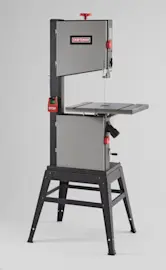
Owner’s manual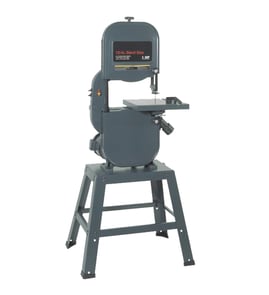



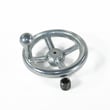
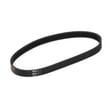
Where can I buy Craftsman replacement parts?
You can buy replacement parts for your Craftsman 113248440 12-inch band saw through Sears PartsDirect by searching the model number and matching the part number from the parts list. For the most accurate match, we recommend using the exploded diagrams and parts list in the owner's manual.
Best way to get the right part for model 113248440
Using the model-specific parts list prevents ordering the wrong item, especially for common hardware and assemblies.
- Find the exact model number on the saw’s ID label and keep it recorded for future use.
- Use the parts list and diagrams to identify the part by part number (not the diagram key number).
- Match the part description to the assembly area (base components, bevel drive, motor mount, stand).
- If the saw has been modified, compare what you see on the tool to the diagram before ordering.
- Order standard hardware locally when the list notes it as standard hardware.
What you will typically need to identify before ordering
| What to collect | Why it matters | Where to find it |
|---|---|---|
| Model number: 113248440 | Ensures the diagram matches your saw | ID label and documentation |
| Part number | This is what ordering systems use | Parts list in the manual |
| Description and location | Confirms you picked the correct item | Exploded view and section title |
Examples of parts categories shown in the manual
The Craftsman 113248440 manual includes repair parts lists for multiple related models and assemblies. Common categories include:
- Stand and leg set components (legs, channels, leveling feet)
- Base components (cord clip, strain relief, cords)
- Bevel drive and motor mount parts (handwheel assembly, bevel lock parts)
Why it matters
Band saw parts often look similar across model families, but small differences in table parts, covers, and electrical cords can affect fit and safe operation. Ordering by the correct part number for model 113248440 avoids returns and downtime.
Last updated: February 2026
What is the 4 inch rule for bandsaw?
The 4-inch rule for a band saw means we keep our hands and fingers at least 4 inches away from the moving blade at all times. On the Craftsman 113248440 12-inch band saw, that usually means using a push stick, push block, or a holding jig anytime the cut would bring your hands close to the blade.
How to apply the 4-inch rule on the Craftsman 113248440
- Set the upper blade guide assembly to just clear the workpiece before you start the cut.
- Keep both hands on the workpiece, but position them so neither hand tracks toward the blade.
- Use gentle, steady feed pressure; do not force the stock into the blade.
- For small parts, narrow rips, or short offcuts, use a push stick or a shop-made sled so your hands stay back.
- Never reach near the blade to clear scraps while the saw is running.
Quick setup checklist (safe cutting basics)
| Setup item | What we want | Why it matters |
|---|---|---|
| Upper guides height | Just above the workpiece | Reduces exposed blade and improves control |
| Blade choice | Match blade width to the cut | Helps prevent binding and sudden workpiece movement |
| Feed rate | Slow and controlled | Keeps hands from creeping toward the blade |
| Work support | Fence, miter gauge, or jig as needed | Stabilizes the cut and improves accuracy |
Blade and speed notes that affect control
Your manual lists two blade speed settings: 3000 FPM for normal wood cutting and 1500 FPM for work needing more control (intricate cuts, plastics, tile, and non-ferrous metals with the recommended blade). Using the slower setting when appropriate helps you maintain control and keep your hands farther from the blade. See the owner's manual for the speed-change procedure and recommended uses.
Why it matters
Most band saw injuries happen when a hand slips, the workpiece twists, or the operator tries to guide a small piece too close to the blade. The 4-inch rule builds in a safety buffer so a minor mistake does not become a severe injury.
Last updated: February 2026
What is the 3-tooth rule for bandsaws?
The 3-tooth rule means you choose a band saw blade (TPI) so at least three teeth are in the workpiece at all times during the cut. On the Craftsman 113248440 12-inch band saw, this helps prevent tooth stripping, rough cuts, and premature blade wear; it also improves chip clearance.
How to apply the 3-tooth rule (quick method)
- Measure the material thickness at the cut.
- Pick a blade TPI that keeps 3 or more teeth engaged.
- If the cut loads up with sawdust or melts plastic, go to a coarser TPI; if the cut chatters or snags thin stock, go to a finer TPI.
Simple TPI starting points
- 1/8 to 1/4 inch thick: 14 to 24 TPI
- 1/4 to 1/2 inch thick: 10 to 14 TPI
- 1/2 to 1 inch thick: 6 to 10 TPI
- Over 1 inch thick (resawing): 2 to 4 TPI (often skip tooth or hook tooth)
Why the rule matters
When too few teeth are engaged, each tooth takes too big a bite, which can strip teeth and make the blade grab. When too many teeth are engaged, the gullets cannot clear chips, which overheats the blade and leaves a wavy, burnished cut.
Setup checks that make the rule work better
Even with the right TPI, blade setup controls cut quality. We recommend these basics from the owner's manual:
- Unplug the saw and remove the switch key before adjustments.
- Set the upper blade guide and guard to just clear the workpiece.
- Make sure blade teeth point downward toward the table.
- Adjust guides so they sit about 1/32 inch behind the gullets (so teeth do not hit the guides).
- Set correct blade tension and confirm tracking before cutting.
Speed selection on model 113248440
This model has two blade speeds; match speed to material for better control.
| Material or task | Recommended approach | Typical blade choice |
|---|---|---|
| Basic wood cutting, resawing | Higher speed | Skip tooth, hook tooth, or regular tooth |
| Intricate wood cutting, plastics, non-ferrous metals | Lower speed for control | Finer TPI (often around 15 TPI for non-ferrous) |
Last updated: February 2026
How do I know the size of my bandsaw blade?
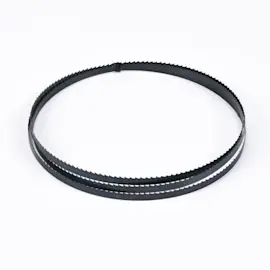
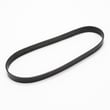
For your Craftsman 113248440 12" band saw, blade “size” means the blade length, width, and teeth per inch (TPI). We measure length by tracing one full loop of the blade; we measure width across the blade from tooth tip to back edge, then count TPI to match the cut you want. See the 113248440 owner's manual for the blade width range this saw supports.
What to measure (and how)
- Blade length (loop length): Unplug the saw, remove the blade, coil it safely, then lay it flat. Mark a starting point (often the weld) and use a tape measure to follow the blade edge until you return to the mark.
- Blade width: Measure from the tip of a tooth to the back of the blade.
- TPI: Count how many teeth are in 1 inch; common woodworking blades are often in the 3 to 14 TPI range depending on the cut.
Model-specific blade width range (113248440)
The manual for model 113248440 states this band saw comes equipped with a 1/4-inch blade and can use blades from 1/8-inch to 1/2-inch wide.
| Spec you need | What it affects | What to do next |
|---|---|---|
| Length | Whether the blade fits around both wheels | Measure the full loop length before ordering |
| Width (1/8" to 1/2") | Curve cutting vs. straight resawing | Choose width based on the type of cuts you make |
| TPI | Cut speed and finish quality | Match TPI to material thickness and desired finish |
Safety and setup notes that matter
The manual calls out key safety steps when handling or changing blades:
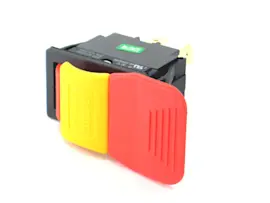
- Unplug the saw, turn the switch off, and remove the switch key before removing guards or changing the blade.
- Do not wear gloves when working around the blade.
- Remove jewelry, secure loose clothing, and tie back long hair.
- Install the blade with the teeth pointing downward toward the table.
- After changing blade width, re-check tracking, guides, thrust bearings, and tension.
Why it matters
Getting the correct length prevents a blade that cannot reach around both wheels; choosing the right width and TPI reduces blade breakage, improves tracking, and gives cleaner, safer cuts.
Last updated: February 2026
What is the specs of the Craftsman 12 inch bandsaw 113248440?
The Craftsman 12-inch band saw model 113248440 is built around a 12-inch throat (cutting width) and a maximum cutting height of about 6 inches. For the exact blade size range, electrical details, and adjustment specs for your configuration, use the 113248440 owner's manual.
Core specs most owners look for
These are the key performance and setup specs to confirm before buying blades, setting guides, or building a stand:
- Throat capacity: 12 inches
- Max cutting height: about 6 inches
- Blade size: length and width range (varies by this Craftsman 12-inch series setup)
- Table: size and bevel (tilt) range for angled cuts
- Motor and power: horsepower, voltage, switch and cord routing
- Overall footprint: bench or stand-mounted dimensions
What the manual confirms for model 113248440
The documentation explicitly lists model 113.248440 in the covered model group and includes illustrated parts lists for major assemblies. That matters because it lets you match your saw’s exact build (drive, base, bevel drive, motor mount) before you order parts or troubleshoot.
| Manual section/area | What you get | When you use it |
|---|---|---|
| Drive assembly parts list | Wheels, tires, bearings, blade tension parts | Tracking problems, vibration, worn tires/bearings |
| Base components parts list | Table/front cover items, cord and switch routing parts | Stability issues, switch/cord repairs |
| Bevel drive and motor mount | Bevel lock/handwheel parts, motor mount hardware | Table will not hold angle, bevel slips |
Why it matters
On a band saw, the throat and cutting height tell you what stock you can physically cut; the blade length and width range determine whether the saw can tension and track the blade correctly for safe, accurate cuts.
Last updated: February 2026