Owner’s manual
 Error Codes



What is the most common problem with GE refrigerators ice maker?
On the GE PFSS6PKXASS, the most common ice maker problem is a water supply issue: the water is turned off, the line is not connected, the freezer is too warm, or the filter is restricted. These conditions prevent proper fills and slow or stop ice production.
Quick checks we recommend first
- Confirm the household water supply valve to the refrigerator is fully open.
- Make sure the water line is connected and not kinked behind the refrigerator.
- Verify the ice maker is turned ON at the control (LCD models use the on-screen ice maker setting).
- Give a new install or a recent shutoff 12 to 24 hours to start making ice.
- Dump the first few batches after restoring water to clear the line.
- If cubes are piled up or jammed, level the bin by hand and clear stuck cubes.
What “normal” looks like on this model
The PFSS6PKXASS ice maker typically makes 7 cubes per cycle and about 100 to 150 cubes in 24 hours, depending on freezer temperature, room temperature, and door openings. Details and control steps are in the PFSS6PKXASS owner’s manual.
| Symptom | Most likely cause | What to do |
|---|---|---|
| No ice at all | Water supply off or not connected | Turn on water, confirm line connection |
| Small or hollow cubes | Restricted filtration or low pressure | Replace filter, confirm strong flow |
| Ice maker stops with full bin | Cubes piled up hitting shutoff arm/sensor | Level cubes, clear bin |
| Slow ice production | Freezer too warm or frequent door openings | Let temps stabilize, reduce openings |
Parts that commonly affect ice production
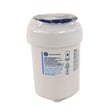
If water flow is weak at the dispenser or ice is small, a fresh filter often restores normal fills. For this model, use the GE refrigerator water filter MWFP.
Why it matters
Ice makers are simple systems: they need cold temperatures and a steady water fill. Fixing the water supply, temperature, or a jam usually restores ice production without replacing the ice maker assembly.
Last updated: February 2026
What does upside down f and f mean on GE fridge?
On the GE PFSS6PKXASS refrigerator display, an upside-down f with an F typically indicates TurboFreeze is turned on (rapid freezer cooling), not a failure code. It is a feature used after loading warm food or after a power outage; it runs for a limited time, then returns to normal settings.
What to do right now
- Press TurboFreeze once to toggle it off (or on), then confirm the indicator clears.
- If you see a similar symbol with C instead of F, that is TurboCool for the fresh food section.
- Close both doors fully; the Home screen indicators can change when the door is open.
- Wait a few minutes and recheck the display; the feature is designed to return to the prior setting automatically.
- If temperatures are still off after the feature is off, check for blocked air vents and overpacked shelves.
TurboFreeze vs. TurboCool (quick comparison)
| Display indicator | Feature name | What it boosts | Typical use case |
|---|---|---|---|
| upside-down f + F | TurboFreeze | Freezer cooling | Adding lots of frozen food, warm items, post-outage recovery |
| upside-down f + C | TurboCool | Fresh food cooling | Loading groceries, cooling leftovers faster |
Why it matters
Turbo modes can make the refrigerator sound different because the compressor and fans may run immediately and longer than usual. That is normal operation, but it can be confusing if the setting was turned on accidentally.
Helpful model-specific references
- Use the control descriptions and settings screens in the PFSS6PKXASS owner’s manual to confirm what the indicator means on your exact display style.
- If you are troubleshooting other display messages, use the GE refrigerator error codes reference to separate feature indicators from true fault codes.
Last updated: February 2026
What is the average lifespan of a GE profile refrigerator?
GE Profile refrigerators typically last 10 to 15 years. For your GE PFSS6PKXASS bottom-mount refrigerator, regular maintenance (clean airflow, good door sealing, and timely filter changes) is what most often determines whether you land closer to 10 years or push beyond 15.
Typical lifespan and what affects it
A refrigerator’s life is mostly driven by compressor run time, airflow through the condenser area, and how well the doors seal.
- Usage and load: frequent door openings and overpacking increase run time
- Airflow and cleaning: dusty condenser areas make the sealed system work harder
- Door seal condition: leaks cause temperature swings and longer run cycles
- Water and ice system upkeep: clogged filters and low water flow strain the dispenser and ice maker
- Room conditions: hot garages and tight built-ins shorten life
Maintenance checklist that helps you reach the high end of the range
Use your PFSS6PKXASS manual for model-specific care and access instructions.
- Vacuum dust from vents and the condenser area (unplug first)
- Keep food from blocking interior air returns
- Confirm doors close fully and stay aligned
- Replace the water filter on schedule (a restricted filter reduces flow)
- Keep the freezer drawer sealing surfaces clean and dry
Common “age-related” parts and what they do
These are frequent service items on many GE refrigerators as they get older.
| Symptom | Often involved system | Example part for PFSS6PKXASS |
|---|---|---|
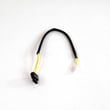
| Warm fresh food section | Temperature sensing or airflow | Refrigerator temperature sensor WR23X10582 |
| No ice or intermittent ice | Ice maker or water supply | Refrigerator ice maker assembly WR30X10097 |
| Slow water dispensing | Filtration or inlet valve supply | GE refrigerator water filter MWFP |
Why it matters
Knowing the 10 to 15 year lifespan range helps you decide when maintenance is worth doing versus when repeated cooling or ice maker issues point to end-of-life wear (especially in the sealed system).
Last updated: February 2026
What is the most common problem with a GE refrigerator?
For the GE PFSS6PKXASS bottom-mount refrigerator, the most common issues we see are cooling problems (not cold enough or temperature swings) and ice maker or dispenser troubles. These usually trace back to airflow restrictions, dirty condenser coils, door sealing problems, or a failing fan, sensor, or control.
Most common symptoms and what they usually mean
- Fresh food section warm, freezer OK: damper or airflow issue, blocked vents, or a fan problem.
- Both sections warm: dirty condenser coils, condenser fan issue, or sealed system/compressor problem.
- Ice maker not making ice: water supply issue, freezer too warm, or ice maker shut off.
- Ice tastes bad or smells: food odors, dirty interior, or old filter.
- Moisture on cabinet or inside: door left open, gasket leak, or high humidity.
Quick checks we recommend first (no tools)
- Confirm doors close fully and nothing is holding them open.
- Set temperatures to normal and give the refrigerator 24 hours to stabilize after changes.
- Make sure air vents inside are not blocked by food containers.
- Clean condenser coils (dust buildup is a top cause of weak cooling).
- If ice is the issue, verify the ice maker is turned on; the control instructions are in the PFSS6PKXASS owner’s manual.
Parts that commonly solve these problems
| Problem area | Common culprit | Example part for this model |
|---|---|---|
| Temperature swings | Sensor reading wrong | Refrigerator temperature sensor WR23X10582 |
| No ice or intermittent ice | Ice maker failure | Refrigerator ice maker assembly WR30X10097 |
| Bad-tasting water/ice | Old or clogged filter | GE refrigerator water filter MWFP |
Why it matters
Cooling and ice maker complaints are often connected. Poor airflow or warm freezer temperatures can stop ice production, and an overdue water filter can cause slow dispensing and off-tastes. Addressing the basic airflow, cleanliness, and settings first prevents unnecessary part replacement.
Last updated: February 2026
How do you run a diagnostic on a GE refrigerator?
On the GE PFSS6PKXASS bottom-mount refrigerator, diagnostics are handled through the control display and the built-in error indications; the exact service-test key sequence varies by GE platform. We use the PFSS6PKXASS manual to identify the correct control features and then confirm the problem using symptoms, settings checks, and any displayed fault information.
What to do first (safe checks that act like a “diagnostic”)
These steps isolate most cooling, ice, and dispenser problems without entering a hidden test mode:
- Verify both fresh food doors and the freezer drawer close and seal fully.
- Confirm temperature settings are at normal targets (fresh food about 37°F, freezer about 0°F).
- Use TurboCool or TurboFreeze only for short recovery after loading food.
- Check the water filter status on the display; replace if it indicates REPLACE.
- If ice is slow, allow a full 24 hours after any setting change or power outage.
Using the control panel information on PFSS6PKXASS
Your model’s display provides useful status screens (for example, water filter status and settings). Use those screens to narrow the issue before replacing parts.
| Symptom | What to check on the control/display | What it points to |
|---|---|---|
| Weak water flow | Water filter status; dispenser flow | Clogged filter, air in line, supply issue |
| No ice | Icemaker setting ON; freezer temp | Icemaker off, freezer too warm, fill problem |
| Temperature swings | Settings; door left open; Turbo modes | Airflow/door issue, sensor/control issue |
When a part is the likely fix
If the checks above confirm a component problem, these are common matches:
- Water tastes bad or flow is restricted: replace the refrigerator water filter MWFP.
- Erratic temperatures or false readings: test/replace the refrigerator temperature sensor WR23X10582.
- No ice with correct freezer temp and water supply: inspect the refrigerator ice maker assembly WR30X10097.
Why it matters
A structured diagnostic approach prevents unnecessary part replacement and helps separate a settings, airflow, or water-supply issue from a failed control, sensor, or icemaker.
Last updated: February 2026