Owner’s manual
 Error Codes



What is the most common problem with Samsung refrigerators?
The most common problems we see on Samsung refrigerators like model RF26HFENDBC are cooling issues and ice maker problems. Cooling trouble is often tied to airflow restrictions, frost buildup from a defrost-system issue, or a failed sensor or fan; ice issues are frequently related to water supply and temperature control.
Most common symptoms customers notice
- Refrigerator section warms up but freezer seems OK
- Frost or ice buildup on the evaporator cover area
- Ice maker stops producing ice or makes small/hollow cubes
- Water leaking or puddles (often from a drain issue)
- Unusual fan noise from the fresh food compartment
Quick checks that solve many “common problems”
These are safe, high-impact checks we recommend before replacing parts:
- Confirm airflow: do not block interior air holes with food packages.
- Power reset: unplug the refrigerator, wait at least 5 minutes, then plug it back in.
- Water supply basics (ice maker): make sure the shutoff valve is fully open and the line is not kinked.
- Water pressure: the ice maker typically needs 20 to 125 psi to operate properly.
- Vacation/low use: if you will not use water or ice for an extended time, close the water valve to prevent leaks.
Common causes and likely repair direction
| Problem area | What it affects | What we check first | Parts that often relate |
|---|---|---|---|
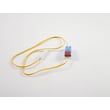
| Defrost system | Frost buildup, warm fridge, fan noise | Heavy frost behind interior panel | Refrigerator defrost heater DA47-00244U, refrigerator protector DA47-00243B |
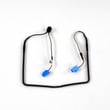
| Temperature sensing | Temps swing, warm sections, odd cycling | Sensor readings and placement | Refrigerator temperature sensor DA32-10104N |
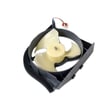
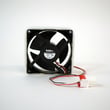
| Evaporator fan/cover | Poor airflow, noise, warm fridge | Fan running, ice obstruction | Refrigerator fresh food evaporator cover and fan assembly DA97-12609B |
| Ice maker assembly | No ice, jammed ice, inconsistent harvest | Freezer temp, fill, mold icing | Samsung refrigerator ice maker assembly DA97-07603B |
Why it matters
Cooling and ice maker complaints often share the same root cause: temperature control and airflow. When airflow is restricted or frost builds up, the refrigerator compartment warms, the ice maker performance drops, and you can also see leaks from drain-related icing.
Where to confirm model-specific steps
For control settings, troubleshooting steps, and safety guidance specific to RF26HFENDBC, use the RF26HFENDBC owner's manual. For display or diagnostic codes, we also use the guide Samsung rf26 model french door refrigerator error codes.
Last updated: February 2026
What is the difference between force defrost RD and FD?
On Samsung model RF26HFENDBC, RD (refrigerator defrost) runs a forced defrost focused on the fresh food (refrigerator) evaporator area, while FD (forced defrost) runs a broader defrost cycle intended to clear heavier frost conditions that can affect multiple cooling and ice-making components. For control and service details, use the owner's manual.
When to use RD vs FD
Use the option that matches where the frost or airflow problem is happening.
- Choose RD when the refrigerator section is warm, airflow is weak in the fresh food compartment, or you suspect frost on the fresh food evaporator cover.
- Choose FD when you have widespread symptoms such as recurring heavy frost, freezer airflow issues, or ice maker area freezing that needs a deeper defrost.
- If temperatures are off after defrosting, reset to the recommended targets (about 37°F refrigerator and 0°F freezer) and allow 24 hours to stabilize.
What you should expect during a forced defrost
A forced defrost cycle is a service mode; it can include fan changes, heater operation, and audible alerts depending on the control setup.
- The refrigerator may beep or change display behavior while the mode is active.
- Water may drip to the drain system as frost melts.
- You should see improved airflow after the cycle if frost buildup was the cause.
- If frost returns quickly, a defrost system part may be failing.
Quick comparison
| Mode | What it targets | Best for | If it does not help |
|---|---|---|---|
| RD | Fresh food evaporator area | Refrigerator section warming, fresh food coil icing | Check defrost heater, sensor, or evaporator fan issues |
| FD | Broader defrost clearing | Heavy frost patterns, freezer and ice maker related icing | Check defrost heater, defrost thermostat, or temperature sensing |
Why it matters
Using the right defrost mode saves time and helps you diagnose the real problem. If RD improves refrigerator temps but FD is repeatedly needed, that points to an underlying defrost control, heater, or sensor issue rather than a one-time ice blockage.
Parts that commonly relate to repeat frost problems
If forced defrost helps only temporarily, these model-compatible parts are often involved:
- Refrigerator defrost heater DA47-00244U
- Refrigerator protector DA47-00243B
- Refrigerator temperature sensor DA32-10104N
Last updated: February 2026
Why is my freezer not freezing at the bottom?
When the bottom of the freezer on your Samsung RF26HFENDBC is warmer than the top, cold air is not circulating evenly. The most common causes are blocked air vents, frost or ice restricting airflow, or a cooling fan or defrost problem that lets ice build up and choke off air movement. See the airflow and loading guidance in the owner's manual.
Quick checks that fix most “warm bottom” complaints
- Make sure packages are not blocking the freezer air vents; the manual notes that blocked vents prevent air from circulating.
- Leave space between items so air can move freely.
- Confirm the freezer drawer closes fully; a drawer that does not seal well can cause temperature swings and frost.
- Reduce overloading; the manual warns that overloading the bottom basket/top drawer can prevent proper closing and lead to frost build-up.
- Set the freezer temperature a little colder and allow 24 hours to stabilize.
What to inspect if the problem keeps coming back
If the bottom warms up again after you clear space or defrost, focus on airflow and defrost components.
- Evaporator fan area: If the fan is weak or blocked by ice, cold air tends to stay near the top.
- Defrost system: Heavy frost on the evaporator cover or back wall points to a defrost issue.
- Drain and ice buildup: A frozen drain can contribute to recurring ice that interferes with airflow.
Parts that commonly relate to uneven freezer cooling
| Symptom you notice | Likely area | Example part on this model page |
|---|---|---|
| Frost/ice buildup, warming returns | Defrost system | Refrigerator defrost heater DA47-00244U |
| Temperature seems inaccurate or swings | Temperature sensing | Refrigerator temperature sensor DA32-10104N |
| Ice keeps forming near covers/vents | Drain path | Refrigerator cabinet drain tube assembly DA97-04049H |
Why it matters
A warm lower freezer can lead to soft ice cream, thawing at the bottom basket, and extra frost. Fixing airflow and drawer sealing helps the refrigerator hold steady temperatures and reduces strain on the compressor.
Last updated: February 2026