 Owner’s manual





What is the tonnage of CK18-1?
For the Goodman CK18-1 outdoor air conditioner unit, the “18” in the model number typically indicates about 18,000 BTU/hr of cooling, which equals 1.5 tons (since 1 ton = 12,000 BTU/hr). Confirm the exact capacity on the unit data plate or in the CK18-1 owner's manual.
Quick conversion (BTU to tons)
| Cooling capacity | Equivalent tons |
|---|---|
| 12,000 BTU/hr | 1.0 ton |
| 18,000 BTU/hr | 1.5 tons |
| 24,000 BTU/hr | 2.0 tons |
How we recommend confirming tonnage for CK18-1
- Check the outdoor unit rating label for “Cooling capacity” or “BTU/h”
- Look for AHRI match information if your system is a matched condenser + indoor coil
- Verify the model number characters exactly (CK18-1 vs similar CKL18 variants)
- Use the CK18-1 owner's manual to cross-check the rated capacity and electrical specs
Why it matters
Correct tonnage affects comfort and efficiency. An oversized system can short-cycle and leave humidity high; an undersized system can run constantly and still not keep up on hot days.
Related repair note (when capacity seems “low”)
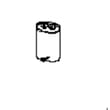
If the unit runs but cooling feels weak, the issue is often airflow, electrical, or a failing start/run component rather than “lost tonnage.” On this model, a common electrical wear item is the dual run capacitor; if testing shows it is out of spec, replace it with the correct rating such as the Goodman Goodman dual capac 25/5 mfd 370v B94576000 when it matches your unit label.
Last updated: January 2026
What is the average lifespan of a Goodman AC unit?
Most Goodman central AC outdoor units like model CK18-1 typically last 12 to 15 years. With correct installation, clean airflow, and yearly service, it’s common to reach 15 to 20 years before major component wear (compressor, fan motor, capacitor) makes replacement more cost-effective.
Typical lifespan ranges (what to expect)
Lifespan depends more on installation quality and operating conditions than brand name alone.
| Scenario | Typical lifespan | What usually fails first |
|---|---|---|
| Minimal maintenance, dirty coil, restricted airflow | 8 to 12 years | Capacitor, contactor, fan motor |
| Normal maintenance (annual check, clean coil) | 12 to 15 years | Capacitor, fan motor |
| Excellent maintenance, mild climate, correct sizing | 15 to 20 years | Compressor or refrigerant-related issues |
What shortens the life of an outdoor AC unit
- Dirty condenser coil causing high head pressure and overheating
- Low airflow from a clogged indoor filter or blocked return vents
- Oversized or undersized system (short cycling or long run times)
- Loose electrical connections and voltage issues
- Salt air, lawn chemicals, or constant debris around the cabinet
Maintenance that helps you get the full lifespan
We recommend these practical steps for a Goodman outdoor unit:
- Replace or clean the indoor air filter regularly (often every 1 to 3 months)
- Keep 18 to 24 inches of clearance around the outdoor unit
- Rinse the outdoor coil gently (power off first) to remove lint and grass
- Schedule a yearly HVAC tune-up to check refrigerant charge and electrical readings
- If the unit struggles to start or the fan hums, test the capacitor and wiring
A common wear item is the dual run capacitor; for this model’s parts list, see the Goodman dual capac 25/5 mfd 370v B94576000.
Why it matters
Once an AC unit gets into the 12 to 15-year range, small issues (weak capacitor, dirty coil, worn fan motor) can snowball into compressor stress. Preventive maintenance usually costs far less than repeated no-cool breakdowns.
For model-specific service and wiring details, use the CK18-1 manual.
Last updated: January 2026
How to check AC model number?
To check the AC model number on a Goodman CK18-1 outdoor unit, we look for the rating plate or data label on the cabinet. The label lists the model number (CK18-1) and usually the serial number, electrical ratings, and refrigerant information.
Where to look on a Goodman outdoor unit
Check these common spots on an air conditioner heat pump outside unit:
- On the side panel of the cabinet (most common)
- Inside the service panel where the electrical components are (after power is off)
- Near the refrigerant line connections (suction and liquid lines)
- On the inside of the access door or control box cover
- On the base pan edge or inside the corner of the cabinet
What the label typically shows
Most outdoor-unit data labels include:
- Model number (example: CK18-1)
- Serial number (used to identify production date and exact build)
- Voltage and minimum circuit ampacity (MCA)
- Maximum overcurrent protection (breaker or fuse size)
- Refrigerant type and factory charge
| Label item | What it’s used for | Why you need it |
|---|---|---|
| Model number | Identifies the unit family | Ensures parts match the correct unit |
| Serial number | Identifies the exact build | Helps confirm compatible replacements |
| Electrical ratings | Power requirements | Prevents incorrect capacitor/contactor selection |
Why it matters
For Goodman CK18-1 repairs, the model and serial number help us match the correct parts and specs before troubleshooting issues like a hard-start, fan not running, or compressor not starting.
Helpful next steps
- Compare the label model number to the paperwork you have for the system
- Use the wiring diagram and parts breakdown in the CK18-1 owner's manual
- If you’re diagnosing an electrical problem, use safe test methods from how to use a multimeter to test electrical parts video
Last updated: January 2026
What are common problems with Goodman air conditioners?
Common problems with a Goodman CK18-1 outdoor air conditioner or heat pump unit include not cooling well, the outdoor fan not running, breaker trips, icing, and unusual buzzing or rattling; the most frequent causes are airflow restrictions, dirty coils, and electrical component wear such as a weak run capacitor.
Most common symptoms and likely causes
- Weak or warm air indoors: clogged return filter, blocked supply vents, dirty indoor coil, low refrigerant
- Outdoor unit runs but cools poorly: dirty condenser coil, restricted airflow around the unit, failing capacitor
- Outdoor fan not spinning: failed dual run capacitor, bad fan motor, loose wiring
- Unit will not start: tripped breaker, blown fuse, failed contactor, failed capacitor
- Ice on lines or coil: low airflow (filter/coil), low refrigerant, thermostat issues
- Noises (buzzing, clicking, rattling): loose panels, debris in fan, failing contactor, failing motor bearings
Quick checks we recommend first (safe, no tools)
- Set thermostat to Cool and lower setpoint 3 to 5 degrees; confirm indoor blower is running.
- Replace or clean the return air filter (a top cause of icing and poor cooling).
- Clear vegetation and debris; keep at least 24 inches of open space around the outdoor unit.
- Look for obvious issues: damaged insulation on the refrigerant line, loose access panels, or heavy dirt on the coil.
- If the breaker trips repeatedly, leave it off and move to the service section below.
When a part is commonly involved
A weak dual run capacitor is a frequent cause of hard starting, humming, or an outdoor fan that will not spin.
| Symptom | Common part involved | What you may notice |
|---|---|---|
| Outdoor fan will not start | Dual run capacitor | Humming, fan blade needs a push (do not do this) |
| Unit clicks but will not run | Contactor or capacitor | Rapid clicking, intermittent starts |
| Breaker trips on startup | Capacitor, compressor, wiring | Trips immediately or within seconds |
If you are diagnosing a start or fan issue, match the microfarad (MFD) rating and voltage to the original part; for this model’s common capacitor option, see Goodman Goodman dual capac 25/5 mfd 370v B94576000.
Why it matters
Airflow and electrical issues can look similar at the thermostat, but the fix is very different. Starting with filter, coil cleanliness, and basic power checks prevents unnecessary parts replacement and helps protect the compressor.
Where to find model-specific specs
For wiring diagrams, electrical ratings, and service procedures for the Goodman CK18-1, use the CK18-1 owner’s manual.
Last updated: January 2026