Installation guide



Where can I order Maytag washing machine parts?
You can order replacement parts for your Maytag commercial washer model MVW18PDBWW0 directly from Sears PartsDirect by matching your model number to the exact part you need, then ordering the part by its part ID. For model-specific installation details, use the MVW18PDBWW0 installation guide.
How we recommend ordering the right part
- Confirm the full model number on the washer’s model tag: MVW18PDBWW0
- Identify the failed system (drain, drive, fill, controls)
- Match the part by part ID (best match) and part name
- Compare your old part to the listing (connectors, ports, mounting points)
- Order any one-time-use hardware you remove (clamps, screws) if needed
Common MVW18PDBWW0 parts customers order
Here are examples of model-matched parts that are commonly replaced:
| Symptom | Likely system | Example part for MVW18PDBWW0 |
|---|---|---|
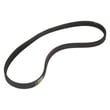
| Won’t spin or squeals | Drive system | Washer drive belt WPW10006384 |
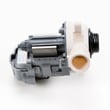
| Won’t drain | Drain system | Washer drain pump assembly WPW10276397 |
| Won’t fill or fills slowly | Water inlet | Washer water inlet valve WPW10486031 |
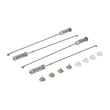
| Loud banging or excessive vibration | Suspension | Damper assembly W10780046 |
Tips to avoid ordering the wrong part
- Use the part ID exactly as listed (example: WPW10276397, not just the printed number on the pump)
- If multiple versions exist, match by connector style and mounting holes
- For electrical parts, disconnect power before inspecting wiring
- If you are troubleshooting wiring, follow safe test practices from how to use a multimeter to test electrical parts video
Why it matters
Commercial washers like the Maytag MVW18PDBWW0 often have model-specific revisions; ordering by model number and part ID helps ensure fit, proper operation, and fewer returns.
Last updated: February 2026
What is the most common problem with a Maytag washer?
Drain and spin problems are the most common issues we see on Maytag washers like model MVW18PDBWW0; the washer may not drain fully, may stop before spin, or may leave clothes soaking wet. The usual causes are a restriction in the drain path, a failing drain pump, or a worn drive belt.
Quick checks we recommend first
- Unplug the washer for safety, then check the tub for standing water.
- Inspect the drain hose for kinks, crushing, or a clogged standpipe connection.
- Listen during drain: a loud hum with little or no water flow points to a blocked or failing pump.
- If the motor runs but the basket will not spin, check for a worn or slipping belt.
- If the washer shakes excessively, reduce load size and redistribute items; persistent shaking often points to worn suspension components.
Common symptoms and the most likely part to inspect
| Symptom | Most likely area | What to look for |
|---|---|---|
| Won’t drain or drains slowly | Drain system | Hose blockage, debris in pump, weak pump |
| Won’t spin or leaves clothes wet | Drive system | Slipping belt, pulley issues |
| Loud noise under washer | Pump or pulley | Grinding pump, loose/damaged pulley |
| Excessive vibration | Suspension/load | Overload, uneven load, worn dampers |
Parts that commonly fix drain and spin complaints
For MVW18PDBWW0, these model-matched parts are frequent fixes when symptoms match:
- Washer drain pump assembly WPW10276397 (no drain, slow drain, grinding noise)
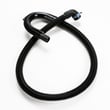
- Washer drain hose W11244231 (kinked, split, restricted drain path)
- Washer drive belt WPW10006384 (won’t spin, weak spin, burning rubber smell)
- Whirlpool washer drive pulley W10721967 (belt wear, squeal, poor spin)
Why it matters
A washer that cannot drain or spin forces the motor and control to work harder, increases cycle time, and can lead to repeat shutdowns. Fixing the drain path or drive components early helps prevent bigger failures like motor or control issues.
For model-specific access panels, hose routing, and service clearances, follow the MVW18PDBWW0 installation guide.
Last updated: February 2026
What's the average lifespan of a Maytag washer?
Most Maytag washers average 10 to 13 years of service life; a Maytag commercial washer like MVW18PDBWW0 often reaches the upper end of that range when it is installed correctly, kept level, and maintained to prevent drain and drive-system wear. See the MVW18PDBWW0 installation guide for setup details that help protect the machine long-term.
Typical lifespan ranges (what to expect)
| Washer type | Typical lifespan | Notes |
|---|---|---|
| Standard residential top-load | 8 to 12 years | Most sensitive to overloading and poor leveling |
| Maytag residential (typical) | 10 to 13 years | Often lasts longer with routine care |
| Commercial-style top-load (like MVW18PDBWW0) | 10 to 15 years | Heavy-duty use still shortens life if maintenance is skipped |
What shortens washer life fastest
- Overloading (stresses the drive belt, pulley, and gear case)
- Running unbalanced loads (wears suspension and tub components)
- Poor draining (pump strain, standing water, odors, corrosion)
- Hard water and excess detergent (buildup, slow drains, residue)
- Ignoring early symptoms (small issues become major failures)
Maintenance that adds years
- Keep the washer level and stable; re-check after moving or floor changes.
- Use HE detergent and measure carefully; too much causes buildup and extra strain.
- Inspect the drain path; a slow drain can point to a weakening pump such as the washer drain pump assembly WPW10276397 or a restricted hose like the washer drain hose W11244231.
- Avoid chronic overloads; split heavy items (blankets, rugs) into smaller loads.
- Address squealing or burning-rubber smells early; they commonly involve the washer drive belt WPW10006384 or the whirlpool washer drive pulley W10721967.
Why it matters
Washer lifespan is mostly about wear per cycle. Good installation, balanced loads, and quick fixes reduce stress on high-wear parts (belt, pulley, drain pump, suspension), which is what typically determines whether a washer lasts 8 years or 13+.
Last updated: February 2026
Is it worth fixing a Maytag washer?
Yes, it’s usually worth fixing a Maytag washer when the problem is a common wear item and the repair cost stays under about half the price of a comparable replacement. For the Maytag MVW18PDBWW0 commercial washer, repairs often make sense because commercial units are built for heavy use and many failures are part-level (belt, pump, valve).
Quick rule of thumb (repair vs. replace)
- Repair when the washer still fills, drains, and powers on, but has noise, slipping, or draining issues.
- Repair when the fix is a single, accessible part (belt, pulley, drain pump, inlet valve).
- Replace when multiple major systems are failing at once (drive system plus leaks plus electrical issues).
- Replace when downtime costs more than the repair (common in shared laundry settings).
- Replace when the tub or cabinet damage is severe (rust-through, cracked outer tub).
Common “worth fixing” repairs on MVW18PDBWW0
These are typical, targeted fixes that often restore normal operation:
- No spin or weak spin: check the washer drive belt WPW10006384 and whirlpool washer drive pulley W10721967
- Won’t drain or drains slowly: inspect the washer drain pump assembly WPW10276397 and drain hose routing
- Won’t fill or fills slowly: test the washer water inlet valve WPW10486031
- Excessive shaking: inspect suspension components such as the damper assembly (if wear is present)
Cost and impact comparison
| Situation | Typical outcome | Usually worth fixing? |
|---|---|---|
| Single-part failure (belt, pump, valve) | Predictable repair, fast turnaround | Yes |
| Repeated breakdowns in short time | Costs stack up, more downtime | No |
| Major drive system issue (motor, gear case, control) | Higher parts cost, more labor | Sometimes |
Why it matters
A commercial washer like the MVW18PDBWW0 is designed for frequent cycles; replacing a straightforward part (like a drain pump or drive belt) often delivers a strong return because it restores reliability without the cost of a full machine replacement.
Before you decide
Use the MVW18PDBWW0 installation guide to confirm access panels, shutoff steps, and any model-specific handling notes; then total up parts plus labor and compare that number to a replacement unit.
Last updated: February 2026