

What causes Genie garage door opener to stop working?
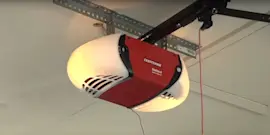
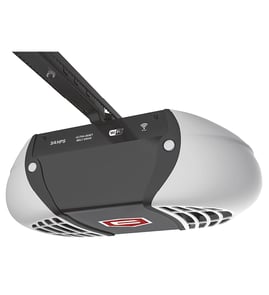
A Genie PRO98S garage door opener usually stops working because the safety sensors are blocked or misaligned, the door is binding (too much resistance), the travel or force settings are off, or the opener has a control or wiring issue. Start with sensors and door movement first.
Quick checks that fix most “stopped working” problems
- Make sure both safety sensor lenses are clean and facing each other; remove dust, cobwebs, or snow.
- Confirm the sensor indicator lights are on and steady; blinking typically points to alignment or obstruction.
- Disconnect the door using the emergency release and lift the door by hand; it should move smoothly and stay about halfway open.
- Check the rail and trolley area for debris, a loose chain/belt, or a jam.
- Replace remote batteries and test the wall control to rule out a transmitter issue.
What the symptoms usually mean
| What you see | Most common cause | What to do next |
|---|---|---|
| Door won’t close, lights blink | Safety sensor problem | Clean, align, and verify wiring at sensors |
| Motor hums, door doesn’t move | Door jam or stripped drive parts | Test door by hand; inspect rail/trolley |
| Starts down then reverses | Force too sensitive or door binding | Lubricate door hardware; adjust force/travel |
| Works from wall button, not remote | Remote/battery or programming | Replace battery; reprogram remote |
Why it matters
A garage door opener is designed to stop or reverse when it senses an obstruction. Fixing sensor alignment and reducing door resistance prevents nuisance stops and helps protect the opener motor, gears, and door hardware.
Next best step for Genie diagnostics
If your PRO98S has diagnostic lights or a fault pattern, match it to the code list in Genie chain and belt-drive error codes (or use Genie screw-drive error codes if your opener is screw-drive). That narrows the problem to sensors, travel limits, force settings, or control circuitry.
Last updated: February 2026
How do I know which garage door opener is compatible?
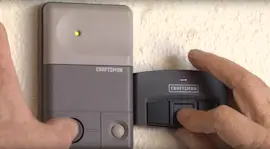
Garage door opener compatibility comes down to the opener’s radio system and safety features, not the door brand. For a Genie PRO98S, the most reliable match is a remote or keypad designed for Genie systems that uses the same “learn/program” method and frequency as your motor unit.
What to check on your existing opener (fast checklist)
- Brand and model on the motor head: Genie PRO98S
- Programming method: does it have a learn/program button (most newer systems) or DIP switches (older systems)
- Remote type: rolling-code style vs. fixed-code style
- Safety sensors: photo eyes at the bottom of the door tracks (required on most modern setups)
- What you’re adding: replacement remote, wireless keypad, wall control, or smart controller
Compatibility guide (what usually works)
| What you want to add | Most likely compatible when… | Common mismatch that blocks pairing |
|---|---|---|
| Replacement remote | It’s made for Genie and matches your opener’s learn/program system | Remote is for a different brand or different code system |
| Universal remote | It lists Genie support and includes Genie programming steps | Opener uses a code system the universal remote does not support |
| Wireless keypad | It’s a Genie-compatible keypad that pairs to the opener head | Keypad is for a different radio platform |
| Smart controller | It supports Genie openers and your opener has standard safety sensors | Controller requires an adapter for certain encrypted systems |
Why it matters
Using the wrong remote or smart controller wastes time and can create “it won’t program” symptoms that look like a bad receiver, logic board, or wall control. Matching the code system first prevents unnecessary parts replacement.
If you’re troubleshooting instead of upgrading
If the opener lights blink or the unit shows an error pattern, use our Genie-specific diagnostics first: Genie chain and belt-drive error codes and Genie screw-drive error codes.
Last updated: February 2026
What's the average lifespan of a Genie garage door opener?
A Genie garage door opener typically lasts 10 to 15 years. With consistent maintenance and a properly balanced door, many openers run closer to 15 to 20 years before wear in the drive system, gears, or electronics makes repair less practical.
Typical lifespan ranges (what to expect)
Most Genie openers, including the PRO98S, fall into these real-world ranges:
| Usage level | Typical lifespan | What usually wears first |
|---|---|---|
| Light (1 to 3 cycles/day) | 15 to 20 years | Safety sensors, wall control, remote issues |
| Average (4 to 8 cycles/day) | 10 to 15 years | Drive components, gear wear, limit/force settings drift |
| Heavy (9+ cycles/day) | 7 to 12 years | Motor/drive wear, carriage/rail wear, control board stress |
Signs your opener is nearing end of life
If you see these symptoms repeatedly, the opener is usually in its final stretch:
- Door reverses or stops even after force and travel are set correctly
- Motor runs but the door barely moves (slipping drive or worn gears)
- Excessive vibration or new grinding noises from the powerhead
- Intermittent operation from the wall control or remotes
- Safety sensor problems that keep returning after alignment and cleaning
Maintenance that extends lifespan
These steps reduce strain on the motor and drive system and help a PRO98S last longer:
- Test door balance; a heavy door shortens opener life quickly
- Keep photo eyes clean and aligned; secure the sensor brackets
- Tighten rail and header mounting hardware to reduce vibration
- Lubricate door rollers and hinges (not the opener rail unless your Genie design calls for it)
- Recheck travel limits and force settings if the door behavior changes seasonally
For sensor-related issues caused by bright sunlight, we use the same fix many techs do: add a shield or reposition the sensors; see installing a sensor sun shield on your garage door opener video.
Why it matters
A garage door opener that is near the end of its lifespan can become unreliable and can also mask a bigger issue: a door that is out of balance or binding. Fixing door drag and balance often restores smooth operation and prevents premature failure of the motor and drive.
Last updated: February 2026
Is it worth repairing a 20 year old garage door opener?
For a 20-year-old garage door opener like the Genie PRO98S, replacement is the better investment because typical opener lifespan is 10 to 15 years. Minor fixes can make sense, but a failing motor, logic board, or drive system usually means you are putting money into an opener that is already past its expected service life.
When repair still makes sense
A repair is worth doing when the problem is simple, low-cost, and safety features are working correctly.
- Remote or keypad needs reprogramming
- Wall control wiring is loose or damaged
- Safety sensors are misaligned or blocked
- Travel limits or force settings are out of adjustment
- Door hardware (rollers, hinges, springs) is causing binding that makes the opener struggle
For Genie-specific diagnostic help, use Genie chain and belt-drive error codes (and match the light pattern or code to the symptom).
When replacement is the smarter call
If you are seeing repeated failures or expensive components, replacement is the practical choice.
- Motor hums but the door does not move
- Opener starts, then reverses or stops under normal load
- Burning smell, intermittent power, or dead control board symptoms
- Stripped gears, damaged sprocket, or excessive drive noise
- Safety reversing system will not pass a basic test
Quick cost and outcome comparison
| Situation | Typical outcome | Best choice |
|---|---|---|
| One-time adjustment or sensor alignment | Restores normal operation fast | Repair |
| One major component failure (motor/board/gears) | High cost, more failures likely | Replace |
| Multiple symptoms plus age (20 years) | Unreliable, harder to keep running | Replace |
Why it matters
A garage door opener is a safety device as much as a convenience. When an older opener is near end-of-life, reliability and consistent safety-sensor operation matter more than squeezing out a little more runtime.
If the door will not close or the lights are blinking, start with the diagnostic steps in Genie chain and belt-drive error codes before spending money on parts.
Last updated: February 2026
Do all garage door openers have a reset button?
Most garage door openers do not have a single button labeled “reset.” On the Genie PRO98S, “resetting” is typically done using the opener’s program/learn controls to clear remotes or reprogram travel and force settings, depending on what problem you’re fixing.
What “reset” usually means on a Genie opener
Different “reset” needs use different steps. Common reset-type actions include:
- Clear remote/keypad memory (erase paired devices)
- Reprogram a remote or wireless keypad
- Relearn travel limits (open and close positions)
- Adjust force settings (how hard the motor pushes/pulls)
- Clear an error condition (diagnostic lights or codes)
Quick checks before you reset anything
These steps prevent unnecessary reprogramming and help pinpoint the real issue:
- Confirm the opener has power (outlet, breaker, and any GFCI).
- Replace the remote battery and try again.
- Make sure the door moves smoothly by hand (with the trolley disengaged).
- Check safety sensors for alignment and obstructions.
- Watch for blinking lights or a displayed code and match it to a diagnostic chart.
For code-based troubleshooting on Genie units, use Genie chain and belt-drive error codes or Genie screw-drive error codes.
Common “reset” actions and when to use them
| What you’re trying to fix | Best reset-type action | What it affects |
|---|---|---|
| Remote/keypad won’t work or you lost a remote | Clear memory, then reprogram devices | Paired remotes/keypads |
| Door reverses, stops short, or won’t fully close | Relearn travel limits and check sensors | Open/close positions |
| Door hits the floor then reverses, or struggles | Force adjustment (after confirming door is balanced) | Motor force settings |
Why it matters
A full memory erase can remove every remote and keypad from the Genie PRO98S, which creates extra setup work. Using the right reset-type step (memory, travel, force, or error-code troubleshooting) fixes the problem faster and keeps your existing programming when possible.
Last updated: February 2026