Owner’s manual
 View engine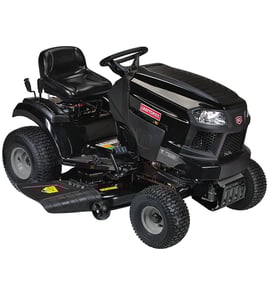



What kind of engine does a Craftsman riding lawn mower have?
The Craftsman lawn tractor model 917272246 is equipped with a 20.0 HP low-emission internal combustion engine (gas) and uses an electric start system. For the exact operating specs and maintenance intervals for this model, use the 917272246 owner's manual.
What we can confirm for model 917272246
From the model-specific documentation, we can identify these engine-related details:
- Engine type: gas, internal combustion (low-emission design)
- Starting system: electric start
- Rated power: 20.0 HP
- Fuel: regular unleaded gasoline (minimum 87 octane)
- Spark plug type: Champion RC12YC (gap .030 in)
Quick engine and fuel specs (model 917272246)
| Spec | Value |
|---|---|
| Horsepower | 20.0 HP |
| Fuel capacity | 4 gallons |
| Recommended fuel | Regular unleaded (87 octane min.) |
| Oil type (above 32°F) | SAE 10W30 |
| Oil type (below 32°F) | SAE 5W-30 |
Why it matters
Using the correct fuel and oil for your Craftsman 917272246 helps prevent hard starting, rough running, and premature engine wear. It also helps you stay on schedule for tune-ups like spark plug and air filter service.
Helpful tips if you are comparing engines across Craftsman riders
If you are shopping or comparing different Craftsman riding mowers, engine “kind” usually varies by:
- Horsepower rating (HP)
- Single-cylinder vs. V-twin design
- Carbureted vs. fuel-injected (most older riders are carbureted)
- Deck size and load (bigger decks demand more power)
- Transmission type (gear drive vs. automatic/hydro)
Last updated: January 2026
What kind of oil do you use in a Craftsman lawn tractor?
For Craftsman lawn tractor model 917272246, we use SAE 10W-30 4-cycle engine oil when temperatures are above 32°F, and SAE 5W-30 4-cycle engine oil when temperatures are below 32°F. Use a high-quality detergent oil that meets API service SF-SJ.
Oil type and capacity for model 917272246
From the product specifications for this model:
- Oil type (above 32°F): SAE 10W-30
- Oil type (below 32°F): SAE 5W-30
- Oil capacity with filter: 4.5 pints
- Oil capacity without filter: 4.0 pints
- Oil rating: API SF-SJ (or better)
For the full maintenance section and the oil viscosity chart, use the 917272246 owner's manual.
Quick reference table
| Operating temperature | Recommended oil viscosity | Notes |
|---|---|---|
| Above 32°F (0°C) | SAE 10W-30 | Good all-around choice for warm weather mowing |
| Below 32°F (0°C) | SAE 5W-30 | Helps with cold-weather starting |
Tips to avoid common oil problems
- Check oil level on level ground before each use; do not overfill.
- Change oil about every 50 hours of operation (or at least once per year).
- If your engine uses an oil filter, replace it every season or every other oil change (heavy use).
- Keep dirt out of the crankcase; clean around the fill cap/dipstick before opening.
- If you see oil leaking at the drain point, inspect the sealing area and consider replacing the drain plug 532428287 if it is damaged.
Why it matters
Using the correct viscosity oil for the temperature helps your 4-cycle engine stay properly lubricated at startup and under load, which reduces wear and helps prevent overheating during mowing.
Last updated: January 2026
Is it worth replacing a lawn mower engine?
Yes, it can be worth replacing the engine on your Craftsman lawn tractor model 917272246 when the tractor is otherwise in good shape and you are solving a true engine failure (low compression, thrown rod, severe oil consumption). If the repair cost approaches about half the value of a comparable replacement tractor, replacement usually makes more sense. See the maintenance and troubleshooting guidance in the 917272246 owner’s manual.
Quick decision checklist
- The deck, steering, and frame are solid (no major rust-through or cracks).
- The transmission still drives smoothly (no slipping, no loss of pull on hills).
- You can confirm the problem is the engine itself (not fuel, ignition, or safety interlocks).
- You can source the correct engine and any required mounting or pulley parts.
- You plan to keep the tractor for multiple seasons after the repair.
Before you commit: rule out common “engine” problems
Many “bad engine” symptoms on riding tractors are caused by maintenance items or safety circuits.
- Verify fresh fuel (use fuel within about 30 days) and correct oil level.
- Check the air filter and cooling fins for blockage.
- Inspect the operator presence and interlock system operation.
- If the engine runs but dies or bogs when blades engage, inspect the deck drive system (belt, idlers, mandrels).
Helpful DIY reading: why your mower loses power when the blades are engaged.
Cost and effort comparison
| Option | Best when | Typical downside |
|---|---|---|
| Replace engine | Tractor is otherwise reliable; you want to keep this machine | Higher parts and labor cost; may require pulley/wiring changes |
| Repair engine (limited) | Issue is carburetion, ignition, fuel delivery, or tune-up | May not fix internal wear |
| Replace tractor | Multiple major systems are worn (engine + transmission + deck) | Higher upfront cost; setup time |
Why it matters
A new engine can restore power and reliability, but it will not fix worn deck spindles, stretched belts, or a failing transmission. Confirming the root cause first helps you avoid spending engine-level money on a tractor that still will not mow or drive correctly.
Last updated: January 2026