Owner’s manual



How to tell if Samsung dryer thermal fuse is bad?
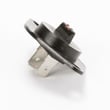
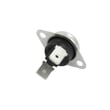
On your Samsung DV2C6BEW dryer, a bad (blown) thermal fuse will test open with a multimeter: you will get no continuity and the meter will read OL/infinite resistance. A good fuse reads near 0 ohms (or beeps on continuity). Use the DV2C6BEW owner's manual for safe access and disassembly guidance.
Quick symptoms that often point to a blown thermal fuse
A thermal fuse is a one-time safety device; when it opens, it usually stops heat or stops the dryer from running (depending on design).
- Dryer will not start or stops shortly after starting
- Dryer runs but produces no heat
- Cycle ends early and clothes stay damp
- You recently had long dry times (often from restricted airflow)
- You find heavy lint buildup in the exhaust path
How we test it (simple multimeter check)
- Unplug the dryer (electric shock hazard).
- Access the fuse location (commonly on the blower housing or heater housing).
- Pull at least one wire off the fuse terminal so you do not backfeed through the circuit.
- Set the meter to continuity or the lowest ohms range.
- Touch a probe to each terminal.
Interpreting the reading
| Meter result | What it means | What to do next |
|---|---|---|
| Beep or ~0 to 1 Ω | Fuse is good | Keep troubleshooting other heat or airflow parts |
| OL / no beep / very high Ω | Fuse is blown | Replace the fuse and fix the overheating cause |
Fix the cause before replacing the fuse
A thermal fuse usually blows because the dryer overheated from poor airflow.
- Clean the lint screen and housing
- Check the vent hose for kinks, crushing, or long runs
- Clean the wall duct and outside vent hood
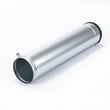
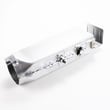
- Inspect the internal exhaust duct for lint buildup (a damaged duct can be replaced with dryer exhaust duct DC97-07519A)
- If heat control is erratic, test temperature-sensing parts such as the dryer thermistor DC32-00007A and safety controls like the dryer high-limit thermostat DC47-00018A
Why it matters
Replacing only the fuse can get the dryer running again, but the same overheating condition can blow the new fuse quickly. Restoring proper airflow and verifying temperature control protects the heating system and helps drying performance.
Last updated: February 2026
What's the average lifespan of a Samsung dryer?
A Samsung dryer like model DV2C6BEW typically lasts 10 to 15 years. Consistent airflow maintenance (lint screen and exhaust path), avoiding overloads, and replacing wear parts early (belt, rollers, thermostats) are what most often push a dryer toward the high end of that range.
What affects dryer lifespan the most
- Vent and airflow health: restricted airflow overheats components and shortens life.
- Load size and cycle choice: frequent overloading strains the drum belt and motor.
- Heat control parts condition: failed thermostats or fuses can cause overheating or no-heat.
- Drum support wear: worn rollers can create noise and extra drag on the drive system.
- Routine cleaning: lint buildup inside the cabinet increases heat and wear.
Maintenance checklist (high impact)
- Clean the lint screen every load.
- Inspect and clean the exhaust ducting regularly; keep runs short and free of kinks.
- Keep the area around the dryer clear so the unit can breathe.
- Stop using the dryer if you smell burning or notice repeated overheating.
- Follow the care and cleaning schedule in the owner's manual.
Common wear items that can extend service life
If your DV2C6BEW is noisy, takes longer to dry, or stops mid-cycle, these parts are common fixes:
| Symptom | Common cause | Example part for DV2C6BEW |
|---|---|---|
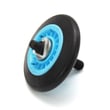
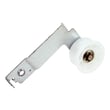
| Thumping or squealing | Worn drum support | Samsung dryer drum support roller DC97-16782A |
| Drum not turning | Worn or broken belt | Samsung dryer drum belt 6602-001655 |
| No heat or overheating shutdown | Heat control safety parts | Dryer high-limit thermostat DC47-00018A or dryer thermal cut-off fuse DC96-00887A |
Why it matters
A dryer that runs hot or struggles to move air can still tumble, but it wears out the heating system, motor, and drum support parts faster. Keeping airflow strong is the simplest way to protect performance and lifespan.
Last updated: February 2026
What is the most common Samsung dryer error?
The most common Samsung dryer error is a door-related error (the dryer thinks the door is open or not latched). On your Samsung DV2C6BEW, this is usually caused by the door not closing fully, a worn latch/strike, or lint buildup around the door switch area; check the owner's manual for the exact code and reset steps.
Quick checks that fix most door errors
- Open and firmly re-close the door; listen for a solid latch click.
- Clean lint and debris from the door opening and around the latch area.
- Inspect the strike for cracks or looseness; replace if worn.
- Check the catch alignment; the door should sit flush with the front panel.
- Power reset: unplug the dryer (or switch off the breaker) for 2 minutes, then restore power.
Parts that commonly solve door-related errors
If the door will not latch consistently, these model-compatible parts are common fixes:
- Dryer door strike DC66-00395A
- Dryer door catch DC97-07510B
- Dryer door seal DC62-00262A (if the door is pushed out by a torn or bunched seal)
If the error is not door-related
Samsung dryers also commonly show heating and temperature-sensing errors when airflow is restricted or a sensor trips.
| Symptom | Most common cause | Related part to consider |
|---|---|---|
| Runs but no heat | Heater circuit issue | Dryer heating element assembly - dryer part by Samsung DC97-14486A |
| Stops and shows temp-related code | Sensor reading out of range | Dryer thermistor DC32-00007A |
| Overheats or shuts down | Safety thermostat opens | Dryer high-limit thermostat DC47-00018A |
Why it matters
Door errors prevent the dryer from running safely, and airflow-related errors can lead to long dry times and repeated shutdowns. Keeping the door area clean and the exhaust path clear reduces nuisance error codes and protects key components.
For code-by-code meanings and what to check first, use our Samsung dryer error codes guide.
Last updated: February 2026
How to tell if a Samsung dryer heating element is bad?
A bad heating element in your Samsung dryer (model DV2C6BEW) usually shows up as no heat, weak heat, or very long dry times. We confirm it by safely accessing the heater circuit and checking the element for continuity and proper resistance, then checking related safety parts.
Common symptoms you can notice
- Dryer runs but clothes stay damp or cold
- Cycles take much longer than normal
- Heat starts, then stops mid-cycle
- A burning smell (stop the cycle and unplug the dryer)
- Repeated overheating shutdowns (often airflow-related)
How we test the heating element (basic process)
- Unplug the dryer (or switch off the breaker) before removing any panels.
- Use the wiring diagram and access steps in the DV2C6BEW owner's manual.
- With a multimeter:
- Continuity test: the element should show continuity; no continuity means the element is open (failed).
- Resistance test: most electric dryer elements read roughly 8 to 15 ohms at room temperature (varies by design). A reading of OL or very high resistance indicates a failed element.
- Ground check: test from an element terminal to the metal heater housing; you should not read continuity. Continuity to ground indicates a shorted element.
Don’t skip these related checks (they cause “no heat” too)
A heating complaint is often caused by a safety device opening due to restricted airflow.
- Check the high-limit thermostat: dryer high-limit thermostat DC47-00018A
- Check the thermal cut-off fuse: dryer thermal cut-off fuse DC96-00887A
- Check the temperature sensor (thermistor): dryer thermistor DC32-00007A
- Inspect and clean the lint filter, blower area, and exhaust ducting
- Confirm strong airflow at the outside vent hood
Quick interpretation guide
| Test result | What it usually means | What to do next |
|---|---|---|
| No continuity through element | Element is open | Replace heating element assembly |
| Continuity to metal housing | Element is shorted to ground | Replace heating element assembly |
| Element tests OK, still no heat | Control, sensor, or safety device issue | Test thermostat, fuse, thermistor |
| Heat cuts out, long dry times | Airflow restriction overheating dryer | Clean venting, check duct and blower |
Why it matters
A failed element stops heat; a tripped thermal cut-off or high-limit thermostat often points to overheating from poor airflow. Fixing the root cause helps prevent repeat failures and improves drying performance.
For model-specific error indicators that can point to heating or sensor problems, use Samsung dryer error codes.
Last updated: February 2026