Error Codes


What is the most common problem with Whirlpool washers?
The most common Whirlpool washer problems are not draining or not spinning, water leaks, and no-start issues. On a Whirlpool LXR7133JQ1 direct-drive washer, these symptoms are often tied to a clogged or failing drain pump, a worn motor coupling, or a lid switch problem.
- Washer will not drain (clothes still wet): clogged pump, blocked drain hose, or a failing pump
- Washer will not spin or agitates poorly: worn motor coupling, clutch wear, or drive block wear
- Water leaking: loose hoses, pump leak, or tub seal/gasket wear
- Loud grinding or rattling: coupling damage, clutch/brake wear, or something caught near the pump
- Washer will not start: lid switch failure, timer issue, or power cord/connection problem
- Unplug the washer; then check the drain hose for kinks and clogs.
- Look for standing water in the tub; if present, suspect a drain restriction or pump issue.
- Listen during drain; a humming pump with no water movement usually points to a blockage.
- Check for oil spots under the washer; that can indicate a drive system or gear case leak.
- If it will not spin, test with a small load to rule out an out-of-balance condition.
| Symptom | Common fix | Part to consider |
|---|---|---|
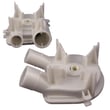
| Won’t drain | Replace drain pump | Washer drain pump WP3363394 |
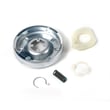
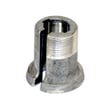
| Won’t spin / agitates weakly | Replace motor coupling | Coupling 285753A |
| Spins poorly / burning smell | Replace clutch | Clutch 285785 |
| Leaks at tub area | Replace tub gasket | Washer tub gasket W10814296 |
| Won’t start or stops mid-cycle | Check lid switch | Switch 3949247V |
Drain, spin, and leak problems can quickly lead to wet loads, longer dry times, odors, and floor damage. Catching the cause early also helps prevent secondary wear to the clutch, basket drive, and gear case.
Last updated: February 2026
How do I reset the lid lock on my Whirlpool washer?
On the Whirlpool LXR7133JQ1 direct-drive washer, a “lid lock reset” is usually a simple power reset plus making sure the lid switch is being pressed correctly. If the washer still will not run or spin, the lid switch circuit is likely the real issue and the switch may need replacement.
- Unplug the washer (or switch off the breaker) for 5 minutes.
- Plug back in.
- Close the lid firmly, then select a cycle and pull the knob (or press Start, depending on your console).
- If the washer is stuck mid-cycle, set the timer to Off, then back to a Spin or Drain/Spin position.
- Listen for a click when closing the lid; no click often points to a lid switch problem.
A direct-drive Whirlpool like the LXR7133JQ1 uses a lid switch to stop agitation and spin when the lid is open. Check these items before replacing parts:
- Lid is closing squarely (hinges not loose, no laundry caught under the lid).
- The lid strike area is not cracked or bent.
- The washer is draining; a no-drain condition can look like a “lock” problem.
- The timer advances; if it stalls, the cycle can appear “stuck.”
- Wiring at the lid switch is secure (unplug washer before inspecting).
If the lid switch is not consistently making contact, replacing the switch assembly is the fix. On this model page, these parts are also commonly involved in no-spin complaints:
| Symptom you see | Common cause on direct-drive washers | Part to consider |
|---|---|---|
| Won’t drain, won’t reach spin | Drain pump jammed or failed | Washer drain pump WP3363394 |
| Motor runs but won’t agitate/spin | Motor coupling broken | Coupling 285753A |
| Spins weakly or slips | Worn clutch | Clutch 285785 |
The lid switch is a safety circuit; if it is intermittent, the washer may stop during spin, not start at all, or only run when the lid is pressed a certain way. Resetting power helps only when the control/timer is “hung,” not when the switch is failing.
Last updated: February 2026
How to check for a clogged drain pump on a Whirlpool washer?
On your Whirlpool LXR7133JQ1 direct-drive washer, a clogged drain pump usually shows up as slow or no draining, standing water, or a humming pump. We check for a clog by safely accessing the pump, inspecting the inlet and outlet ports for debris, and confirming the impeller turns with light, even resistance.
- Unplug the washer before servicing
- Turn off both water supply valves
- Have towels and a shallow pan ready for water in the hoses
- Wear gloves; small items and sharp debris are common
- Confirm the drain hose is not kinked or crushed behind the washer
- Make sure the drain hose is not shoved too far down the standpipe (it can siphon or restrict flow)
- If the washer hums during drain but water does not move, suspect a clog at the pump or a jammed impeller
- Tip the washer back (or remove the cabinet, if you are comfortable) to access the pump at the front of the motor.
- Place towels under the pump; remove the pump hoses and drain any trapped water.
- Look into the pump ports and hose ends for socks, coins, lint, or small plastic pieces.
- Rotate the impeller by hand.
- Normal: turns with slight, consistent resistance.
- Clogged/jammed: hard to turn or stops abruptly.
- Likely failed: spins freely with no “magnetic” feel, wobbles, or the shaft feels loose.
If the pump is clogged or the impeller is damaged, replacing the pump is the reliable fix: washer drain pump WP3363394.
| What you observe | Most likely cause | What we recommend |
|---|---|---|
| Hums, no drain; debris found | Clog in pump or hose | Clear debris; re-test |
| Impeller jammed or broken | Pump damage | Replace washer drain pump WP3363394 |
| Drains slowly; hose clear | Partial restriction or weak pump | Inspect hoses again; replace pump if symptoms persist |
A restricted drain pump can leave water in the tub, cause poor spin performance, and strain the drive system over time. Restoring proper draining protects components like the clutch and motor coupling.
Last updated: February 2026
Can a power surge cause the F7E1 error?
On a Whirlpool direct-drive washer like model LXR7133JQ1, an F7E1 error code is not a normal model behavior because this design typically uses a mechanical timer instead of a digital control that displays codes. A power surge can still cause no-start, stopping mid-cycle, or erratic operation; treat it as a power or component issue.
- Unplug the washer for 2 to 5 minutes, then plug it back in.
- Plug directly into a properly grounded wall outlet (no extension cord or power strip).
- Check the outlet by plugging in a lamp or small appliance to confirm steady power.
- Inspect the cord and plug for cuts, burn marks, or a loose fit.
- If the washer smells hot or you see melted wiring, keep it unplugged and contact Sears PartsDirect support.
A surge usually shows up as power loss, intermittent running, or a cycle that will not advance.
| Symptom | Most likely area | Part to consider |
|---|---|---|
| No power or intermittent power | Power feed to washer | Power cord W10820044 |
| Will not run or stops when lid is moved | Lid safety circuit | Switch 3949247V |
| Cycle will not advance correctly | Mechanical cycle control | Washer timer WP3948323 |
| Will not drain or stalls at drain/spin | Drain system | Washer drain pump WP3363394 |
On a timer-driven Whirlpool washer, “error code” symptoms are almost always a real interruption in power, a safety switch opening, or a timer contact problem. Fixing the underlying cause prevents repeat shutdowns and protects the motor and drive system.
- The washer has power but will not start unless you jiggle the lid or knob.
- The timer motor runs but the cycle does not advance, or it advances inconsistently.
- The cord or plug shows heat damage or the prongs feel loose in the outlet.
Last updated: February 2026