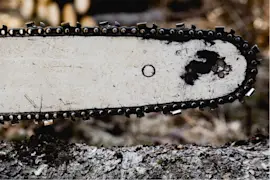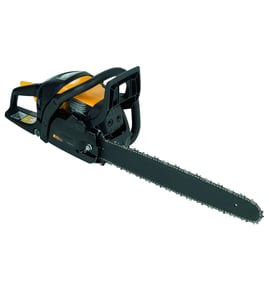

Can you put a 16 bar on a 14 chainsaw?
Yes, you can often run a 16-inch guide bar on a chainsaw that originally came with a 14-inch bar, but only if the bar mount pattern, chain pitch, gauge, and drive-link count match what your Mcculloch PRO chainsaw is designed to use. If any of those specs differ, the chain will not fit correctly and the saw can be unsafe to operate.
What must match for the swap to work
To fit a longer bar correctly, these items must match your current setup:
- Bar mount pattern (the slot and stud spacing that fits the powerhead)
- Chain pitch (common sizes include 3/8 low PROfile or .325)
- Chain gauge (common sizes include .043, .050, .058)
- Drive link count (changes with bar length and sprocket setup)
- Sprocket type and pitch (rim or spur sprocket must match chain pitch)
Quick compatibility checklist
Use this as a practical way to confirm fit before you buy parts.
| Item to compare | Where to check | What “match” means |
|---|---|---|
| Pitch | Stamped on bar or listed on chain box | Same pitch as your current chain and sprocket |
| Gauge | Stamped on bar or listed on chain box | Same gauge as the bar groove |
| Drive links | Printed on chain box or counted | Correct count for the 16-inch bar |
| Mount | Compare old bar to new bar | Same slot, oil hole location, and tensioner hole |
Why it matters
A longer bar increases cutting reach, but it also increases load on the engine, clutch, and chain. If the chain pitch or gauge is wrong, the chain can bind, derail, or fail to oil PROperly, which accelerates bar and chain wear.
Safe setup tips after installing a longer bar
After you install the 16-inch bar and matching chain:
- Set chain tension so the drive links stay engaged but the chain still pulls around by hand
- Confirm the oiler is working (you should see a light line of oil flung off the bar tip)
- Recheck tension after the first few minutes of cutting (new chains stretch quickly)
- Keep the chain sharp; a dull chain makes the saw feel underpowered
For step-by-step repair and fit guidance, use our DIY resources like chainsaw repair guide landing page. For model-based parts lookup and ordering, search by your full model information on Sears PartsDirect.
Last updated: February 2026
Are McCulloch chainsaws any good?
Mcculloch chainsaws are a solid choice for typical homeowner cutting when they are PROperly maintained; they are generally known for good cutting performance and straightforward operation. For your Mcculloch PRO chainsaw, overall “good” comes down to condition, tune, and using the right chain, fuel mix, and bar oil; you can also find model-matched parts by searching on Sears PartsDirect.
What “good” means for a chainsaw
A chainsaw can be considered good if it starts reliably, cuts straight, oils the bar and chain consistently, and holds a steady idle without stalling.
Common signs a saw is performing well:
- Starts within a few pulls when cold (with choke used correctly)
- Accelerates cleanly without bogging
- Cuts without pulling to one side (sharp chain, even cutters)
- Leaves a light line of oil on wood or cardboard at half-throttle
- Idles without the chain creeping
What owners usually like (and what causes complaints)
Many “mixed reviews” on chainsaws come from setup and maintenance differences, not just brand.
| Area | When it feels “good” | When it feels “not good” |
|---|---|---|
| Starting | Fresh fuel, clean air filter, good spark | Old fuel, flooded engine, weak spark |
| Cutting power | Sharp chain, correct raker depth | Dull chain, pinched bar, clogged muffler screen |
| Durability | Clean cooling fins, correct bar oil | Overheating, lean carb setting, dirty intake |
| Safety/control | Chain brake works, PROper PPE | Chain brake ignored, poor grip/stance |
Quick checks we recommend before judging the saw
These steps apply well to Mcculloch gas chainsaws like the PRO series.
- Drain old fuel; refill with fresh, correctly mixed 2-cycle fuel
- Verify bar oil level and that the oiler is feeding
- Clean or replace the air filter
- Inspect the spark plug (gap and condition)
- Sharpen the chain and set chain tension correctly
- Confirm the chain brake engages and releases smoothly
Why it matters
A “good” chainsaw is one that runs safely and predictably. Most performance complaints trace back to fuel quality, carburetor condition, air leaks in fuel lines, or a dull chain, all of which are fixable with routine service.
Helpful DIY resources
Last updated: February 2026
How many cc's is a Mcculloch PRO?
For the Mcculloch PRO MAC 700 MODEL 600116-02 chainsaw, the engine size is typically about 70 cc. On older Mcculloch saws, “PRO” is often used as a series name, so the most accurate way to confirm cc is by matching the full model name and engine tag to the PRO MAC 700 family.
How to confirm the cc on your exact saw
We recommend verifying the displacement using the identification markings on the saw so you get the right tune-up and replacement parts.
- Check the engine tag or data plate (often on the starter housing or crankcase)
- Look for “cc”, “cm³”, or a displacement number near the model information
- Confirm the full model naming: PRO MAC 700 and 600116-02
- If the tag is missing, match by carburetor type, air filter cover style, and starter assembly
- Use the parts diagrams for your exact configuration on Sears PartsDirect
Why the cc matters for parts and troubleshooting
Engine displacement affects fuel mix demand, carburetor settings, and which ignition and fuel-system parts fit correctly.
- Carburetor tuning and rebuild kit compatibility
- Fuel line and impulse line routing differences across versions
- Correct spark plug heat range and gap spec family
- Expected power and cutting performance (helps diagnose “runs rough” complaints)
Quick reference: what “cc” means on chainsaws
| Term | What it tells you | Why you care |
|---|---|---|
| cc (cm³) | Engine displacement (cylinder volume) | Helps match parts and tune settings |
| Model number | The exact version/build | Prevents ordering the wrong parts |
| Serial number | PROduction run identifier | Useful when diagrams split by range |
Related DIY help for Mcculloch chainsaw issues
If your question is coming from a starting or running PROblem, these guides help you narrow it down fast:
Last updated: February 2026
What is the mix for McCulloch chainsaw 2 stroke?
For the Mcculloch PRO MAC 700 MODEL 600116-02 chainsaw, use a 40:1 fuel mix (gasoline to 2-cycle oil). That equals 3.2 fl oz of 2-stroke oil per 1 U.S. gallon of gas; mix in an approved fuel can using fresh fuel for best starting and power.
Quick mix chart (40:1)
| Gasoline amount | 2-cycle oil needed | Notes |
|---|---|---|
| 1 U.S. gallon | 3.2 fl oz | Common small batch |
| 2 U.S. gallons | 6.4 fl oz | Good for weekend use |
| 5 U.S. gallons | 16 fl oz | Larger batch; store carefully |
| 1 liter | 25 ml | Metric reference |
How we recommend mixing 2-stroke fuel
- Use a clean, approved fuel container (not the chainsaw tank).
- Add about half the gasoline to the container.
- Measure and add the 2-cycle oil.
- Cap and shake to blend, then add the remaining gas and shake again.
- Mix only what you will use in 30 days.
- Label the can “40:1” to prevent accidental straight-gas fueling.
If it still runs rough or will not start
A correct mix helps, but hard starting and rough running usually point to fuel delivery or ignition issues. Check these common items:
- Spark plug condition and gap
- Air filter cleanliness
- Fuel filter and fuel line condition
- Carburetor settings and diaphragm condition
- Muffler spark arrestor screen (if equipped) for carbon buildup
For step-by-step diagnosis, use tips for a hard to start chainsaw.
Why the correct mix matters
A 2-stroke engine depends on oil in the fuel for lubrication. A 40:1 mix PROvides the oil film the crankshaft bearings, piston, and cylinder need; an oil-lean mix increases wear and can lead to scoring and loss of compression.
Finding parts and diagrams
If you need maintenance or fuel-system parts for the Mcculloch PRO MAC 700 MODEL 600116-02, start with the model parts diagrams, or search by model number on Sears PartsDirect.
Last updated: February 2026