Owner’s manual
 Error Codes


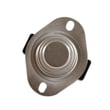
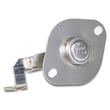
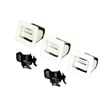
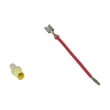
How do I know if my Kenmore dryer thermal fuse is blown?
On Kenmore dryer model 11066512692, a blown thermal fuse usually shows up as a dryer that will not run at all, or a dryer that runs but will not heat. The sure way to confirm is a continuity test with a multimeter after unplugging the dryer; a blown fuse reads open (no continuity).
Quick symptoms to look for
- Dryer will not start even though the door is closed and the Start button is pressed
- Motor hums briefly but drum does not turn (some failures present this way)
- Dryer tumbles but there is no heat (common when a heat safety device opens)
- Cycle seems normal but clothes stay damp and dry times get longer
- You recently had poor airflow from the vent (kinked, crushed, or lint-clogged)
How we recommend testing it (safe, accurate)
- Unplug the dryer (or switch off the breaker) before opening any panels.
- Access the thermal fuse area as shown in the 11066512692 owner’s manual.
- Remove at least one wire from the fuse terminal.
- Set your multimeter to continuity or lowest ohms.
- Test across the fuse terminals.
What the meter reading means
| Meter result | What it means | What to do next |
|---|---|---|
| Beep or near 0 ohms | Fuse is good | Keep troubleshooting airflow, heat circuit, or controls |
| No beep or OL/infinite | Fuse is blown | Replace the fuse and correct the airflow problem |
Why the fuse blows (and what to fix so it does not happen again)
A thermal fuse opens when the dryer overheats. Overheating is most often caused by restricted exhaust airflow. Our manual’s troubleshooting guidance for poor drying focuses on airflow checks such as cleaning the lint screen and confirming strong air movement at the outside exhaust hood.
- Clean the lint screen before every load
- Check the outside exhaust hood for strong airflow
- Replace crushed or kinked venting
- Use rigid or heavy metal venting where possible
- Keep the dryer level so airflow and drum movement stay consistent
Parts that are commonly involved in overheating or no-heat complaints
These are not the thermal fuse itself, but they are frequently checked or replaced during heat and airflow repairs on this model:
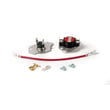
- Cut-off kit 279816 (thermal cut-off safety components)
- Dryer operating thermostat WP3387134 (temperature regulation)
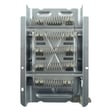
- Dryer heating element 279838 (electric heat source)
Why it matters
A blown thermal fuse is a safety shutdown. Replacing it without fixing the vent restriction often leads to repeat failures, longer dry times, and overheating.
Last updated: February 2026
How do I tell what model my Kenmore dryer is?
Your Kenmore dryer’s model number is printed on the model and serial number plate; on model 11066512692, it’s typically found around the door opening area. Once you have the full model number, we can match the correct parts, wiring, and operating instructions.
Where to find the model number plate
Check these common locations on Kenmore dryers:
- Inside the dryer door opening on the cabinet frame
- On the door opening lip (front panel area)
- On the back panel of the dryer cabinet
- Near the lint screen housing area (depending on the design)
For the exact location and how the plate looks on your unit, use the 11066512692 owner's manual.
What to write down (and why)
Record both numbers exactly as shown on the plate.
- Model number (example: 11066512692)
- Serial number (helps identify production run details)
- Date of purchase (useful for service history and records)
Why it matters
The model number is what ensures we recommend the right Kenmore dryer parts. Even small differences can change which heating element, door switch, timer, or drum belt fits.
Quick ID tips for Kenmore model numbers
Kenmore model numbers often start with a 3-digit prefix that points to the manufacturer family.
| What you see | What it usually means | How to use it |
|---|---|---|
| 110.xxxxxxxx | Common Kenmore dryer family | Use the full model to match parts diagrams |
| 796.xxxxxxxx | Another common Kenmore family | Use the full model to match parts lists |
| Full model + serial | Most accurate ID | Best for ordering parts and troubleshooting |
After you find the model number
Once you confirm the model, match symptoms to the most common wear parts. For example:
- Drum not turning: check the drum belt 341241 and idler pulley
- No heat: check the heating element and thermal cut-off components
- Won’t start: check the door switch and push-to-start switch
Last updated: February 2026
What is the average lifespan of 11066512692?
The average lifespan of the Kenmore 11066512692 dryer is about 13 years with normal household use. Regular vent cleaning, lint removal, and replacing wear items like the drum belt when needed help this dryer reach its full service life.
What affects lifespan most
- Airflow and venting: restricted venting overheats the heater and thermostats
- Lint buildup: the manual recommends removing lint inside the dryer every 2 to 3 years (more often with heavy use)
- Wear parts: belt, idler pulley, drum support components, and blower wheel wear over time
- Electrical health: loose power-cord connections can damage the terminal block
- Load habits: chronic overloading strains the drive motor and drum support
Maintenance schedule we recommend
Use this as a practical baseline for the 11066512692; details and safety steps are in the 11066512692 owner's manual.
| Task | How often | Why it matters |
|---|---|---|
| Clean lint screen | Every load | Keeps airflow strong and drying times down |
| Check and clean vent duct to outside | Every 6 to 12 months | Prevents overheating and long dry times |
| Remove lint inside cabinet (service-level) | Every 2 to 3 years | Reduces fire risk and heat stress |
| Inspect belt and idler for wear/noise | Yearly | Prevents sudden no-tumble failures |
Parts that commonly determine “end of life”
If the dryer is otherwise in good shape, these repairs often restore performance:
- Drum belt 341241 (no tumble, squealing, or intermittent drum movement)
- Dryer operating thermostat WP3387134 (overheating or cycling heat issues)
- Dryer blower wheel WP694089 (poor airflow, rumbling, weak exhaust)
- Drive motor 279827 (hums, won’t start, or stops under load)
Why it matters
Once a dryer gets past the 10-year mark, small airflow problems and normal wear can cascade into heater, thermostat, and motor stress. Staying ahead of lint and vent maintenance is the simplest way to keep the Kenmore 11066512692 running reliably.
Last updated: March 2026