Installation guide
 Owner’s manual


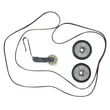
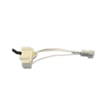
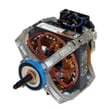
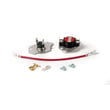
How do I tell what model my Kenmore dryer is?
Your Kenmore dryer’s model number is printed on the model and serial number label; on model 11064632300, that label is located at the top inside the dryer door well. Write down the full model number and serial number so we can match the correct parts, diagrams, and specifications.
Where to look (fast checklist)
- Open the dryer door and look along the top edge inside the door opening (door well area).
- Find the model and serial number label (sticker or metal plate).
- Record the complete model number (all digits) and the serial number.
- Take a clear photo of the label for future reference.
- Use the model number when ordering parts like a belt, heating element, or door switch.
What the model number tells you
Kenmore model numbers often start with a 3-digit prefix (for example, 110). That prefix helps identify the manufacturing source and ensures we show the right part list for your exact dryer.
Common label locations by dryer style
| Dryer type | Most common label location | Other common spots |
|---|---|---|
| Kenmore electric dryer (like 11064632300) | Top inside dryer door well | Back panel, inside cabinet near lint screen housing |
| Compact or specialty models | Door opening or side panel | Rear panel |
Why it matters
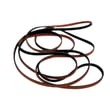
Using the exact model number prevents ordering the wrong replacement part and helps confirm fit for items like the dryer drum belt 341241 or the dryer door switch WP3406107. For cycle details and feature differences across similar models, we also recommend checking the 11064632300 owner’s manual.
Last updated: February 2026
Is it worth repairing an old Kenmore dryer?
Yes, repairing an older Kenmore electric dryer like model 11064632300 is usually worth it when the fix is a common wear item (belt, thermostat, fuse, switch) and the dryer is otherwise drying well and venting properly; these repairs are typically far less than replacing the dryer.
Quick way to decide
We use a simple cost-and-condition check:
- If the dryer drum turns, the cabinet is solid, and the problem is isolated (no heat, won’t start, squealing), repair is the smart move.
- If multiple major systems are failing at once (motor plus heat plus timer), replacement often makes more sense.
- If you have airflow issues (long dry times, overheating), fix the venting first because it can cause repeat failures.
Repairs that are usually worth it on 11064632300
These are common, straightforward fixes on many Kenmore 110-series style electric dryers:
- Broken belt or no tumble: replace the dryer drum belt 341241
- No heat but drum still turns: check house breakers (electric dryers use two), then inspect the heater and safety fuses
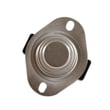
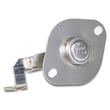
- Overheating or shuts off: inspect venting, then test thermal safety parts such as the dryer thermal cut-off fuse kit 279816
- Won’t start: confirm door closes firmly, then test the door switch and start switch
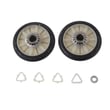
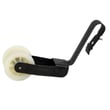
- Squealing or rumbling: a roller/idler service kit is often the best value
Cost comparison (typical)
| Repair type | Common symptom | Typical DIY cost range (parts only) |
|---|---|---|
| Belt or idler service | Drum won’t turn, squeal | $10 to $40 |
| Heat circuit parts | No heat, overheating | $20 to $80 |
| Motor | Hums, won’t run, intermittent | $90 to $150 |
| Timer/control | Won’t advance, erratic cycles | $150+ |
Why it matters
A dryer that “needs parts” often really needs airflow. The use and care guidance emphasizes cleaning the lint screen every load and keeping the exhaust area clear; poor venting can lead to no-heat complaints, overheating, and blown thermal cutoffs. For model-specific safety, operation, and troubleshooting steps, follow the 11064632300 owner's manual and the venting requirements in the installation guide.
Last updated: February 2026
How do I troubleshoot my 11064632300?
For your Kenmore 11064632300 electric dryer, start troubleshooting by matching the symptom (won’t start, no heat, noisy, or poor drying) to a short set of checks: power, door/controls, airflow, and heat circuit. Use the owner's manual troubleshooting section to confirm the exact steps.
Quick symptom checklist (start here)
- Won’t start: verify power, cycle selection, and door closed
- Runs but no heat: confirm both household breakers or fuses are on
- Long dry times: check lint screen and venting for restrictions
- Unusual sounds: identify thumping, squealing, or rattling and inspect wear parts
Step-by-step troubleshooting by symptom
1) Dryer will not run
- Confirm the power cord is plugged into a grounded outlet.
- Check the house electrical supply; many electric dryers use two fuses or breakers.
- Make sure a cycle is selected and controls are in an “On” or running position.
- Press the Start button firmly.
- Close the door fully; if the door switch is failing, the dryer may not start.
Helpful parts to consider if symptoms match:
- Dryer door switch WP3406107 (door must register closed)
- Dryer push-to-start switch WP3977456 (start circuit)
- Dryer timer WP8299779 (cycle control)
2) Dryer runs but there is no heat
- Check both breakers or fuses; the drum can turn even when one leg of power is out.
- Make sure you did not select an air or no-heat cycle.
- If airflow is restricted, safety devices can open and stop heat.
Common heat-system parts for this model:
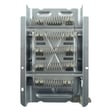
- Dryer element 279838
- Dryer thermal cut-off fuse kit 279816
- Dryer high-limit thermostat WP3977767
- Dryer operating thermostat WP3387134
3) Clothes not drying well
- Clean the lint screen.
- Check the exhaust vent and outside hood for lint buildup.
- Replace crushed or kinked venting with heavy metal or flexible metal venting.
What to check first (fast triage)
| Symptom | Most likely first check | Next step |
|---|---|---|
| Won’t start | Door closed, cycle selected | Breakers/fuses, start switch |
| No heat | Both breakers/fuses on | Heating circuit parts |
| Long dry time | Lint screen, vent airflow | Fix crushed/kinked vent |
| Noise | Drum support wear | Belt, rollers, idler |
Why it matters
Most “no start” and “no heat” issues on electric dryers trace back to power supply (two breakers/fuses) or a simple interlock like the door switch. Poor airflow causes overheating and repeated heat shutoffs, which also increases drying time.
Last updated: March 2026