Installation guide
 Owner’s manual
 Error Codes


What can cause a Kenmore washer not to spin?
On Kenmore washer model 11027731600, a no-spin problem is usually caused by the lid not fully closing, a drain setup issue that prevents proper draining, or a failed drive component. Start with the lid switch and drain hose height checks in the 11027731600 owner's manual.
Quick checks we recommend first
- Confirm the lid is fully closed; this washer will not agitate or spin with the lid open.
- Reduce the load size and rebalance the items; overloads can stop or slow spinning.
- Check for excessive sudsing; too much detergent can interfere with draining and spinning.
- Verify the drain hose is not kinked or clogged.
- Make sure the drain hose is installed with an air gap and is not taped or sealed into the standpipe.
Drain and installation issues that stop spinning
If the washer cannot drain, it often will not spin because water remains in the tub.
Use the installation specs as your baseline:
| Drain setup item | What to look for | Typical result if wrong |
|---|---|---|
| Standpipe height | Top of drain hose at least 39 in. above floor | Cycle can seem stuck filling or draining |
| Max drain height | End of drain hose not more than 96 in. above floor | Poor draining, no spin, water left in tub |
| Air gap | Hose fits securely but is not sealed with tape | Siphoning or slow drain issues |
For the exact drain system requirements, follow the 11027731600 installation guide.
Common part failures on this model
If the lid and drain setup are correct, these parts commonly cause a no-spin condition:
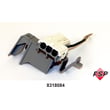
- Lid switch: If it does not sense a closed lid, the washer will not spin. Consider the washer lid switch assembly WP8318084.
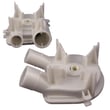
- Drain pump: A weak or jammed pump can leave water in the tub and prevent spin. Consider the washer drain pump WP3363394.
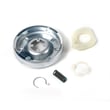
- Motor coupling: If the motor runs but the basket does not spin, the coupling can be broken. Consider the washer motor coupling 285753A.
- Clutch: A worn clutch can cause slow spin or no spin under load. Consider the clutch 285785.
Why it matters
A washer that will not spin usually leaves clothes soaking wet and can make the cycle appear “stuck.” Fixing the root cause (lid sensing, draining, or drive transfer) prevents repeat failures and reduces strain on the drive motor and gearcase.
Last updated: February 2026
Where to find model number on a Kenmore washer?
On the Kenmore washer model 11027731600, the model number is printed on the model and serial number label attached to the washer cabinet. On most Kenmore top-load washers, you will find that label under the lid opening or on the back of the control console; confirm the exact label location in the 11027731600 owner's manual.
Common label locations to check first
- Under the lid, around the tub opening (top rim of the cabinet)
- On the back of the control panel/console
- On the rear panel of the washer cabinet
- Along the side of the main cabinet near the bottom edge
- Inside the lid area where the lid closes (near the hinge or opening)
How to find it quickly (no tools)
- Lift the washer lid and look around the cabinet opening first.
- If you do not see it, check the back of the control console.
- Move to the back and sides of the cabinet and scan for a rectangular sticker or metal tag.
- Write down both the model number and serial number; you will use both for parts lookup and service.
What the label typically includes
| Item on label | What it’s used for |
|---|---|
| Model number | Matching the correct parts diagrams and replacement parts |
| Serial number | Identifying production series and compatible revisions |
| Purchase date (you record it) | Warranty and service records |
Why it matters
We use the model number to match the exact Kenmore washer configuration so you get the right parts (for example, a lid switch, drain pump, or agitator components) and the correct repair instructions.
Last updated: February 2026
What is the average lifespan of 11027731600?
The average lifespan of the Kenmore 11027731600 washer is about 10 to 14 years with normal household use. Regular maintenance, correct loading, and fixing small issues early (drain, spin, agitation) are what most often determine whether it reaches the high end of that range.
What affects lifespan the most
- Load size and balance: frequent overloading or consistently unbalanced loads shortens drive and suspension life.
- Drain performance: slow draining strains the pump and can leave water that causes odors and corrosion.
- Spin system wear: worn clutch or brake components can cause slipping, noise, or poor spin.
- Water leaks: tub seal or gasket leaks can damage bearings and the drive system.
- Electrical stress: power interruptions and repeated restarts can stress switches and the motor circuit.
Quick maintenance habits that add years
Use the care guidance in the 11027731600 owner's manual and focus on these basics:
- Keep loads evenly distributed; wash bulky items in pairs when possible.
- Use the right detergent amount; too much can cause residue and extra rinsing.
- Check hoses for bulges or seepage and replace at the first sign of wear.
- If the washer starts leaving water behind, inspect the drain path and consider the washer drain pump WP3363394 if draining is weak.
- Address lid related no-spin symptoms promptly; a failing washer lid switch assembly WP8318084 can stop agitation or spin.
Common “end-of-life” symptoms and likely areas
| Symptom | What it often points to | Example parts on this model |
|---|---|---|
| Won’t spin or spins weakly | clutch, brake, drive block | clutch, brake shoe, drive block |
| Loud grinding or leak at center | tub seal, bearing wear | tub seal, bearing and seal kit |
| Agitator doesn’t move properly | worn agitator dogs or coupling | agitator dog, motor coupling |
Why it matters
Knowing the typical 10 to 14 year lifespan helps you decide whether a repair is cost-effective. On this model, replacing common wear items (pump, lid switch, coupling, clutch) often restores reliable operation and extends service life.
Last updated: March 2026