Owner’s manual
 Error Codes


Why is my LG bottom freezer not freezing?
If your LG LFXS24623S bottom-mount freezer is not freezing while the fresh-food section still feels cold, the most common causes are restricted airflow (often from frost buildup), a fan problem, or a compressor that is not running correctly. Start with settings and basic checks in the LFXS24623S manual.
Quick checks we recommend first
- Confirm the freezer is set near 0°F and the refrigerator near 37°F.
- Give the unit 24 hours after any setting change to stabilize.
- Make sure the freezer drawer closes fully and the door gaskets seal all the way around.
- Listen for the evaporator fan running when the doors are closed.
- Look for heavy frost on the rear freezer panel (a common sign of a defrost or airflow issue).
Model-matched parts to inspect if the freezer stays warm
These parts are listed for LG LFXS24623S and can directly affect freezing performance:
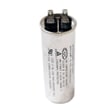
- Refrigerator compressor TCA38091801 (drives the sealed cooling system)
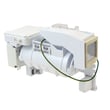
- LG refrigerator evaporator fan motor 4681JB1027C (circulates cold air through the freezer)
If you suspect a control issue, check the parts list for your model for compatible control components; control boards can vary by production version.
Symptom-to-cause guide
| What you notice | Most likely area to check | What it usually means |
|---|---|---|
| Fridge cool, freezer warm | Airflow path, evaporator fan | Cold air is not moving through the freezer |
| Heavy frost on freezer back wall | Defrost system or door seal | Frost is blocking airflow across the evaporator |
| Clicking, then quiet | Compressor start or compressor | Compressor is struggling to start or stay running |
| Both sections warming | Compressor or sealed system | Cooling system is not producing enough cold |
Why it matters
A freezer that is not freezing can spoil food quickly and can also cause longer run times that stress the compressor. Catching airflow and frost issues early often prevents more expensive cooling-system repairs.
Last updated: January 2026
Why is my LG refrigerator not making ice on the bottom?
If your LG LFXS24623S refrigerator isn’t making ice in the bottom freezer, the most common causes are a water supply restriction (filter or inlet valve), the ice maker being off or jammed, or freezer temperature and airflow problems that prevent the ice maker from cycling. Use the LFXS24623S manual to confirm ice maker settings and basic checks.
Quick checks we recommend first
- Confirm the ice maker is turned ON and the ice bin is fully seated.
- Make sure the freezer is cold enough; ice production slows or stops if temperatures rise.
- Break up and discard clumped ice; check for a cube jam at the ejector.
- Test the door dispenser (if equipped); normal water flow usually means the supply is on.
- Look for frost buildup or blocked vents that can restrict airflow.
Water supply problems (most common)
A weak fill or no fill is often caused by a clogged filter or a failing inlet valve.
- If water flow is slow, replace the filter; this model uses options such as the LG kenmore refrigerator water filter ADQ36006101.
- If the filter is fresh but the ice maker still won’t fill, inspect the inlet valve and supply line for kinks or freezing; a compatible valve listed for this model is the valve asy,wa 5221JB2010G.
Symptoms and what they usually mean
| What you notice | Likely cause | What to do next |
|---|---|---|
| No ice and weak or no dispenser water | Supply shutoff closed, kinked line, restricted filter, or inlet valve issue | Check shutoff and line; replace filter; then test inlet valve |
| Water dispenses normally but no ice | Ice maker off, jammed, or not cycling | Turn on, clear jam, reset if applicable |
| Small or hollow cubes | Restricted filter or low water pressure | Replace filter; verify household pressure |
Freezer temperature and airflow issues
Bottom-freezer ice production depends on steady cold air movement.
- Keep packages from blocking vents and the ice maker area.
- Heavy frost on the evaporator cover can indicate a defrost issue.
- If airflow seems weak, the fan may be failing; one listed option is the LG refrigerator evaporator fan motor 4681JB1027C.
Why it matters
Ice makers are sensitive to both water flow and freezer temperature. Fixing the root cause (filter restriction, inlet valve fill problem, or airflow) helps prevent hollow cubes, slow production, and repeat ice jams.
Last updated: January 2026
What is the problem with the LG bottom freezer refrigerator?
On the LG LFXS24623S bottom-mount refrigerator, the most common “problem” customers report is a cooling imbalance: the refrigerator section warms up while the freezer stays cold. This usually points to an airflow restriction, frost buildup from a defrost issue, or a temperature-sensing/control problem.
Quick checks we recommend first
- Make sure food packages are not blocking air vents in the fresh food section.
- Confirm both doors close fully and the gaskets seal all the way around.
- Set temperatures to normal and allow 24 hours for temperatures to stabilize.
- Listen for the evaporator fan; weak or no airflow often means a fan issue or ice blockage.
- Check for frost or ice on the rear freezer panel (a common sign of defrost trouble).
For model-specific control settings and operating guidance, use the LFXS24623S manual.
Likely causes by symptom
| Symptom you notice | Most likely area | What to check next |
|---|---|---|
| Fridge warm, freezer cold | Airflow from freezer to fridge | Blocked vents, ice restricting ducts, evaporator fan not moving air |
| Frost buildup, weak airflow | Defrost system | Defrost heater, defrost sensor, ice behind the evaporator cover |
| Temps swing up and down | Temperature sensing | Sensor readings and wiring connections |
| Runs a lot, still warm | Heat rejection or sealed system | Condenser coil cleanliness, condenser fan operation, compressor performance |
Parts that commonly relate to these symptoms on this model
If troubleshooting points to a failed component, these compatible parts are listed for LG LFXS24623S:
- LG refrigerator evaporator fan motor 4681JB1027C (moves cold air through the freezer and into the fresh food section)
- Refrigerator defrost sensor assembly 6615JB2005N (helps control defrost operation and prevents heavy frost)
- Refrigerator temperature sensor 6500JB2002E (reports compartment temperature to the controls)
- Refrigerator compressor TCA38091801 (circulates refrigerant; cooling problems can occur if it is failing)
Why it matters
When the freezer stays cold but the refrigerator warms up, food safety becomes the priority. Fixing airflow and defrost or sensor issues helps prevent spoilage, reduces run time, and avoids repeat icing.
Last updated: January 2026