Owner’s manual



Where is the model number on a Kenmore Elite dryer?
On the Kenmore Elite dryer model 11068087701, the model number is typically printed on the rating label inside the dryer door opening. Open the door and check the cabinet frame around the opening (usually along the top or side edge); confirm the exact number in the 11068087701 owner's manual.
Where to look first
- Inside the door opening on the cabinet frame (most common)
- Along the top lip of the door opening
- Along the left or right side of the door opening
- On the inner surface of the dryer door (less common)
- On the back panel near the power cord entry (occasional)
What the label looks like
The label is usually a small sticker or metal plate that includes:
- Model number (for example, 11068087701)
- Serial number (unique to your dryer)
- Electrical information (volts/amps)
- Certification markings
Why it matters
We use the model number to match Kenmore parts correctly, especially for common wear items like a dryer drum belt, thermal fuse, or heating element. A single digit difference can change the correct part fit.
Quick tip: model vs. part numbers
| What you’re reading | Example format | What it’s used for |
|---|---|---|
| Model number | 11068087701 | Identifies the exact dryer version |
| Part ID | WP8547157 | Identifies a specific replacement part |
| Part number | 8547157 | Manufacturer number for the part |
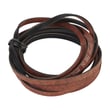
If you are replacing a belt after you find the label, the dryer drum belt WP8547157 is a common match for this model.
Last updated: February 2026
How do I know if my Kenmore dryer thermal fuse is blown?
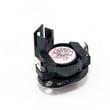
A blown thermal fuse on your Kenmore Elite dryer model 11068087701 commonly shows up as a dryer that won’t run at all or runs but has no heat. The sure way to know is to unplug the dryer and test the fuse for continuity with a multimeter (no continuity means it’s blown).
Quick symptoms to look for
- Dryer will not start even though the door is closed and controls are set to run
- Drum turns but there is no heat (electric dryers can still tumble with a heat-side problem)
- Dryer stops mid-cycle and will not restart until the issue is corrected
- You see airflow-related warnings or poor drying performance (often tied to overheating conditions)
Confirm it before replacing parts
We recommend following the access and test steps in the 11068087701 manual. In general, the process looks like this:
- Unplug the dryer (or shut off power at the breaker)
- Access the thermal fuse (typically on the blower housing or exhaust path)
- Remove at least one wire from the fuse terminal
- Check continuity across the fuse with a multimeter
- If the fuse is open (no beep/no continuity), replace it
What the meter reading means
| Multimeter result | What it means | What to do |
|---|---|---|
| Continuity (beep or near 0 ohms) | Fuse is good | Keep troubleshooting heat or run issues |
| No continuity (open circuit) | Fuse is blown | Replace the thermal fuse |
Why the fuse blew (fix this too)
A thermal fuse usually blows because the dryer overheated, most often from restricted venting. Your manual’s troubleshooting guidance for airflow issues aligns with this: clean the lint screen and make sure the vent run is not crushed, kinked, or packed with lint.
- Clean the lint screen every load
- Check the vent hose behind the dryer for kinks or crushing
- Clear lint buildup from the vent pipe to the outside hood
- Confirm the outside exhaust hood opens freely
Parts that commonly apply
If your fuse tests open, the correct replacement for this model is the dryer thermal fuse WP3390719.
Last updated: February 2026
What does F40 mean on a Kenmore Elite dryer?
On the Kenmore Elite dryer model 11068087701, an F40 code points to a control communication problem (the dryer’s main control is not reliably “talking” to a motor or drive-related circuit). We fix it by checking power, wiring connections, and heat-related safety trips first.
What to check first (fast, no parts)
- Unplug the dryer for 2 minutes, then restore power and retry a cycle.
- Confirm the outlet is supplying the correct voltage (electric dryers need full 240V; a half-tripped breaker can cause odd codes).
- Inspect the harness connections you can access at the control and motor area for loose plugs, corrosion, or pinched wires.
- Clear airflow restrictions; overheating and safety trips can trigger secondary symptoms.
- If the code returns immediately, stop running the dryer and move to component checks.
Airflow and overheating checks (common root cause)
Your manual calls out airflow problems as a diagnostic condition; restricted venting can overheat the dryer and lead to shutdowns and fault behavior. Use the venting guidance and diagnostics in the 11068087701 owner's manual.
- Clean the lint screen and lint screen housing.
- Check the vent run for kinks, crushing, or heavy lint buildup.
- Verify the exterior vent hood opens freely and is not blocked.
Parts that commonly relate to heat and shutdown symptoms
If your dryer overheated or stopped mid-cycle, these model-matched parts are common checks:
| Symptom you notice | Part to test/inspect | What it affects |
|---|---|---|
| Dryer won’t run or stops quickly | Dryer thermal fuse WP3390719 | Cuts power to protect against overheating |
| Runs but heat is erratic | Dryer thermistor WP8577274 | Feeds temperature data to the control |
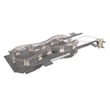
| No heat (electric) | Dryer heating element WP8544771 | Produces heat for drying |
Why it matters
An F40 is often a “system” code, not a single failed part. Fixing airflow, confirming correct power, and checking safety devices first prevents repeat failures and protects the motor, heater circuit, and control wiring.
Last updated: February 2026
What are the codes for Kenmore Elite dryer?
For Kenmore Elite dryer model 11068087701, the display can show diagnostic codes that point to power supply issues, airflow restrictions, or control and sensor problems. Use the code to guide quick checks first, then follow the model’s troubleshooting steps in the 11068087701 owner's manual.
Common codes you may see on 11068087701
- PF: Power failure during a cycle; press and hold START to restart.
- L2: Low or no line voltage; the drum may turn but the heater may not run.
- AF: Low airflow; vent may be crushed, kinked, or blocked.
What to do first (fast checks)
- PF: Restart the cycle; confirm the outlet has power.
- L2:
- Check for a tripped breaker or blown fuse (electric dryers typically use two fuses/breakers).
- Confirm the power cord is installed correctly.
- Run a Timed Dry heated cycle to verify heat.
- AF:
- Clean the lint screen and check the lint screen housing.
- Inspect the vent hose for crushing behind the dryer.
- Check the outside vent hood for blockage.
Error-code families you might encounter
Some Kenmore Elite dryers also use F-codes that point to specific circuits (control board, keypad, heater relay, thermistors). If your display shows an F-code, use the code list and steps in Kenmore elite dryer error codes to match the code to the most likely failure area.
| Code type | What it usually indicates | Typical next step |
|---|---|---|
| PF | Power interruption | Restart; check outlet/breaker |
| L2 | Supply voltage problem | Check both breakers/fuses; verify cord |
| AF | Restricted venting | Clear venting; confirm strong exhaust |
| F-codes | Control or sensor circuit issue | Follow code-specific tests |
Why it matters
Running with AF (restricted airflow) can cause long dry times and overheating symptoms; L2 can prevent the heater from turning on even though the drum tumbles. Correcting venting and power issues often restores normal drying without replacing parts.
Last updated: February 2026