


What is the depth of a Whirlpool dishwasher?
Most Whirlpool undercounter dishwashers, including model GU2500XTPS0, are designed to fit a standard 24-inch-deep cabinet opening; the overall depth is typically about 24 inches, but the door and handle can add extra projection beyond the cabinets.
Typical dishwasher depth measurements
When we talk about “depth,” it helps to separate cabinet cutout depth from the dishwasher’s overall depth.
- Cabinet opening depth (standard): about 24 inches
- Dishwasher cabinet depth (typical): about 23 to 24 inches
- Overall depth with door/handle: often extends past 24 inches
- Depth can change if the unit is not pushed fully back or if the toe panel is adjusted
Quick reference table
| Measurement you’re checking | What it usually means | Typical value |
|---|---|---|
| Cabinet opening depth | Space from cabinet face to back wall | ~24 in. |
| Dishwasher body depth | Main cabinet (without door) | ~23 to 24 in. |
| Overall installed depth | Door/handle projection past cabinets | 24+ in. |
How we recommend measuring (so you get the right fit)
- Measure the cabinet opening depth from the front cabinet face to the back wall.
- Check for anything behind the dishwasher (water line, drain hose loop, electrical box) that can prevent it from sliding fully back.
- If you’re matching a flush look, measure how far the door and handle stick out when closed.
Why it matters
Depth affects whether the dishwasher sits flush with your cabinets and whether the door opens freely without hitting adjacent drawers or pulls. It also helps prevent installation issues caused by hoses and wiring being pinched behind the unit.
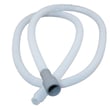
If you’re troubleshooting fitment after installation, a kinked drain line can also keep the dishwasher from sliding back; replacing a worn or stiff hose like the dishwasher drain hose 8269144A can help restore proper routing.
Last updated: January 2026
What is the error code H on a Whirlpool dishwasher?
On the Whirlpool GU2500XTPS0 dishwasher, error code H commonly points to a water fill problem (the dishwasher is not getting water fast enough or at all). Start by confirming the water supply is on, the inlet line is not kinked, and the dishwasher can actually fill.
What to check first (fast, no tools)
- Make sure the shutoff valve under the sink is fully open.
- Confirm the kitchen faucet has normal water pressure (hot and cold).
- Check the supply line for kinks, crushing, or a pinched spot.
- If you have a recent install, confirm the supply line connection is not cross-threaded or leaking.
- Power reset: turn off the breaker for 1 minute, then restore power and try a cycle again.
Parts that commonly cause an H (fill) error
If the supply is good but the dishwasher still will not fill, these model-related parts are the most common suspects:
- Dishwasher water inlet valve WP8531669
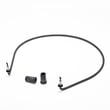
- Dishwasher water inlet tubing W10878507
- Fuse 8193762 (if the dishwasher is completely dead or intermittently loses power)
Quick symptom-to-cause guide
| What you notice | Most likely cause | What we do next |
|---|---|---|
| Tub stays dry, no water sound | Inlet valve not opening, no supply | Verify valve is open; test/replace inlet valve |
| Slow fill, cycle stops early | Restricted supply line or inlet screen | Inspect line and inlet screen; correct restriction |
| Fills sometimes, then stops | Electrical issue, loose connection | Check wiring and fuse; inspect harness connections |
Why it matters
A dishwasher that cannot fill will not wash, heat, or drain correctly. Fixing the fill issue early helps prevent poor cleaning, standing water, and repeated cycle failures.
Helpful DIY skill builder
If you plan to test electrical parts during troubleshooting, use how to use a multimeter to test electrical parts video to get accurate readings safely.
Last updated: January 2026
How do I reset the error code on my Whirlpool dishwasher?
On the Whirlpool GU2500XTPS0 dishwasher, most error-code resets are done by canceling the cycle and fully resetting power; if the code returns right away and the tub still has water, treat it as an active drain or fill problem, not just a “stored” code.
Quick reset steps (safe, no tools)
- Press Cancel/Drain and let the dishwasher run the drain portion until it stops.
- If the display still shows the code, turn power off at the breaker for 1 minute, then restore power.
- Start a Rinse or 1-hour type cycle and listen for: fill (water sound), wash (spray), then drain.
- If water remains in the bottom after Cancel/Drain, focus on the drain path first.
If it stops mid-cycle and leaves water in the bottom
A repeat error after a reset usually means the control is detecting the same condition again (commonly a drain restriction, weak drain pump, or a fill issue).
What to check first
- Garbage disposal knockout: If the drain hose connects to a disposal, confirm the inlet knockout plug was removed.
- Drain hose routing: Look for kinks and make sure the hose has a high loop under the counter.
- Air gap (if used): Check for clogs at the sink air gap cap.
- Filters and sump area: Remove debris that can block water flow to the pump.
- House drain: Slow sink draining can back up into the dishwasher.
Parts that commonly relate to “won’t drain” or “stops and leaves water”
| Symptom | Most likely area | Example part for GU2500XTPS0 |
|---|---|---|
| Won’t drain, water left in tub | Drain path or drain pump/impeller | Impeller 8193951A |
| Drains slowly, intermittent stopping | Drain hose restriction or routing | Dishwasher drain hose 8269144A |
| Fills poorly or stops early | Water supply or inlet valve | Dishwasher water inlet valve WP8531669 |
Why it matters
Resetting clears the control’s state, but it does not fix the condition that triggered the code. If the dishwasher cannot drain or fill correctly, rerunning the cycle will bring the same error back and can leave standing water that causes odors and poor cleaning.
Last updated: January 2026
What to do when your whirlpool dishwasher won't drain?
If your Whirlpool dishwasher model GU2500XTPS0 will not drain, we start by clearing a blockage in the filter/sump area and then confirm the drain path is open (air gap or disposal inlet, drain hose, and pump). Most no-drain problems come from a clog, kink, or a failed drain component.
Quick checks we do first (fastest wins)
- Turn off power at the breaker before reaching into the sump area.
- Remove standing water with a cup or wet/dry vacuum so you can see debris.
- Clear the filter area and sump of labels, glass, food, and twist ties.
- Check the sink drain connection: clear the air gap (if used) and confirm the garbage disposal knockout plug was removed.
- Inspect the drain line for kinks, crushing, or a high loop that fell down.
Parts that commonly cause a no-drain condition
If the drain path is clear but water still will not pump out, these parts are the most common suspects.
| Symptom | Most likely cause | What we check next |
|---|---|---|
| Hums but no water moves | Drain pump jammed or impeller issue | Look for debris at the pump inlet and inspect the impeller |
| Drains slowly | Partial clog in hose or sink connection | Flush/clear the hose and air gap/disposal inlet |
| Stops mid-cycle, dead or intermittent | Electrical protection opened | Test the fuse and wiring connections |
| Won’t fill and won’t drain correctly | Water level/flow problems | Verify inlet valve operation and proper fill |
Helpful model-matched parts to consider:
- Dishwasher drain hose 8269144A (kinked, clogged, or internally restricted hose)
- Fuse 8193762 (open fuse can stop the unit from running the drain function)
Step-by-step drain troubleshooting (what we recommend)
- Run a cancel/drain (if your control panel supports it) and listen for the drain motor.
- Verify the drain hose routing: it should rise up under the counter (high loop) before going to the sink/disposal.
- Clear the sink-side connection: air gap cap and hose, or disposal inlet.
- Check for pump obstruction: debris in the sump can block the pump inlet or impeller.
- Electrical check (if needed): inspect wiring for damage and test the fuse.
Why it matters
A dishwasher that cannot drain can leave dirty water in the tub, cause odor, and trigger cycle interruptions. Fixing the drain path early also helps protect the pump motor from overheating and premature failure.
Last updated: January 2026







