Installation guide
 Owner’s manual


What is the life expectancy of a Whirlpool dryer?
A Whirlpool electric dryer like model WED4616FW0 typically lasts 10 to 15 years with normal household use. Consistent airflow maintenance (lint screen and venting) and fixing wear items early often pushes real-world life toward the high end of that range.
What most affects dryer lifespan
- Airflow and venting: restricted venting makes the heater and thermostats run hotter and longer.
- Lint screen habits: clean it before every load (this is a top longevity factor).
- Load size: chronic overloading strains the belt, drum support, and motor.
- Heat management: repeated overheating can trip thermal protection parts.
- Timely repairs: replacing common wear parts prevents bigger failures.
Common wear parts that can extend life when replaced
If the dryer tumbles poorly, squeals, or stops mid-cycle, these are frequent culprits on electric dryers:
| Symptom | Common cause | Example part for WED4616FW0 |
|---|---|---|
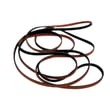
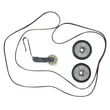
| Drum not turning | Worn/broken belt | Belt 341241 |
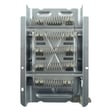
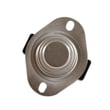
| No heat or overheating shutdown | Heater or thermal protection issue | Dryer heating element 279838 |
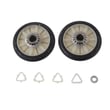
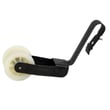
| Squealing or thumping | Drum support wear | Dryer repair kit 4392065 |
Maintenance checklist (simple, high impact)
- Clean the lint screen before every load.
- Inspect and clean the exhaust duct periodically; keep it short and unkinked.
- Confirm proper power supply for an electric dryer (240V) if performance changes.
- Keep the dryer level so the load contacts moisture sensors correctly on automatic cycles.
Why it matters
A dryer that runs with poor airflow can take longer to dry, run hotter, and cycle safety thermostats more often. That extra heat and run time accelerates wear on the heating system, motor, and drum support components.
For model-specific use and care guidance, follow the WED4616FW0 owner’s manual and venting/electrical details in the WED4616FW0 installation guide.
Last updated: February 2026
What are the common problems with whirlpool dryers?
Common Whirlpool dryer problems on model WED4616FW0 include a dryer that will not start, runs but will not heat, takes too long to dry, makes unusual noises, or will not tumble. Most issues trace back to power supply, door switch, airflow restrictions, or normal wear parts.
Quick checks we recommend first
- Confirm the door closes fully; a dryer will not run if the door switch is not made.
- Check both household fuses or both breakers; electric dryers use two (the drum can turn with no heat if one is tripped).
- Verify the dryer has a 240-volt supply (required for heat on an electric dryer).
- Clean the lint screen before every load.
- Inspect the vent for crushing, kinks, excessive length, or too many turns.
Symptom-to-cause guide (most common)
| Symptom | Most likely causes | What to do next |
|---|---|---|
| Won’t start | Door not closed, failed door switch, tripped breaker | Check door closure, test/replace dryer door switch WP3406107, reset both breakers |
| Runs but no heat | One breaker tripped, heater circuit fault | Confirm 240V, then consider dryer heating element 279838 and heat safety parts |
| Long dry times | Restricted venting, lint buildup | Clean lint screen and venting; confirm proper vent routing per WED4616FW0 owner’s manual |
| Squealing, thumping, rumbling | Worn belt, idler pulley, rollers/bearings | Inspect belt path and drum support; consider belt 341241 |
| Stops mid-cycle or overheats | Airflow restriction, thermostat/fuse opening | Fix venting first; then check thermal cut-off and thermostats |
Why it matters
Airflow and power issues are the top causes of “no heat” and “takes too long to dry” complaints. Fixing vent restrictions and confirming the full 240V supply prevents repeat failures of heating and safety components.
When parts are commonly needed
- No tumble or squeal: Belt 341241 (and often an idler/roller kit)
- No heat: Dryer heating element 279838 (after confirming both breakers and venting)
- Won’t start with door shut: Dryer door switch WP3406107
Last updated: February 2026
How do you know if a thermal fuse is blown on a whirlpool dryer?
On a Whirlpool WED4616FW0 electric dryer, a blown thermal fuse commonly shows up as a dryer that will not start, or a dryer that runs but has no heat. The sure way to know is a continuity test with a multimeter after disconnecting power and accessing the fuse.
What you’ll notice first (common symptoms)
- Dryer will not run even though the door is closed and you press Start
- Drum turns but there is no heat (clothes stay damp)
- Cycle seems normal but drying times get longer (often from restricted venting that overheats the dryer)
- You recently had a hot or “burning” smell, then the dryer stopped heating
How we confirm it (quick continuity test)
Follow the safety steps and access guidance in the WED4616FW0 owner’s manual.
- Unplug the dryer (or shut off power at the breaker for a hardwired setup).
- Remove the necessary panels to reach the fuse (commonly on or near the blower housing on many Whirlpool designs).
- Pull at least one wire off the fuse terminal.
- Set your multimeter to continuity (or lowest ohms).
- Test across the fuse terminals.
Reading the meter
| Meter result | What it means | What to do next |
|---|---|---|
| Beep or near 0 ohms | Fuse is good | Keep troubleshooting heat or start circuit |
| No beep or OL/infinite | Fuse is blown | Replace the fuse kit and fix the overheating cause |
Parts that are commonly involved
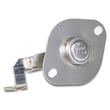
On this model, overheating protection parts are often serviced together. If you’re replacing the thermal cut-off style fuse components, use the correct kit for the dryer: dryer thermal cut-off fuse kit 279816.
Why it matters (fix the cause, not just the fuse)
A thermal fuse usually opens because the dryer overheated. If the vent is crushed, kinked, or clogged, the replacement fuse can fail again. Our installation guidance calls out making sure the vent is not crushed or kinked and verifying heat during the initial run checks. See the WED4616FW0 installation guide for venting and startup checks.
Overheating causes to correct right away
- Clean the lint screen before every load
- Clear lint buildup from the exhaust duct and outside hood
- Replace crushed or excessively long vent runs
- Confirm strong airflow at the outside vent while the dryer runs
Last updated: February 2026
Where is my dryer part number?
On your Whirlpool WED4616FW0 electric dryer, the part number is printed on the part itself (often on a sticker, stamp, or molded marking). For ordering, we recommend using the dryer’s model number from the rating label first, then matching the exact part number from the parts diagram in the WED4616FW0 owner’s manual.
Where to look for the model and part numbers
Most customers find what they need in these spots:
- Model/serial (rating) label: typically inside the door opening or on the cabinet opening near the door
- Heating parts: markings on the heater housing or the element itself (common when diagnosing “no heat”)
- Door area parts: labels on the switch body or latch area (for “won’t start” issues)
- Drum drive parts: numbers printed on the belt or stamped on the idler bracket
- Blower housing: part numbers molded into the blower wheel or stamped on the housing
Quick match: symptom to likely part area
Use this to narrow down where to check first.
| Symptom | Most likely area to check | Example part for this model |
|---|---|---|
| Dryer runs but won’t heat | Heater circuit | Dryer heating element 279838 |
| Dryer won’t start | Door circuit | Dryer door switch WP3406107 |
| Loud squeal or thump | Drum support/drive | Belt 341241 |
| Runs but airflow is weak | Lint/vent/blower | Dryer blower wheel WP694089 |
Why it matters
Using the model number WED4616FW0 ensures the replacement part fits your exact Whirlpool dryer design. Many dryer parts look similar across models, but small differences in terminals, mounting, or length can cause poor performance or repeat failures.
Pro tips before you order
- Compare the part number printed on the old part to the listing details
- If the old label is unreadable, match by location and shape using the exploded-view diagrams in the WED4616FW0 installation guide
- For heating problems, also inspect venting; restricted airflow can overheat the heater circuit and damage components
Last updated: February 2026