Owner’s manual
 Error Codes





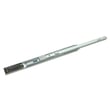
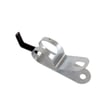
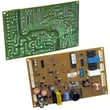
How to raise a refrigerator off the floor?
To raise your Kenmore Elite refrigerator model 79577249601 off the floor, turn the two front leveling screws clockwise to lift the front of the cabinet. Raise each side a little at a time until the refrigerator feels stable and the doors close easily; then reinstall the base cover. See the 79577249601 owner's manual for the leveling and door-alignment steps.
How to raise it safely (leveling screws)
- Keep the refrigerator in its final position and plugged into a grounded outlet.
- Have someone gently push against the top of the refrigerator to take weight off the leveling screws.
- Turn the right front leveling screw clockwise to raise the right side.
- Turn the left front leveling screw clockwise to raise the left side.
- Make small, equal adjustments side-to-side to prevent door misalignment.
- Recheck that both fresh food doors close easily after each adjustment.
Quick checks after you raise it
| What to check | What “good” looks like | What to do if it’s not right |
|---|---|---|
| Cabinet stability | No rocking when you press on corners | Raise the low side using the front leveling screw |
| Door closing | Doors close fully without slamming | Tilt slightly more to the rear by turning both leveling screws clockwise the same amount |
| Door gap | Even spacing between doors | Use the snap rings at the middle hinge to raise the low door (per manual) |
Why it matters
Raising and leveling the refrigerator helps prevent vibration or rattling, improves door sealing, and reduces warm air leaks that can cause temperature swings and frost buildup.
If you are raising it to move it
The manual also notes that, depending on the model, you can raise the front so it rolls more easily or screw the leveling legs all the way in so they do not scrape the floor. Follow the moving prep steps in the 79577249601 owner's manual.
Last updated: January 2026
What are the common problems with Kenmore Elite refrigerators?
On the Kenmore Elite refrigerator model 79577249601, the most common problems we see are cooling issues (often tied to dirty condenser coils or airflow problems), ice maker and water supply complaints, doors that will not close or seal, and normal but surprising operating noises. Start with the quick checks in the 79577249601 owner's manual.
Most common symptoms and what to check first
- Not cooling well or warm temperatures: allow up to 24 hours after plugging in; confirm controls are set correctly; make sure doors close fully.
- Doors will not close completely: check leveling, food packages blocking the door, and bins or shelves out of position.
- Frost, water, or puddles: a clogged drain path can cause water issues; inspect the drain tube and look for ice buildup.
- Ice tastes bad or smells: discard the first batches after install, replace old ice, wrap foods tightly, and clean the ice bin.
- Noisy operation: many clicks, hums, and fan sounds are normal; compare to the “sounds you may hear” guidance in the manual.
Parts that commonly relate to these problems
If a basic check points to a failed component, these model-matched parts are commonly involved:
| Symptom | Likely area | Example model-matched part |
|---|---|---|
| Interior light stays off or door alarm behavior seems wrong | Door sensing | Lg refrigerator door switch 6600JB1010A |
| Water leaks, slow dispensing, or water line routing issues | Water line path | Refrigerator water tubing (check fit and routing) |
| Door not sealing, moisture around door | Door seal and alignment | Refrigerator door gasket (inspect for gaps/tears) |
| Warm temps with heavy frost or defrost issues | Defrost system | Defrost sensor or defrost heater |
Why it matters
Most “refrigerator not working” calls come down to airflow, door sealing, or maintenance. Keeping the condenser coils clean and making sure doors close and seal correctly reduces compressor run time, helps temperatures recover faster, and prevents odor and ice-quality problems.
Quick maintenance checklist (prevents repeat problems)
- Clean condenser coils on a regular schedule.
- Push bins and drawers fully into position so doors shut squarely.
- Clean door gaskets and the surfaces they touch; apply a thin coat of paraffin wax if gaskets stick.
- Empty and wash the ice bin if ice develops odor.
- Keep food wrapped to prevent odor transfer to ice.
Last updated: January 2026
What does DH mean on Kenmore Elite refrigerator?
On Kenmore Elite refrigerator model 79577249601, DH (often shown as dH or Er dH) points to a defrost heating problem. It typically means the refrigerator is not sensing the expected temperature rise during defrost, so the unit may start building frost and cooling performance can drop; see the 79577249601 owner's manual for control and troubleshooting guidance.
What you’ll notice when DH is active
- Frost or ice building up on the freezer back wall
- Warmer-than-normal fresh food temperatures
- Reduced airflow from the vents (ice blocking airflow)
- Water leaking or puddles after a defrost attempt
- The refrigerator running longer than usual
Most common causes (and what to check first)
Before checking parts, unplug the refrigerator and follow the safety steps in the 79577249601 owner's manual. Then focus on these common defrost-system issues:
- Heavy frost on the evaporator cover: points to a defrost failure.
- Defrost heater circuit problem: heater, wiring, or connectors can be open or damaged.
- Defrost sensor issue: a bad sensor can prevent proper defrost operation; for this model, a common related part is the refrigerator defrost sensor assembly 6615JB2005C.
- Control problem: the electronic control may not be powering the heater during defrost.
- Airflow restrictions: blocked vents can worsen symptoms even after defrost.
Quick decision guide
| What you see | Most likely direction | What to do next |
|---|---|---|
| Solid frost sheet on freezer rear panel | Defrost system not working | Inspect heater/sensor wiring; test components |
| No frost, but DH keeps returning | Sensor or control logic issue | Check sensor connection; verify harness seating |
| Water under crisper/freezer after icing | Drain path affected by ice | Clear ice buildup; check drain tube routing |
Why it matters
The defrost system keeps the evaporator from icing over. When DH appears, frost can block airflow between the freezer and refrigerator sections, causing temperature swings, food spoilage risk, and longer compressor run times.
Last updated: January 2026
What size is Kenmore refrigerator model 79577249601?
Kenmore Elite refrigerator model 79577249601 is a 33-inch class bottom-freezer refrigerator with a typical total capacity around 22 to 25 cu. ft. Exact width, height, and depth vary by door style and handle; confirm your unit’s published dimensions in the 79577249601 owner's manual.
Typical size ranges you can plan around
Most Kenmore 795.7724_ / 795.7725_ bottom-freezer models fit these common planning ranges:
- Width: about 33 inches (cabinet width class)
- Capacity: about 22 to 25 cu. ft. total
- Depth: varies most; deeper with handles, shallower without
- Height: typically mid to upper 60-inch range
How we recommend measuring (so you get the right “real-world” size)
Measure your refrigerator and your space before ordering parts, moving the unit, or planning cabinetry:
- Width: widest point, often at the hinges
- Depth (case): back of cabinet to front of doors (no handles)
- Depth (overall): back of cabinet to front of handles
- Height: floor to top of hinge cover
- Clearance: space behind and above for airflow and water line routing
Quick reference table
| What you need | Measure from | Measure to |
|---|---|---|
| Width for cabinet opening | left outer edge | right outer edge (include hinges) |
| Depth for walkway clearance | back panel | front of handles |
| Height under cabinets | floor | top hinge cover |
Why it matters
“33-inch class” tells you the general fit, but the exact depth and door swing clearance determine whether doors open fully, drawers clear nearby walls, and the water line does not kink when you push the refrigerator back.
Last updated: January 2026