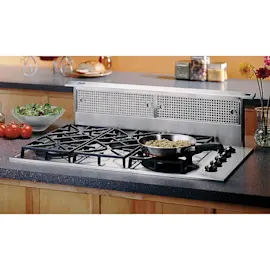
Installation guide
 Owner’s manual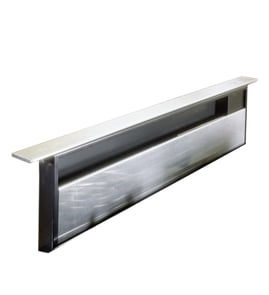

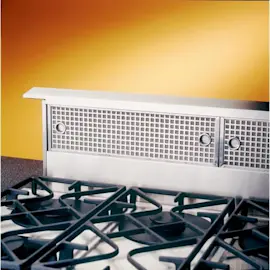
Why is my downdraft vent not rising?
If your Bosch DHD965AUC downdraft vent will not rise, the most common causes are a power issue, a control (UP/DOWN) problem, or a failed lift mechanism or motor. Start by confirming the unit has power and the UP/DOWN control is being used correctly, then move to electrical and mechanical checks.
Quick checks first (no tools)
- Press UP/DOWN firmly; this control raises and lowers the vent.
- Confirm the unit is plugged into a working outlet in the cabinet (the installation instructions call for a 3-prong receptacle).
- Make sure the cooktop is aligned so it does not interfere with the vent travel; the guide calls for a small gap between the cooktop and downdraft cover.
- If the vent is stuck partway, do not force it; binding can damage the lift mechanism.
Electrical checks (power and switch)
Always disconnect power before accessing wiring or internal components.
- Verify the outlet has power (trip/reset the breaker if needed).
- If you have a multimeter, check the UP/DOWN switch for continuity when pressed.
- If the switch tests good, check whether the lift motor is receiving power when UP is pressed.
What the results usually mean
| Test result | What it points to | What to do next |
|---|---|---|
| No power at outlet | Supply issue | Restore power, then retest |
| Switch has no continuity | Failed UP/DOWN switch | Replace the switch/control |
| Motor gets power but does not run | Failed lift motor or jammed mechanism | Inspect for binding; replace motor/mechanism |
| Motor does not get power | Control or wiring issue | Inspect wiring connections and control circuit |
Mechanical causes (binding or installation interference)
A vent that will not rise can be physically blocked.
- Check for interference from the cooktop or countertop cutout.
- Confirm mounting and leveling brackets are secure and not twisting the housing.
- Look for grease buildup or debris that could restrict the vent’s movement.
Why it matters
A downdraft that cannot rise will not capture smoke and steam effectively, and repeated attempts to run it while stuck can overheat or damage the lift motor, wiring, or control components.
For model-specific operating details, clearances, and service access steps, use the DHD965AUC installation guide and the DHD965AUC owner's manual.
Last updated: February 2026
What are the cons of a downdraft range?
Downdraft ventilation (like the Bosch DHD965AUC system used with a cooktop or range) typically captures smoke and grease less effectively than an overhead hood because it has to pull cooking fumes downward, away from their natural rise. It can also require more planning for ducting and cabinet space.
Common downsides to expect
- Weaker capture for heavy smoke and steam: Tall pots and high-heat searing can let fumes spread before the downdraft pulls them in.
- More sensitive to airflow conditions: Cross drafts from HVAC, open windows, or ceiling fans can push smoke away from the intake.
- Cabinet space tradeoff: The blower housing and duct path can reduce usable storage under the cooktop.
- Ductwork complexity: Long runs and multiple elbows reduce performance; this matters more in island and peninsula layouts.
- More installation constraints: Outlet placement and discharge direction can limit where the unit fits.
Installation and performance limits that matter on DHD965AUC
Our Bosch DHD965AUC installation guidance highlights a few practical constraints that can become “cons” in real kitchens:
- The blower ships with the discharge facing down, and you may need to rotate it right or left to avoid joists, plumbing, or wiring.
- For best efficiency, keep total ducting to 40 feet of equivalent duct or less (straight duct plus elbows and transitions).
- Electrical planning matters: the system draws 4 amps and needs a 120 VAC, 60 Hz grounded outlet; the power cord is about 2 feet long.
| Factor | Downdraft ventilation | Overhead hood (typical) |
|---|---|---|
| Smoke capture | Lower, especially with tall cookware | Higher, captures rising plume |
| Cabinet impact | Uses base cabinet space | Uses upper cabinet or wall space |
| Duct routing | Often longer, more elbows | Often shorter, more direct |
| Best use case | Open sightlines, no hood option | Frequent high-heat cooking |
Why it matters
If you cook with high heat (stir-fry, griddling, searing), capture efficiency and duct design directly affect odors, grease film on cabinets, and how hard the blower has to work. A well-planned duct run and clean filters help a downdraft perform as strongly as it can.
What we recommend
- Use the duct planning rules and equivalent-length guidance in the installation guide.
- Confirm electrical and outlet placement details in the owner's manual.
- Clean filters and grease-laden surfaces frequently to maintain airflow.
- If your duct run is long or has many elbows, consider simplifying the route before installation.
Last updated: February 2026
Do downdraft vents need to be vented outside?
Yes. For the best smoke, grease, and odor removal, a Bosch downdraft ventilation system like model DHD965AUC is designed to connect to ductwork that exhausts air out of the home. Some installations can be set up to recirculate, but ducted venting delivers the strongest capture and performance.
What “vented outside” means for a downdraft
A ducted downdraft pulls cooking fumes down through the vent, then pushes them through ductwork to an exterior termination (typically through a wall or floor route).
Key installation details we follow for DHD965AUC include:
- Plan duct routing before setting the cooktop and downdraft in place.
- Use the correct duct connection size; a 3-1/4 inch x 10 inch collar is provided for certain ductwork connections.
- Keep cooktop alignment accurate so the vent can raise and lower without interference.
- Provide a nearby 3-prong receptacle in the cabinet for the downdraft power cord.
For the exact ducting and electrical requirements, use the installation guide.
Ducted vs. recirculating: quick comparison
| Setup | Where the air goes | Best for | Tradeoffs |
|---|---|---|---|
| Ducted (outside venting) | Outside the home | Heavy cooking, best odor control | Requires duct routing and exterior outlet |
| Recirculating (ductless) | Back into the kitchen | Spaces where exterior ducting is not practical | Less effective at removing heat and moisture |
Why it matters
Downdraft systems fight natural heat rise from pans. Venting outside helps the blower move air efficiently, which improves capture of smoke and grease and reduces lingering odors in the kitchen.
Helpful use and care tips that support performance
Even with perfect ducting, airflow drops if the unit is dirty.
- Disconnect power before cleaning.
- Wash the two aluminum or stainless steel grease filters regularly (dishwasher or mild detergent solution).
- Vacuum the blower area to remove dust and grease buildup.
- Do not use abrasive cloths or scouring powders on finished surfaces.
- Do not immerse the blower in water.
Cleaning steps and safety notes are covered in the owner's manual.
Last updated: February 2026
Does downdraft cooktop ventilation work?
Yes; a downdraft system like the Bosch DHD965AUC works well for everyday cooking by pulling airborne contaminants down at the cooktop surface, especially when the vent is raised and the filters are clean. Like most downdrafts, performance drops with heavy smoke, tall cookware, or poor ducting.
What downdraft ventilation is best at
Downdraft ventilation is designed for general ventilating use and to exhaust airborne contaminants created during cooking with gas or electric cooktops.
- Capturing steam and light smoke from simmering and boiling
- Reducing cooking odors near the cooktop
- Helping in island or peninsula layouts where an overhead hood is not practical
- Working with a variety of cooktops when aligned correctly
What most often limits performance
Even when the blower is running, downdrafts can struggle when the cooking plume rises fast or gets blocked.
- High-heat searing, wok cooking, and heavy frying create fast-rising smoke
- Tall pots and griddles can deflect airflow away from the intake
- Long duct runs, too many elbows, or restrictions reduce airflow
- Dirty grease filters reduce capture and increase noise
- Misalignment between cooktop and vent can cause interference when the vent raises/lowers
Quick alignment check (model-relevant)
For the Bosch DHD965AUC, accurate cooktop alignment matters so the air vent can raise and lower without interference. The installation guidance calls for a small gap between the back of the cooktop and the front of the downdraft cover.
| Item to check | What “good” looks like | What happens if it’s off |
|---|---|---|
| Cooktop to downdraft alignment | Vent moves freely up and down | Binding, rubbing, or reduced intake area |
| Grease filters | Clean and seated correctly | Weak airflow, more odor, more noise |
| Duct connection | Secure, not crushed or leaking | Lower capture, more vibration |
Cleaning and care that keeps it working
We recommend following the cleaning steps in the documentation and disconnecting power before cleaning.
- Clean grease-laden surfaces frequently
- Wash the two aluminum/stainless steel grease filters (dishwasher or mild detergent)
- Vacuum the blower area as directed; do not immerse the blower in water
- Avoid abrasive cloths, steel wool pads, and scouring powders
Why it matters
Downdraft ventilation is all about capture at the source. Clean filters, correct cooktop spacing, and low-restriction ductwork make the biggest difference in how much smoke and odor your Bosch downdraft can actually pull down.
For model-specific installation and use-and-care details, use the installation guide and owner's manual.
Last updated: February 2026