Installation guide
 Owner’s manual
 Error Codes



Does my Kenmore top load washer have a filter?
Yes. Kenmore top load washer model 11026002011 uses drain and inlet screening to catch debris, but it typically does not have a large, user-cleanable “lint filter” like some front-load washers. Most “filter cleaning” on this style washer means checking the drain pump area and the inlet screens.
Where “filters” are on this washer
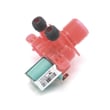
- Water inlet screens: small screens inside the hot and cold fill valve ports where the hoses connect.
- Drain pump trap area: debris can collect at the pump inlet or in the drain path (coins, socks, lint).
- Drain hose: kinks or buildup can act like a restriction and mimic a clogged filter.
How we recommend checking and cleaning it
- Unplug the washer and turn off hot and cold water.
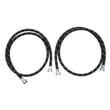
- Check inlet screens: remove fill hoses, rinse screens, and flush hoses into a bucket.
- Check draining: if the washer won’t drain or drains slowly, inspect the pump and drain path.
- Replace a failing pump if it’s noisy, jammed, or leaking; use the washer drain pump assembly WPW10276397.
Quick symptom guide
| Symptom | Most common “filter” area | What to do first |
|---|---|---|
| Slow fill or no fill | Inlet screens | Clean screens; verify 20-100 psi supply |
| Slow drain or standing water | Pump/drain path | Inspect pump inlet; check hose for kinks |
| Hums but won’t drain | Pump impeller jam | Clear debris or replace pump |
Why it matters
A restricted inlet screen can cause long fill times and cycle issues, and a blocked drain path can leave water in the tub and strain the drive system. Keeping these areas clear helps the washer run quieter and finish cycles normally.
For model-specific access steps and safety notes, follow the 11026002011 installation guide.
Last updated: February 2026
How to identify a Kenmore washer model?
Your Kenmore washer model number is printed on the appliance’s model and serial tag. For Kenmore model 11026002011, you’ll typically find that tag under the lid on a top-load washer, inside the door opening on a front-load washer, or on the back panel near the power cord; matching the full model number ensures you get the correct parts and instructions.
Where to look on the washer
Check these common locations first (the tag is usually a sticker or metal plate):
- Top-load washers: under the lid, around the rim of the opening
- Front-load washers: inside the door opening, along the door frame
- Any style: back panel, often near the power cord or lower rear corner
- Near controls: behind or under the control console area (less common)
For model-specific diagrams and labeling references, use the 11026002011 owner's manual.
What the model number looks like (and what to write down)
Kenmore washer model numbers often start with 110 and can be 11 characters or longer. Record the full model number exactly as shown.
| What to capture | Example | Why it matters |
|---|---|---|
| Model number | 11026002011 | Matches the correct parts list and diagrams |
| Serial number | (varies) | Helps identify production version for some parts |
| Type | Top-load or front-load | Changes where the tag is located |
Quick checks to avoid ordering the wrong part
- Copy the model number character-for-character (no spaces)
- Confirm you are reading the model number, not the serial number
- If the tag is worn, take a clear photo and zoom in
- Use the model number to cross-check parts like the washer lid lock assembly W10404050 or washer drain pump assembly WPW10276397
Why it matters
Kenmore washers can look similar across series, but parts such as the lid lock, drain pump, drive belt, and electronic control board vary by model. Using the exact model number (like 11026002011) prevents fit issues and repeat repairs.
Last updated: February 2026
How many cubic feet is a Kenmore Model 11026002011 washer?
The exact tub capacity (cubic feet) for Kenmore washer model 11026002011 is listed in the product specifications section of the 11026002011 owner's manual. For most Kenmore 110-series top-load washers of this design, capacity commonly falls in the 3.2 to 3.5 cu. ft. range.
How to find the exact capacity for model 11026002011
We recommend using the model-specific specs because Kenmore 110 models can vary by platform and year.
- Check the Specifications or Product features section in the 11026002011 owner's manual
- Look for wording such as “basket volume,” “tub capacity,” or “capacity (cu. ft.)”
- If the manual lists basket volume in liters, convert to cubic feet (see table below)
- If you are comparing to a newer washer, note that “HE” designs often feel larger due to wash action, not just cubic feet
Quick conversion table (if the manual lists liters)
| If you see this in the manual | That equals (approx.) |
|---|---|
| 90 L | 3.2 cu. ft. |
| 99 L | 3.5 cu. ft. |
| 110 L | 3.9 cu. ft. |
Why it matters
Capacity affects how much you can wash per load, how well items circulate, and how you should dose detergent. Overloading a top-load washer can also increase vibration and wear on drive components such as the washer drive belt WPW10006384.
Practical loading guidance (works well for this washer style)
- Fill the basket loosely; do not pack items down
- Keep bulky items (blankets, comforters) to one or two pieces per load
- Balance mixed loads (towels with towels, jeans with jeans) to reduce out-of-balance spinning
- If the washer struggles to spin or drains slowly, reduce load size and check for drainage restrictions
Last updated: February 2026
What brand is Kenmore 11026002011?
Kenmore 11026002011 is a Kenmore brand washer model. Kenmore is the brand name shown for this appliance, and it’s the correct brand to use when you’re looking up parts, installation details, and operating information in the 11026002011 installation guide.
How to use the brand and model number when ordering parts
Using both the brand (Kenmore) and the full model number (11026002011) helps us match the correct diagrams and compatible parts.
- Match the full model number exactly: 11026002011
- Use the brand name exactly as shown: Kenmore
- Confirm the part by name and ID before ordering
- Compare symptoms to common failure parts (belt, lid lock, drain pump)
- Follow safety and access steps in the installation instructions before servicing
Common parts customers replace on Kenmore 11026002011
These are model-linked parts that often come up during washer troubleshooting.
| Symptom | Common part to check | Example part for this model |
|---|---|---|
| Won’t spin or agitate | Drive belt, actuator | Washer drive belt WPW10006384, washer actuator WPW10006355 |
| Won’t drain | Drain pump, drain hose | Washer drain pump assembly WPW10276397, washer drain hose W11244231 |
| Lid won’t lock or cycle won’t start | Lid lock | Washer lid lock assembly W10404050 |
Why it matters
Kenmore is the selling brand, but the model number is what determines the exact design and parts fit. For example, drive system parts like a belt or actuator can vary widely across Kenmore washers, so using 11026002011 prevents ordering the wrong component.
Last updated: February 2026
What is the average lifespan of a Kenmore washer?
A Kenmore washer typically lasts 10 to 15 years. For Kenmore model 11026002011, reaching the high end of that range comes down to correct installation, avoiding chronic overloading, and keeping the drain and drive system in good working order; those factors reduce wear on the motor, belt, and suspension.
Typical lifespan (what to expect)
Most residential washers fall into these ranges:
| Usage pattern | Typical lifespan | What shortens it fastest |
|---|---|---|
| Light (1 to 3 loads/week) | 12 to 15 years | Long periods of non-use, corrosion |
| Average (4 to 7 loads/week) | 10 to 13 years | Overloading, poor leveling |
| Heavy (8+ loads/week) | 7 to 10 years | Frequent bulky loads, repeated off-balance spins |
How to help your washer last longer
We recommend these habits for Kenmore top-load washers like model 11026002011:
- Keep loads balanced; mix items and avoid washing one heavy item by itself.
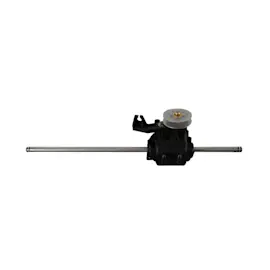
- Do not overload; consistent overloading strains the drive belt, motor, and gear case.
- Level the washer and keep it stable; vibration accelerates suspension and tub wear.
- Use the right amount of HE detergent (too much can cause residue and odor issues).
- Check pockets and use garment bags for small items to reduce pump clogs.
- Inspect hoses periodically and replace at the first sign of bulging, cracking, or leaking.
Signs it is nearing end of life (or needs a major repair)
These symptoms usually point to higher-cost repairs or multiple worn components:
- Loud grinding or banging during spin (often suspension, tub, or drive issues)
- Repeated failure to spin or agitate (actuator, belt, motor, control)
- Water not draining consistently (pump restriction or pump failure)
- Leaks that return after tightening hoses (hose, tub, or valve problems)
- Burning rubber smell (belt slipping)
Parts that commonly affect longevity
If performance problems start showing up, these model-compatible parts are often involved:
- Washer drive belt WPW10006384 (slipping, squealing, no spin)
- Washer drain pump assembly WPW10276397 (slow drain, standing water)
- Suspension W10780051 (off-balance, excessive shaking)
Why it matters
A washer that is level, not overloaded, and draining correctly runs cooler and smoother. That reduces stress on the drive system and suspension, which are the components that most often determine whether you get 8 years or 15 years out of the machine.
For model-specific safety, spacing, and setup details that protect the washer long-term, follow the 11026002011 installation guide.
Last updated: February 2026