Owner’s manual
 Error Codes


What is the most common problem with GE PFCS1PJYCSS refrigerators?
The most common issues we see with the GE PFCS1PJYCSS bottom-mount refrigerator are ice maker and water dispenser problems (no ice, slow water, leaks) and temperature complaints (fresh food too warm or freezer too warm). Many of these trace back to airflow, water supply, or control settings outlined in the owner's manual.
Most common symptoms (and what they usually point to)
- Not making ice or slow ice production: restricted water flow, a clogged filter, or an ice maker issue
- Slow water from dispenser: water filter restriction or air in the water line
- Water leaking: loose water line connection, filter head issue, or a water valve problem
- Refrigerator too warm: door left open, heavy loading, or airflow/fan problems
- Long run times: normal after first plug-in, hot weather, frequent door openings, or TurboCool enabled
Quick checks we recommend first
- Confirm temperature controls are set correctly (a control set to OFF or too warm can mimic a failure).
- Give it time after changes: after plugging in or adjusting settings, allow up to 24 hours for temperatures to stabilize.
- Rule out a defrost cycle: if cooling seems paused, wait about 30 minutes for defrost to finish.
- Check doors and packaging: make sure nothing is holding a door slightly open.
- Address water flow basics: replace the filter if flow is weak, then purge air from the dispenser.
Parts that commonly solve these complaints
| Problem area | What fails most often | Example part for PFCS1PJYCSS |
|---|---|---|
| Water dispensing, ice fill | Water inlet valve not opening fully | Refrigerator water valve WR57X33326 |
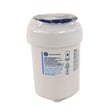
| Slow water, bad taste/odor, low ice output | Clogged water filter | GE refrigerator water filter MWFP |
| Temperature swings, warm sections | Sensor or airflow component issue | Temperature sensor WR55X10025 |
Why it matters
Ice, water, and cooling problems often share the same root causes: restricted airflow, incorrect control settings, or restricted water flow. Fixing the basics first prevents unnecessary part replacement and helps the refrigerator maintain stable temperatures.
For step-by-step filter and dispenser guidance, use how to replace the water filter in a GE refrigerator.
Last updated: February 2026
Is GE PFCS1PJYCSS considered high end?
GE PFCS1PJYCSS is generally considered a premium, higher-end GE refrigerator compared with basic GE models because it is a GE Profile-series bottom-mount design with upgraded features and a higher typical price tier. For exact feature and configuration details, use the PFCS1PJYCSS owner's manual.
How we define “high end” for this model
We typically consider a refrigerator “high end” when it has several of these traits:
- Premium series positioning (such as GE Profile)
- More advanced temperature management and controls
- Higher-cost components and assemblies
- More complex ice and water systems (filter, valve, ice maker)
- More specialized door, drawer, and bin hardware
What you can expect from a GE Profile bottom-mount
Many GE Profile bottom-mount refrigerators are built to deliver tighter temperature control and more convenience features than entry-level models. On PFCS1PJYCSS, common “premium” ownership factors include the complexity of the cooling system and the ice and water features.
Examples of premium-related parts on this model
| System | Example part on this model | What it supports |
|---|---|---|
| Water filtration | GE refrigerator water filter MWFP | Filtered dispenser water and ice |
| Water supply | Refrigerator water valve WR57X33326 | Controls water flow to dispenser and ice maker |
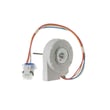
| Cooling airflow | Rca refrigerator evaporator fan motor WR60X10185 | Circulates cold air for consistent temps |
| Sensing/control | Temperature sensor WR55X10025 | Feeds temperature data to the control system |
Why it matters
“High end” usually means more features and a more refined user experience, but it also means more specialized parts and troubleshooting steps when something like cooling, ice production, or water dispensing is not performing normally.
Helpful next step if you are comparing features
To confirm what your exact PFCS1PJYCSS configuration includes (ice maker type, filter location, control settings, and recommended temperatures), follow the feature and operation sections in the PFCS1PJYCSS owner's manual.
Last updated: February 2026
What are the disadvantages of a bottom freezer refrigerator?
Bottom-freezer refrigerators like the GE PFCS1PJYCSS put fresh food at eye level, but the tradeoffs are higher upfront cost, more bending to reach frozen items, and a freezer drawer that can be harder to keep organized. They can also be more sensitive to door alignment and drain or defrost-related icing if maintenance is neglected.
Common drawbacks you may notice
- More bending and lifting: heavy frozen foods sit low in a deep drawer.
- Drawer organization challenges: items stack and get buried, especially in large baskets.
- More cold air loss during freezer access: a wide drawer can dump cold air quickly when opened.
- Door and drawer closing quirks: if the refrigerator is not level, the door or drawer may not close by itself (leveling legs often need adjustment).
- Potential for moisture and icing issues: frequent openings in humid conditions can increase interior moisture; defrost and drain components also matter over time.
What to check on your PFCS1PJYCSS if convenience is the issue
Use the setup and care guidance in the PFCS1PJYCSS owner's manual to confirm the refrigerator is installed and operating as intended.
Quick checks
- Level the cabinet so doors and the freezer drawer close smoothly.
- Avoid overloading the freezer drawer; use bins to separate categories.
- Keep food packages away from air vents to prevent freezing in the fresh-food section.
- Minimize long door openings in humid weather to reduce moisture buildup.
Why it matters
Most “bottom freezer” complaints come down to ergonomics (bending and drawer access) and airflow or moisture management. When the refrigerator is level and the doors seal well, temperature stability improves and you reduce nuisance issues like moisture and frost.
Bottom freezer vs. top freezer (at a glance)
| Feature | Bottom freezer | Top freezer |
|---|---|---|
| Fresh-food access | Easier (eye level) | Requires more bending |
| Freezer access | More bending | Easier reach |
| Organization | Deep drawer, can bury items | Shelves, often simpler |
| Typical cost | Often higher | Often lower |
Last updated: February 2026