Owner’s manual
 Error Codes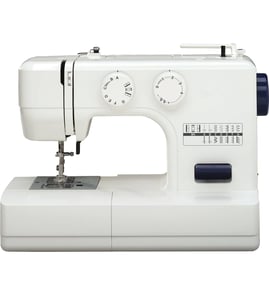

How do I know what model my sewing machine is?
On your Kenmore sewing machine, the model number is shown on the nomenclature plate on the back of the machine. For Kenmore model 15815250, use that exact model number when looking up parts and when matching the correct manual or diagrams.
Where to look on the machine
Check these common spots first:
- The nomenclature plate on the back of the sewing machine (most common)
- Near the electric cord receptacle area
- Around the base or bed area, depending on whether it is flat-bed or free-arm style
- On or near the face cover plate area (less common)
What to write down (and why)
When you find the plate, record the details exactly as printed.
| Item to record | What it’s used for | Example |
|---|---|---|
| Model number | Identifies the correct parts list and diagrams | 15815250 |
| Serial number (if present) | Helps distinguish production runs | Letters and numbers |
| Brand | Helps narrow manuals and repair info | Kenmore |
Why it matters
Kenmore sewing machines often look similar across multiple series, but parts like the motor belt, light bulb, bobbin winder components, and stitch controls can vary by model. Using the correct model number prevents ordering the wrong part and helps you follow the right setup and threading instructions.
Next best step
Confirm the model number on the plate, then match it to the documentation for your machine in the 15815250 owner's manual.
Last updated: February 2026
What is the most reliable brand of sewing machine?
Reliability depends more on the specific model and how it’s maintained than on the brand name alone. For a mechanical machine like the Kenmore 15815250, consistent threading, correct needle choice, and routine cleaning and oiling deliver the most dependable stitch quality and fewer jams (see the owner's manual).
How to judge “reliable” when comparing brands
When you’re shopping across brands, we recommend focusing on build and serviceability rather than a single “best” brand.
- Prefer a simple mechanical machine if you want fewer electronics to troubleshoot
- Look for steady stitch formation at slow and medium speeds
- Confirm easy access to the bobbin area for cleaning lint
- Choose a model with readily available consumables (needles, bobbins, belts)
- Make sure the machine feeds fabric evenly without you pulling the material
What makes your Kenmore 15815250 run reliably
The Kenmore 15815250 manual calls out several habits that directly prevent common “unreliable” symptoms like skipped stitches, thread breaks, and fabric not feeding.
- Use the correct needle size for the fabric and thread; replace needles often
- Pull thread tails about 4 inches to the rear before starting
- Test-stitch on a double-thickness scrap and adjust tension and stitch length
- Sew at a slow, even speed; guide fabric gently and never pull it
- Finish seams with the needle at its highest point; turn the handwheel toward you
Quick reliability checklist (brand-agnostic)
| What you notice | Usually points to | First action |
|---|---|---|
| Skipped stitches | Dull/bent needle, wrong needle type | Replace needle, rethread |
| Fabric not moving | Feed issue, presser foot setup | Check presser foot and feed path |
| Machine locks up | Thread jam, lint buildup | Remove jam, clean bobbin area |
Why it matters
“Reliable” sewing means consistent feeding, stable tension, and smooth motion through the drive system (motor, belt, and moving shafts). Good setup and cleaning reduce strain on those parts and prevent repeat problems.
For symptom-based help, use sewing machine fabric not moving or sewing machine locks up.
Last updated: February 2026
What year did Kenmore stop making sewing machines?
Kenmore did not stop making sewing machines in one single, well-defined year; the Kenmore name was used across many model series over time, and production and retail availability changed by model and era. For your Kenmore 15815250, the most reliable way to place it in time is to use the identification information and documentation in the 15815250 owner's manual.
How we date Kenmore sewing machines (including model 15815250)
We use model identification and documentation details to narrow the timeframe accurately.
- Check the nomenclature plate on the back of the machine for the full model number (15815250) and any additional codes.
- Compare the machine’s controls and accessories (stitch width, stitch length, presser feet) to the diagrams and parts list in the manual.
- Use the manual’s publication identifiers as a reference point for the manual itself (not a guaranteed build date for the machine).
- Keep the model number handy when ordering parts; it is the fastest way to avoid mismatches.
What the manual tells you (and what it does not)
Some Kenmore manuals include a print code (for example, a month and year) that indicates when that manual version was printed. That code helps date the documentation, but machines can be produced before or after a specific manual printing.
| Clue | Where to find it | What it indicates |
|---|---|---|
| Model number | Nomenclature plate | Exact machine identification for parts matching |
| Manual print code | Back pages or footer | Approximate manual printing timeframe |
| Features/accessories list | Manual diagrams and parts list | Confirms the correct manual and machine family |
Why it matters
Kenmore sewing machine parts and accessories vary by generation (needle system, presser feet, motor belt style, light bulb type). Using the correct model number and the 15815250 owner's manual keeps repairs accurate and prevents ordering the wrong items.
Last updated: February 2026
Who made Kenmore 15815250 sewing machines?
Kenmore model 15815250 is part of the Kenmore 158-series mechanical sewing machines that were commonly built for Sears by Japanese contract manufacturers. The exact factory can vary by production run, but these machines are widely known as durable, all-metal style Kenmore mechanical models.
How to identify the actual manufacturer on your machine
The most reliable way is to use the machine’s identification markings and the model information on the nomenclature plate.
- Check the nomenclature plate on the back of the sewing machine for the full model identification.
- Use the parts list and diagrams in the owner's manual to match assemblies (motor, belt, covers) to your machine.
- Look for any additional stamped or printed codes inside the face cover or near the base (often visible after removing a cover).
- If you are ordering parts, always use the model number and the part description (the manual specifically calls this out for ordering).
What “158” means for Kenmore sewing machines
“158” is the Kenmore prefix used for many vintage mechanical machines sold by Sears. In practical terms, it usually indicates a traditional mechanical design with serviceable components like the motor belt, light bulb, and presser feet.
Common 158-series components referenced in the manual
| Component | What it does | Why it matters |
|---|---|---|
| Motor belt | Transfers power from motor to handwheel | Worn belts can cause slipping or sluggish running |
| Light bulb | Illuminates the sewing area | A failed bulb reduces visibility and stitch accuracy |
| Presser feet | Controls fabric handling for different stitches | Wrong foot can cause poor feeding or uneven stitches |
Why it matters
Knowing the maker is helpful for compatibility when you are choosing accessories (needles, presser feet) and when troubleshooting mechanical symptoms like fabric not moving or the machine locking up.
For step-by-step operation details and the parts list, use the owner's manual.
Last updated: February 2026