Owner’s manual
 Error Codes


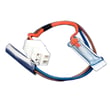
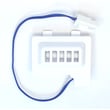
Why is there ice on the bottom of my freezer side by side?
Ice on the freezer floor is almost always caused by a defrost drain that is restricted, so meltwater can’t flow to the drain pan and instead refreezes at the bottom. On Kenmore model 79571602010, clearing the drain path and confirming the door seals close fully typically fixes it.
When the refrigerator goes through a defrost cycle, water should run into the drain pan; if the drain is blocked, water backs up and freezes on the freezer bottom.
What we recommend (safe DIY checks):
- Unplug the refrigerator.
- Remove the freezer drawer and ice bin so you can access the freezer floor.
- Melt the ice with warm air (hair dryer on low) or warm towels; do not chip ice with sharp tools.
- Flush the drain with hot water; a common mix is 1 teaspoon baking soda in 2 cups hot water.
- Make sure the drain opening is clear and water flows freely.
- If the drain keeps refreezing, inspect the drain tube for restriction or damage.
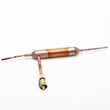
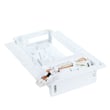
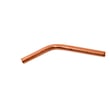
A common replacement part for drain issues is the refrigerator drain tube 5251JA3003D.
Warm, humid air entering the freezer increases frost and can contribute to ice buildup.
- Door not closing completely (food packages, bins, or a misaligned drawer)
- Door opened frequently
- Gasket not sealing (gaps, tears, or debris on the sealing surface)
- Freezer temperature set too warm (ice can melt slightly, then refreeze at the bottom)
Use this checklist to confirm the fix holds.
| Check | What “good” looks like | What it points to if not good |
|---|---|---|
| Drain flow test | Hot water disappears quickly | Drain still restricted or frozen |
| Door closure | Drawer and door shut flush | Alignment or obstruction issue |
| Frost pattern | No heavy frost returning in 24 to 48 hours | Air leak or airflow problem |
A blocked defrost drain can cause recurring ice sheets, water leaks, and poor cooling performance because airflow and defrost water management get disrupted.
For diagrams and access steps specific to this refrigerator, follow the 79571602010 owner’s manual.
Last updated: January 2026
What are the common problems with Kenmore Elite refrigerators?
Common Kenmore Elite refrigerator problems include no cooling (often tied to compressor or airflow issues), ice maker or water dispensing failures, and lights or controls acting up. On Kenmore model 79571602010, the troubleshooting steps in the 79571602010 owner's manual cover many of these symptoms and the quickest checks.
- Not cooling or weak cooling: confirm the unit is plugged in, breaker is on, and it is not in Demo (Demonstration) Mode.
- Compressor seems to run too much: frequent door openings, warm room temperature, or warm food loads can make run time normal.
- Rattling, vibration, or unusual sounds: check leveling and that the refrigerator sits solidly on the floor.
- Lights not working: reseat or replace the bulb; lights can shut off after the door is open for about 7 minutes.
- Ice maker not making ice: verify water supply is on and the ice maker is not jammed; then check for water flow issues.
The manual for this model calls out a few high-impact items:
| Symptom | Likely cause | Fast check you can do |
|---|---|---|
| No cooling but lights/display work | Demo Mode enabled | Open a door; press Ultra Ice + Refrigerator Temp together for 5 seconds to exit Demo Mode |
| Rattling/vibration | Leveling or floor issue | Adjust leveling legs until stable |
| Lights out | Bulb loose/burned out or door open too long | Reseat/replace bulb; close doors for 1 second to reset lights |
If troubleshooting points to a failed component, these are common culprits for this model:
- Airflow and temperature issues: lg refrigerator evaporator fan motor 4681JB1027C, refrigerator temperature sensor and cover ACQ73244001
- Ice maker problems: ice maker assembly (AEQ72909602) - refrigerator ice maker part by lg AEQ72909602
- Water dispensing or ice fill issues: refrigerator water inlet valve 5220JB2010A
Catching the root cause early helps prevent food spoilage and reduces strain on the sealed system. For example, a simple setting like Demo Mode can look like a major failure, while airflow problems can mimic compressor trouble.
Last updated: January 2026
Why is my refrigerator not getting cold at the bottom?
If your Kenmore 79571602010 is warm at the bottom, the most common causes are restricted airflow (blocked vents or overpacked shelves) or poor heat release from dirty condenser coils. Start with airflow and control settings, then clean the condenser area and listen for fan operation.
- Keep food packages from blocking interior air vents; blocked vents interrupt airflow and cause uneven temperatures.
- Set controls to normal; adjust the refrigerator control first, then wait 24 hours between changes.
- After a restart or power outage, let the refrigerator run 2 to 3 hours before judging cooling.
- Confirm room temperature stays between 55°F and 110°F.
- Avoid packing items tightly against the back wall where vents and return air paths are.
Dirty condenser coils trap dust and pet hair, making the sealed system run hotter and often leaving the fresh food section warmer.
- Unplug the refrigerator.
- Vacuum the condenser coils and the condenser fan area.
- Restore power; allow 24 hours for temperatures to stabilize.
On this model, the refrigerator control acts as the thermostat for the whole appliance, and the freezer control adjusts how much cold air moves to the refrigerator section. Follow the adjustment sequence in the 79571602010 owner’s manual.
| Symptom | Most likely cause | First action |
|---|---|---|
| Bottom shelves warm, top OK | Vents blocked, overpacked shelves | Clear vents, reorganize |
| Freezer OK, fridge warm | Airflow restriction or frost buildup | Clear vents, check for frost |
| Whole unit warm | Dirty coils, door not sealing | Clean coils, check door closure |
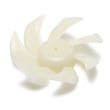
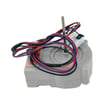
- No airflow sound from the freezer area: check the lg refrigerator evaporator fan motor 4681JB1027C.
- Temperatures swing or seem inaccurate: check the refrigerator temperature sensor and cover ACQ73244001.
A warm bottom usually means cold air is not circulating correctly or the refrigerator cannot shed heat efficiently; fixing airflow and coil cleanliness restores even cooling and helps protect food.
Last updated: January 2026