Owner’s manual



How do I find the cubic feet of my dryer?
To find the cubic feet (capacity) of your Samsung dryer model DV393ETPARA, we measure the inside of the drum and calculate its volume. Use the drum diameter and drum depth, then convert cubic inches to cubic feet; the exact drum dimensions are typically listed in the DV393ETPARA owner's manual.
Measure the drum (quick steps)
- Unplug the dryer for safety.
- Open the door and measure the drum diameter (inside wall to inside wall, straight across the center).
- Measure the drum depth (from the back wall of the drum to the inside front lip, not the door opening).
- Write both measurements in inches.
- Use the formula below to calculate volume.
Capacity formula (cubic feet)
A dryer drum is essentially a cylinder:
- Cubic inches = π × (diameter ÷ 2)² × depth
- Cubic feet = cubic inches ÷ 1,728
Example calculation
| Measurement | Example value |
|---|---|
| Drum diameter | 27 in |
| Drum depth | 20 in |
| Cubic inches | 11,454 in³ |
| Cubic feet | 6.6 ft³ |
(Your DV393ETPARA measurements will be different; this is just to show the math.)
What to do with the number
Knowing cubic feet helps you match the dryer to your laundry needs and compare models.
- 5.0 to 7.5 ft³ is a common capacity range for full-size Samsung dryers.
- Larger capacity generally means fewer loads, but drying performance still depends on airflow and heat.
Why it matters
Capacity is only part of the story. If loads take too long to dry, restricted venting or lint buildup can make even a large-capacity dryer perform poorly. Our guide on dryer takes a long time to dry helps you check airflow, vent length, and lint blockage.
Last updated: February 2026
How to reset Samsung dryer error code?
To reset an error code on your Samsung dryer model DV393ETPARA, we recommend doing a power reset: turn the dryer off, disconnect power for 1 to 5 minutes, then restore power and try a cycle again. If the code returns, the dryer is detecting an ongoing problem.
How to do a safe reset
- Press Power to turn the dryer off.
- Unplug the power cord (preferred).
- If you cannot reach the plug, turn off the dryer circuit breaker.
- Wait 1 to 5 minutes.
- Restore power, then run a short Timed Dry cycle to see if the code comes back.
What to do if the error code comes back
A reset clears the control temporarily; a repeating code usually points to a real issue such as airflow restriction, overheating, or a sensor problem.
- Clean the lint screen and check the vent for blockage or crushing.
- Avoid overloading; heavy loads can trigger heat and airflow issues.
- If the dryer is not heating correctly, check common heat-related parts such as the thermistor and safety thermostats.
- If the drum is not turning or the dryer is unusually noisy, inspect the belt and drum support components.
Common “repeat code” causes and related parts
| Symptom you notice | What it often points to | Example part for DV393ETPARA |
|---|---|---|
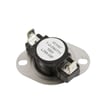
| Long dry times, hot cabinet | Restricted venting, overheating | Dryer high-limit thermostat DC47-00018A |
| No heat or heat cuts out | Heater circuit or safety fuse opening | Samsung dryer heating element DC47-00019A |
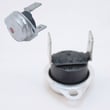
| Dryer stops and shows a temp-related code | Temperature sensing issue | Dryer thermistor DC32-00007A |
Why it matters
Repeated error codes are the dryer’s way of preventing damage from overheating, poor airflow, or failed components. Resetting is a good first step, but fixing the underlying cause helps restore normal drying performance and protects the heater and controls.
For model-specific error code meanings and checks, use the DV393ETPARA owner’s manual and our Samsung dryer error codes guide.
Last updated: February 2026
What is the most common Samsung dryer error?
On Samsung dryers such as model DV393ETPARA, the most common error is a door-related error caused by the door not fully closing or the door switch not sensing a solid latch. Next most common are airflow and heating-related errors, often triggered by lint restriction and overheating. See the DV393ETPARA manual for the exact code list and meanings.
What to check first (fast, no tools)
- Open and firmly re-close the door; listen for a solid latch click.
- Clear lint from the lint screen and the lint screen housing.
- Run a timed dry cycle and confirm strong airflow at the outside vent hood.
- Avoid overloading; heavy loads can pull the door slightly out of alignment.
- If an error returns immediately, power the dryer off for 1 minute and restart.
Common Samsung dryer error themes and what they usually mean
| Error theme | What you typically notice | Most common cause | What to do next |
|---|---|---|---|
| Door / dE-type | Dryer stops, won’t start, or beeps | Door not fully closed, door switch issue | Re-seat door; inspect latch area; check door switch circuit per manual |
| Heating / temperature | No heat, shuts off early, or overheats | Restricted venting, failed thermostat/fuse, sensor issue | Clean venting; test heat circuit parts |
| Airflow / long dry | Clothes take too long | Lint blockage, crushed vent, blower issue | Clear vent path; inspect blower wheel |
Parts that commonly relate to heating and airflow errors
If your DV393ETPARA shows heating or temperature errors (or dries poorly), these model-matched parts are common suspects:
- Dryer thermistor DC32-00007A (temperature sensing)
- Dryer high-limit thermostat DC47-00018A (overheat protection)
- Dryer thermal cut-off fuse, 320-degree f DC47-00015A (opens if overheating occurs)
- Samsung dryer heating element DC47-00019A (electric heat source)
- Dryer blower wheel DC67-00180B (moves air through the drum and vent)
Why it matters
Door, airflow, and heating errors are often symptoms of a simple root cause: a poor door seal/closure or restricted ventilation. Fixing the underlying issue helps prevent repeat shutdowns, long dry times, and overheating that can trip safety devices.
For code-by-code troubleshooting steps, we recommend using the model-specific guide: Samsung dryer error codes.
Last updated: February 2026