Installation guide
 Owner’s manual


What is the average lifespan of a KitchenAid dishwasher?
Most KitchenAid dishwashers, including the KitchenAid KUDE40FXSS5 undercounter dishwasher, typically last 9 to 12 years with normal household use and basic maintenance (cleaning filters, using rinse aid, and fixing leaks quickly).
Typical lifespan and what affects it
A dishwasher’s service life depends more on conditions than brand name alone. The biggest factors we see are:
- Water quality (hard water speeds up mineral buildup)
- How often you run loads (daily use wears pumps, seals, and racks faster)
- Detergent and rinse aid habits (rinse aid improves drying and helps reduce deposits)
- Filter and spray arm cleanliness (clogs reduce wash performance and strain the motor)
- Door sealing and loading habits (leaks and rack damage shorten life)
Maintenance that helps you reach the 9 to 12 year range
The KUDE40FXSS5 is designed to run longer, energy-efficient cycles; keeping the wash system clean helps it perform correctly over time.
- Clean and reinstall the filter regularly; replace it if it is cracked or won’t lock in place
- Use rinse aid consistently for better drying and to reduce hard-water film
- Check spray arms for blocked holes and clear debris
- Keep the door seal clean so the door closes tightly and doesn’t seep
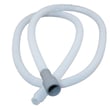
- Address slow draining early (kinks in the drain hose, clogs, or a weak drain pump)
| Item to maintain | What you do | How often (typical) |
|---|---|---|
| Filter | Rinse and scrub buildup | Monthly |
| Spray arms | Clear blocked jets | Every 1 to 3 months |
| Door seal | Wipe and inspect for tears | Monthly |
| Drain path | Check for kinks/clogs | As needed |
Why it matters
A dishwasher that is struggling to drain, heat, or spray correctly often runs longer and works harder. That extra strain can shorten the life of key components like the pump, heater, and seals.
Helpful model-specific resources
For care steps, cycle expectations, and operating tips, follow the guidance in the KUDE40FXSS5 owner’s manual.
If you are troubleshooting poor drying or mineral buildup, the manual’s rinse aid guidance is especially important.
Last updated: January 2026
What is the most common problem with a KitchenAid dishwasher?
On KitchenAid dishwashers like model KUDE40FXSS5, the most common issue we see is a drain-related problem: the dishwasher won’t drain fully, drains slowly, or stops mid-cycle because water cannot leave the tub. Most fixes start with clearing a blockage and confirming the drain system is working per the KUDE40FXSS5 owner's manual.
What “drain problem” usually looks like
- Standing water in the bottom after the cycle ends
- Gurgling at the sink or disposer during drain-out
- Cycle pauses or ends early with water left behind
- Dishes come out dirty because wash water is not being exchanged
- You notice a burning smell or loud humming when it tries to drain (pump strain)
Quick checks we recommend first
- Cancel/Drain the cycle and listen for the drain pump running.
- Check the filter area for debris (labels, glass, food). If your filter cup is damaged or won’t seat, replace the dishwasher filter W10872845.
- Inspect the drain hose routing for kinks and make sure it has a proper high loop/air gap setup (installation details are in the KUDE40FXSS5 installation guide).
- Check the sink/disposer inlet (a common blockage point after a new disposer install).
- If the pump runs but water barely moves, the drain pump may be failing; the correct replacement for this model is the dishwasher drain pump WPW10348269.
Common causes and the most likely fix
| Symptom | Most common cause | Typical fix |
|---|---|---|
| Water left in tub | Clogged filter/sump area | Clean filter area; verify filter seats correctly |
| Slow drain | Kinked/blocked drain hose | Correct routing; clear hose or replace if restricted |
| Hums but won’t drain | Weak/failed drain pump | Replace drain pump |
| Stops and Start/Resume blinks | Door not fully latched or cycle interruption | Close/latch door; press Start/Resume (normal pauses can occur) |
Why it matters
A dishwasher that can’t drain properly often reuses dirty water, which hurts cleaning performance and can strain the pump and motor over time. Fixing drainage early is one of the best ways to prevent repeat wash issues.
Last updated: January 2026
How do I find the model number on my KUDE40FXSS5?
The model number and serial number for your KitchenAid KUDE40FXSS5 dishwasher are printed on a label inside the tub, near the door opening, on the right-hand or left-hand side. Open the door and look along the inner frame area near the front edge.
Where to look (fast checklist)
- Open the dishwasher door fully
- Look inside the dishwasher interior (the tub opening)
- Check the label near the door opening, not on the outer door panel
- Inspect both sides: right-hand side first, then left-hand side
- Use a flashlight; the label can be small or partially hidden by the rack
What the label includes
You will typically see both identifiers on the same label.
| Item on label | What it’s used for |
|---|---|
| Model number | Matching the correct parts diagrams and replacement parts |
| Serial number | Identifying the production run for service and documentation |
Why it matters
Using the exact model number ensures the parts you choose fit your specific KUDE40FXSS5 configuration (rack components, pump and motor assembly, water inlet valve, and control parts can vary by model). We use the model number to match you to the correct diagrams, manuals, and manufacturer-approved parts.
Tips if the label is hard to read
- Wipe the label gently with a damp cloth and mild soap, then dry it
- Take a close-up photo and zoom in to read the characters
- If the door is open and racks block your view, slide the top rack out for better access
For the official location description and documentation, use the KUDE40FXSS5 owner's manual.
Last updated: March 2026