Owner’s manual
 Error Codes


How do you level a Kenmore Elite refrigerator?
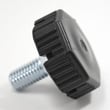
To level your Kenmore Elite refrigerator model 79571032010, adjust the front leveling legs until the cabinet is stable and the doors close on their own; the front should sit slightly higher than the rear to reduce vibration and improve sealing. For the exact adjustment points and access panels, use the 79571032010 owner's manual.
Quick leveling steps
- Empty heavy items from the doors so the cabinet settles accurately.
- Place a level on the top front edge of the refrigerator cabinet.
- Turn the front leveling legs to raise or lower each front corner.
- Recheck side-to-side level, then recheck front-to-back tilt.
- Confirm both doors align evenly and close without drifting open.
- Slide the refrigerator back carefully and recheck after it is in place.
What “slightly higher in front” means
Most bottom-mount refrigerators level best with a small forward-to-back tilt so gravity helps the doors close.
| Check | Target result | What you’ll notice if it’s off |
|---|---|---|
| Side-to-side | Bubble centered | Doors look uneven; bins may rattle |
| Front-to-back | Front slightly higher | Doors do not self-close; warm air leaks |
| Stability | No rocking | Vibration, buzzing, or knocking sounds |
Common issues after leveling (and what to do)
- Still rocking: raise the lower front corner a bit more until the cabinet is solid.
- Doors pop open: increase the front height slightly so the cabinet leans back a touch.
- Gaps at the gasket: re-level, then check for food packages blocking door closure.
- Noise after moving: verify the refrigerator is not touching cabinets or the wall.
Why it matters
A properly leveled 79571032010 helps the door gaskets seal, keeps temperatures steady, reduces compressor run time, and prevents vibration-related noise.
Last updated: February 2026
How to tell cubic feet of Kenmore refrigerator by model number?
You typically cannot determine the exact cubic-foot capacity from the Kenmore model number alone. For Kenmore Elite model 79571032010, the most reliable way is to look up the capacity on the model’s rating label or in the 79571032010 owner's manual.
Fast ways to find the cubic feet (most accurate first)
- Check the rating label: On most bottom-mount refrigerators, it’s inside the fresh food compartment (often on a side wall) and may list total capacity in cubic feet.
- Use the owner’s manual/specifications section: Look for “capacity,” “total volume,” or “specifications.”
- Measure and estimate (backup method): If the label is missing, you can estimate interior volume by measuring usable interior space (see method below).
- Compare by product class: Many Kenmore Elite bottom-mount units fall into a common capacity range; use this only as a rough check.
Estimating cubic feet if the label is missing
We use this when the rating label is unreadable or the manual doesn’t list capacity.
- Measure usable interior dimensions (inches) of:
- Fresh food compartment (width, height, depth)
- Freezer drawer compartment (width, height, depth)
- Convert each compartment to cubic feet:
- Cubic feet = (W x H x D) / 1728
- Add the two results.
| Method | Accuracy | What you need |
|---|---|---|
| Rating label | Highest | Flashlight, model/serial tag access |
| Manual specs | High | 79571032010 owner's manual |
| Measure and calculate | Medium | Tape measure |
| “Typical range” comparison | Low | None |
Why it matters
Cubic feet helps you choose correctly sized replacement items and accessories (like bins and drawers), and it’s useful when comparing refrigerators for kitchen fit and food storage needs.
Last updated: February 2026
How to tell if a Kenmore refrigerator compressor is bad?
On Kenmore Elite refrigerator model 79571032010, a bad compressor usually shows up as poor cooling with the unit running constantly, unusual buzzing or clicking near the back, and the compressor shell getting very hot. We confirm the diagnosis by checking airflow, frost pattern, and start components before replacing the compressor.
Quick signs the compressor is failing
- Refrigerator and freezer temperatures keep rising even though the unit runs a lot
- Loud humming, buzzing, or repeated clicking from the compressor area
- Compressor is extremely hot to the touch (hotter than the surrounding tubing)
- Breaker trips or the overload protector clicks off and on
- Little to no heat coming off the condenser area while the compressor is “running”
Rule out common look-alikes first (important)
Many “bad compressor” symptoms are caused by airflow or control issues. Before condemning the compressor, we check:
- Condenser coils for heavy dust buildup and verify the condenser fan is running
- Evaporator fan operation and airflow in the fresh food section
- Door sealing and frost buildup that points to a defrost problem
- Start relay/overload and wiring connections at the compressor
- Temperature settings and error indications (if your display shows a code)
Symptom-to-likely-cause guide
| What you notice | More likely cause | Compressor more likely when… |
|---|---|---|
| Runs all the time, warm temps | Dirty coils, fan issue, sealed-system issue | Fans run, coils are clean, still no cooling |
| Clicking every few minutes | Start relay/overload | Relay tests good, compressor will not start |
| Freezer cold, fridge warm | Airflow/damper, evaporator fan | Airflow checks out, temps still drift |
When replacement is the right next step
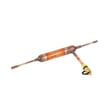
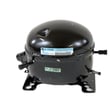
If the start components test good and the compressor will not start, overheats quickly, or runs but cannot maintain temperature, replacement of the sealed-system components is typically required. For this model, the compressor is listed as refrigerator compressor TCA36411702.
Why it matters
A failing compressor can lead to food spoilage and can also stress the control board and start components. Catching the real root cause first prevents replacing expensive parts unnecessarily.
For model-specific checks, wiring diagrams, and diagnostic notes, use the 79571032010 owner's manual.
Last updated: February 2026
What are the common problems with Kenmore Elite refrigerators?
Common problems on the Kenmore Elite 79571032010 bottom-mount refrigerator include weak or warm cooling, noisy operation, water leaks, and ice maker or dispenser issues. These symptoms usually trace back to airflow problems (fans, blocked vents), water system parts (filter, valve, tubing), or door sealing and alignment; use the 79571032010 owner's manual for model-specific checks and settings.
Most common symptoms and what they usually mean
- Not cooling or warm fridge/freezer: dirty condenser area, evaporator fan not running, frost buildup from a defrost issue, or a sealed-system/compressor problem
- Loud humming, buzzing, or rattling: fan motor noise, ice buildup contacting the fan, or vibration from the cabinet/lines
- Water leaking or puddles: clogged/iced drain path, cracked drain tube, or a leaking water line connection
- Ice maker not making ice: low water supply, frozen fill tube, failed ice maker, or inlet valve issue
- Water dispenser slow or tastes off: restricted filter, air in the line, or filter head/bypass issues
Quick checks we recommend first (before replacing parts)
- Confirm temperature settings and allow 24 hours after any adjustment.
- Make sure air vents inside the compartments are not blocked by food packages.
- Clean dust from the condenser area (a common cause of poor cooling).
- Check door closing and gasket contact all the way around.
- If you have a dispenser, purge air by dispensing several cups of water after any filter change.
Parts that commonly solve these problems on model 79571032010
| Symptom | Common part to inspect | Example part for this model |
|---|---|---|
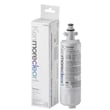
| Slow water, bad taste, dispenser issues | Water filter | Genuine Kenmore refrigerator water filter 9690 AGF80300801 |
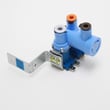
| No ice or weak water flow | Water inlet valve | Lg refrigerator water inlet valve AJU72992601 |
| Warm temps, noise, poor airflow | Evaporator fan motor | Lg refrigerator evaporator fan motor 4681JB1027C |
| Interior light issues, door alarm behavior | Door switch | Refrigerator door switch 6600JB1010A |
Why it matters
Cooling, ice, and water problems often start small (restricted airflow, a partially clogged filter, a slow drain) and then snowball into temperature swings, frost buildup, odors, and food spoilage. Catching the root cause early helps protect the compressor and keeps the refrigerator running efficiently.
Helpful DIY references
- Kenmore 795 model bottom freezer refrigerator error codes
- How to replace the water filter in a Kenmore refrigerator
Last updated: February 2026
What is the average lifespan of a Kenmore Elite refrigerator?
A Kenmore Elite refrigerator like model 79571032010 typically lasts 10 to 15 years. With consistent maintenance (good airflow, clean condenser area, tight door seals, and a healthy ice and water system), it commonly reaches the upper end of that range.
Typical lifespan and what affects it
Most bottom-mount and French door refrigerators land in a similar window, but real-world life depends on how hard the sealed system and airflow components have to work.
- Heat and airflow: Dusty condenser areas make the compressor run longer.
- Door sealing: Leaky gaskets cause temperature swings and longer run times.
- Ice and water use: Heavy dispenser use increases wear on valves, motors, and tubing.
- Power quality: Frequent outages or surges stress control boards.
- Maintenance habits: Simple upkeep often prevents early failures.
Maintenance checklist to help it reach 15 years
Use your 79571032010 settings and care instructions as your baseline in the 79571032010 owner's manual.
- Keep temperatures steady (avoid frequent warm-ups from propped doors).
- Clean and dry spills quickly to reduce odors and corrosion.
- Replace the water filter on schedule; use the correct filter such as genuine Kenmore refrigerator water filter 9690 AGF80300801.
- Watch for slow water flow or no ice; those symptoms often point to the inlet valve or a restricted filter.
- Confirm the doors fully close; a weak door switch can also cause lights to stay on and add heat.
Repair vs. replace: a simple rule of thumb
| Refrigerator age | What we recommend | Why |
|---|---|---|
| 0 to 7 years | Repair is usually worth it | Parts restore full function with good ROI |
| 8 to 12 years | Compare repair cost to value | Multiple issues can stack up |
| 13 to 15+ years | Replace if major cooling parts fail | Compressor or sealed-system repairs are high cost |
Why it matters
A refrigerator that runs longer to hold temperature uses more energy and puts extra load on key parts like the compressor, evaporator fan, and control board. Preventive care reduces run time, stabilizes temps, and extends overall lifespan.
Last updated: February 2026
Where to find model number on Kenmore Elite fridge?
On Kenmore Elite refrigerator model 79571032010, the model number is printed on the rating label inside the fresh food (refrigerator) compartment; the most common spot is on an interior side wall near the crisper drawers. For exact label locations and illustrations, use the 79571032010 owner's manual.
Most common places to check
Look for a white or silver sticker or plate with the model and serial number.
- Inside the refrigerator section on the left or right interior wall
- Behind or just above the lower crisper drawer area
- On the ceiling of the refrigerator compartment (near the lights)
- On the door frame (hinge side) when the door is open
- Behind the lower front toe grille (kick plate) on some installations
Quick steps to find it fast
- Open the refrigerator door and pull out the lower crisper drawers.
- Shine a flashlight along the side walls and the back wall near the drawer rails.
- If you do not see it, check the door frame area, then the toe grille.
What the label usually looks like
| Label item | What you will see | Why it helps |
|---|---|---|
| Model number | A number like 79571032010 | Ensures you get the correct Kenmore parts and diagrams |
| Serial number | A longer code/number | Helps match production details for service and parts |
Why it matters
We use the model number to match the correct parts for your exact refrigerator configuration (for example, door bins, water filter parts, or an ice maker). Even small model-number differences can change which part fits.
Last updated: February 2026
Why is my Kenmore Elite refrigerator leaking water out of the bottom?
On Kenmore Elite refrigerator model 79571032010, water leaking from the bottom is usually caused by a clogged defrost drain (water backs up and spills into the base), a leak in the dispenser water line, or a water/ice system component that is seeping and running down to the floor. Check the drain and water supply path first using the 79571032010 owner's manual.
Quick checks we recommend (start here)
- Unplug the refrigerator and pull it out so you can inspect the rear and the floor.
- Look for the source: is the water under the freezer area (defrost drain) or under the left/right door area (dispenser line)?
- Check the water filter seating: remove and reinstall the filter; inspect for cracks.
- Inspect the water tubing for splits, kinks, or loose connections, especially near the hinge area.
- Check the drain tube at the back for blockage or misrouting.
Most common causes and what they look like
| Likely cause | Typical clues | What to do next |
|---|---|---|
| Defrost drain clogged/frozen | Water appears after defrost cycles; puddle under freezer/front | Clear ice/debris from drain opening and flush with warm water |
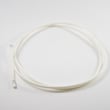
| Dispenser water line leak | Water near door, hinge, or under fresh food side | Inspect/replace tubing such as refrigerator water tubing MJU62070602 |
| Filter or filter head leaking | Drips near filter area; leak starts after filter change | Re-seat filter; inspect housing; consider refrigerator water filter head ADQ36011715 |
| Inlet valve seeping | Slow puddle near back/bottom; water line connection damp | Inspect valve and fittings; replace if leaking |
How to clear a clogged defrost drain (safe DIY)
- Empty the freezer section enough to access the rear interior panel area.
- Melt any visible ice around the drain trough with warm (not boiling) water.
- Use a turkey baster or squeeze bottle to flush the drain until it flows freely.
- Verify the rear drain tube outlet is not blocked; clean it if needed.
Why it matters
A small leak can turn into floor damage, ice buildup in the freezer, and poor cooling if the defrost water cannot drain correctly. Fixing the drain or a small tubing leak early prevents repeat puddles and protects the compressor area.
For step-by-step filter and water system tips that match Kenmore setups, use how to replace the water filter in a Kenmore refrigerator.
Last updated: February 2026