Installation guide
 Owner’s manual
 Error Codes


How to hard reset a Kenmore Elite washer?
To hard reset a Kenmore washer like model 11028322700, we power the washer off, disconnect power for a full minute, then restore power and clear the control by holding the appropriate buttons (varies by control style). Use the steps in the 11028322700 owner's manual for your exact control panel.
Reset steps we recommend (safe, works for most Kenmore washers)
- Press Power/Stop to turn the washer off.
- Unplug the washer (or switch the breaker off).
- Wait 60 seconds.
- Plug back in (or turn the breaker on).
- If your model has a Pause/Cancel button, press and hold it for 5 to 10 seconds.
- Start a Rinse/Spin or Drain/Spin cycle to confirm the washer responds.
If the washer still will not respond
These checks fix the most common “won’t start” or “stuck” situations after a reset:
- Confirm the outlet has power (test with a lamp).
- Make sure the lid is fully closed; a failed lid switch can prevent agitation or spin.
- Listen for drain pump humming during drain; a jammed pump can stop the cycle.
- Redistribute the load if the basket is off-balance.
| Symptom after reset | Most common cause | What we do next |
|---|---|---|
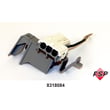
| Won’t start or stops when lid closes | Lid switch not sensing closed | Inspect/replace washer lid switch assembly WP8318084 |
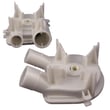
| Won’t drain | Pump jammed or failing | Check/replace washer drain pump WP3363394 |
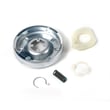
| Agitates poorly or “slips” | Worn agitator dogs/cam | Inspect agitator dog 80040 and agitator cam 285748 |
Why it matters
A proper reset clears a “hung” control state and helps you separate a one-time glitch from a real failure (lid switch, drain pump, or drive components). That saves time before ordering parts or scheduling service.
Last updated: February 2026
How to identify a Kenmore washer model?
Your Kenmore washer model number is printed on the model and serial number label; on Kenmore model 11028322700, that label is located under the washer lid. Once you have the full model number, we can match the correct washer parts, diagrams, and repair instructions.
Where to look on model 11028322700
Check these common spots in this order:
- Under the washer lid (lift the lid and look around the rim and underside area)
- Along the top edge of the washer opening (near the tub opening)
- On the back panel near the power cord entry (less common for this style)
- On the inside of the cabinet near the control console (occasionally)
For the exact label location and how it is referenced in documentation, use the 11028322700 owner’s manual.
What the model number looks like (and why it matters)
Kenmore washers often use a numeric model format that starts with 110. Record the model number exactly as shown, including all digits.
| What to record | Example for this washer | Why we need it |
|---|---|---|
| Model number | 11028322700 | Ensures parts fit your exact Kenmore washer |
| Serial number | (varies) | Helps identify production range and revisions |
| Purchase date | (your date) | Useful for maintenance tracking |
Tips to avoid ordering the wrong part
- Copy the model number directly from the label, not from the control panel styling
- Take a clear photo of the label before you start shopping
- Match the full model number when selecting parts like a lid switch, drain pump, or coupling
- If the washer will not start and the lid must be closed, the washer lid switch assembly WP8318084 is a common part to check for this model family
Why it matters
Kenmore model numbers identify the exact design and component set used in your washer. Using the correct model number prevents fit issues and helps us narrow troubleshooting steps to the right drive system, timer, and safety interlocks.
Last updated: February 2026
How to unclog drain hose on Kenmore washer?
For Kenmore washer model 11028322700, unclogging the drain hose usually means removing the hose, clearing lint or small items from the hose and pump inlet, then reinstalling it with the correct height and an air gap so the washer can drain and spin normally (see the 11028322700 installation guide).
Step-by-step: clear the drain hose safely
- Unplug the washer.
- Pull the corrugated drain hose out from inside the washer cabinet (it is stored inside the cabinet).
- Place towels and a shallow pan under the hose connection points.
- Disconnect the drain hose from the home drain (standpipe or laundry tub) and from the washer end if needed.
- Flush the hose with hot water; if buildup is heavy, soak the end in hot water and vinegar, then flush again.
- Check the washer side for blockage at the pump inlet; remove any debris you can reach.
Installation checks that prevent repeat clogs
A “clog” symptom is sometimes a drain setup problem. For this model, these setup rules matter:
- Keep the top of the drain hose at least 39 in. (99 cm) above the floor.
- Do not push the hose tightly into the standpipe; it should be secure but loose enough to leave an air gap.
- Do not tape or seal the hose to the standpipe.
- Do not force excess hose back into the rear of the washer.
| What you see | What it usually means | What to do |
|---|---|---|
| Washer drains slowly | Partial blockage in hose or pump inlet | Flush hose; clear pump inlet |
| Washer keeps filling and draining | Drain hose too low or sealed | Raise hose; restore air gap |
| Won’t drain or spin | Clog, hose too high, or lid open | Clear hose; keep hose under 96 in.; close lid |
When a part is likely needed
If the hose is clear but the washer still will not drain, the drain pump can be the issue. For this model, the replacement part is the washer drain pump WP3363394.
Why it matters
A restricted drain path can leave water in the tub, stop the spin cycle, and cause longer cycle times. Correct drain hose routing (height plus air gap) prevents siphoning and protects floors from leaks.
Last updated: February 2026
Is it worth repairing a Kenmore washing machine?
Yes, repairing a Kenmore washer is worth it when the fix restores reliable washing and spinning for significantly less than replacing the machine. For Kenmore model 11028322700, many common failures are repairable with standard parts and a straightforward diagnosis using the 11028322700 owner's manual.
How we decide if repair makes sense
Use this quick checklist before spending money:
- Total repair cost vs. replacement: If parts plus labor are well below the cost of a comparable new washer, repair wins.
- What failed: Wear items and common drive or drain problems are usually good repair candidates.
- Overall condition: Rusted cabinet, severe leaks, or repeated breakdowns push toward replacement.
- Safety and usability: If the tub, drum, or agitator movement is unsafe, stop using it until repaired.
- DIY vs. technician: If you can safely do the repair, the value of fixing it increases.
Common repairs that are usually “worth it” on this model
These are frequent, fixable issues on many Kenmore top-load designs:
- Won’t drain or leaves water behind: often the washer drain pump WP3363394
- Won’t start or stops when the lid opens: often the washer lid switch assembly WP8318084
- Agitates poorly or “slips”: often agitator dog 80040 or agitator cam 285748
- No agitation or spin with motor running: often coupling 285753A
Quick cost-to-benefit guide
| Situation | Typical recommendation |
|---|---|
| Single failed part, washer otherwise solid | Repair it |
| Multiple major drivetrain issues at once | Price it out carefully |
| Repeated leaks, heavy corrosion, or frequent service history | Consider replacement |
Why it matters
A targeted repair can extend the life of your Kenmore washer and avoid the cost and hassle of replacement. The manual also emphasizes safe operation and avoiding repairs unless you have the skills and instructions to do them correctly; the 11028322700 owner's manual is the best place to confirm procedures and safety steps.
Last updated: February 2026
What is the UL code on the Kenmore Elite Oasis HE washer?
On Kenmore top-load washers like model 11028322700, a UL code indicates the washer detected an unbalanced load and stopped or limited the spin to protect the basket and drive system. Correcting load balance and leveling usually clears it; see the 11028322700 owner's manual.
What to do first (fast fixes)
- Pause the cycle and open the lid; redistribute items evenly around the basket.
- Remove a few items if the tub is tightly packed; loads must move freely.
- Wash bulky items (blankets, jackets) with a few similar items to balance weight.
- Confirm the washer sits solidly on the floor; adjust leveling feet until stable.
- Run a Spin/Drain cycle again after rebalancing.
Leveling checklist (most common cause)
A washer that rocks or sits twisted will trigger UL more often.
| Check | What “good” looks like | What to change |
|---|---|---|
| Floor contact | All feet firmly on the floor | Adjust feet to eliminate rocking |
| Basket balance | Load is evenly distributed | Re-load items around the tub |
| Load size | Not overloaded | Reduce load size |
When UL keeps coming back
If the washer is level and loads are balanced but UL persists, a worn drive or suspension component can contribute to poor spin stability.
Common parts we check on this Kenmore design:
- Washer suspension spring WP63907 (weak spring lets the tub swing too much)
- Clutch 285785 (can affect smooth spin engagement)
- Coupling 285753A (wear can cause rough operation that worsens imbalance)
Why it matters
Repeated unbalanced spinning increases vibration, can cause loud banging, and accelerates wear on the clutch, drive block, and basket drive components. Fixing the root cause helps the washer spin out water properly and reduces future UL interruptions.
Last updated: February 2026
What is the average lifespan of a Kenmore washer?
Most Kenmore washers, including model 11028322700, typically last 10 to 15 years with normal household use and basic maintenance. Reaching the high end usually comes down to avoiding overloads, keeping the washer clean, and fixing small issues (like draining or spinning problems) before they damage major drive parts.
Typical lifespan and what affects it
A washer’s life is mainly driven by load size, cycle frequency, water quality, and how quickly wear items are replaced.
- Usage level: daily loads wear out drive and suspension parts faster than 2 to 3 loads per week
- Overloading: strains the motor, clutch, and coupler; loads should move freely during washing (see the 11028322700 owner’s manual)
- Drain and spin health: slow draining or weak spin increases stress on the drive system
- Installation conditions: a level, sturdy floor helps reduce vibration and wear (see the 11028322700 installation guide)
- Cold-weather storage: operating at or below 32°F can leave water inside that can cause damage over time
Quick “repair vs replace” checkpoints
Use this as a practical way to judge whether your washer is near end-of-life.
| What you’re seeing | Most common cause | What it usually means |
|---|---|---|
| Won’t spin or agitates poorly | Worn drive components | Often repairable if caught early |
| Loud banging or walking | Suspension or out-of-balance loads | Can shorten lifespan if ignored |
| Won’t drain consistently | Pump or blockage | Repair quickly to prevent bigger failures |
| Multiple recurring issues | Several worn systems | Often near the end of typical service life |
Parts that commonly extend service life
On Kenmore top-load washers like 11028322700, these are frequent wear items that can restore normal operation and help the washer last longer.
- Agitator dog 80040 (common fix for weak or slipping agitation)
- Coupling 285753A (common fix for no-agitate or no-spin symptoms on direct-drive designs)
- Washer drain pump WP3363394 (common fix for drain problems)
- Washer lid switch assembly WP8318084 (common fix when the washer will not spin with the lid closed)
Why it matters
A washer that is overloaded, unlevel, or slow to drain can turn a small, inexpensive wear issue into a major repair (motor, clutch, gear case). Keeping loads balanced and addressing early symptoms is the simplest way to stay in the 10 to 15 year range.
Last updated: February 2026