Owner’s manual



What is the average lifespan of a Samsung dryer?
A Samsung dryer typically lasts 10 to 15 years with normal household use. For your Samsung DV337AGG, consistent airflow maintenance (lint screen and venting) and avoiding overloads are the biggest factors that push life toward the high end; see the DV337AGG owner’s manual for care guidance.
What affects dryer lifespan the most
- Lint control: Clean the lint screen before or after each load.
- Vent and duct condition: Keep the exhaust opening area clear; have the interior and exhaust duct cleaned periodically by qualified service personnel.
- Load size: Avoid chronic overloading (extra strain on the drum, belt, and rollers).
- Heat stress: Restricted airflow can overheat components like thermostats and sensors.
- Installation quality: Proper grounding and correct setup reduce nuisance failures.
Typical lifespan expectations (what we see most often)
| Usage and care level | Typical lifespan | What it looks like in real life |
|---|---|---|
| Light use, excellent maintenance | 14 to 15 years | Clean venting, no overloads, steady drying times |
| Average family use, basic maintenance | 10 to 13 years | Occasional long dry times, normal wear items replaced |
| Heavy use, poor airflow maintenance | 7 to 10 years | Long dry times, overheating symptoms, repeated part failures |
Wear items that commonly determine “end of life”
If the dryer still runs but gets noisy, stops tumbling, or takes longer to dry, these common wear parts often decide whether a repair is worth it:
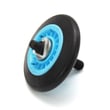
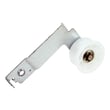
- Drum support roller (noise, thumping): Samsung dryer drum support roller DC97-16782A
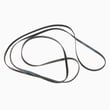
- Drum belt (no tumble): Samsung dryer drum belt 6602-001655
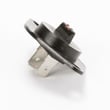
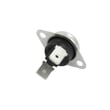
- Thermal cut-off thermostat (no heat or shuts down): dryer thermal cut-off thermostat DC47-00016A
Why it matters
A dryer that is maintained for good airflow dries faster, runs cooler, and puts less stress on the motor, belt, rollers, and safety thermostats. That directly extends service life and helps prevent repeat breakdowns.
Last updated: February 2026
How to tell if a Samsung dryer heating element is bad?
If your Samsung dryer model DV337AGG runs but produces little or no heat, the heating element is often the cause. We confirm it by unplugging the dryer, inspecting the element coil for damage, then testing the element with a multimeter for continuity and for a short to the metal housing (ground). See the DV337AGG owner’s manual for safety guidance before servicing.
Quick symptoms that point to a bad heating element
- Dryer tumbles normally but clothes stay cold or damp
- Cycle takes much longer than normal to dry
- Burning smell (lint or a failing heater can cause this)
- Breaker trips when heat should turn on (possible short to ground)
- Heat comes and goes unpredictably (can also be thermostats or airflow)
How we test the heating element (safe, reliable method)
- Disconnect power (unplug; for electric dryers, verify the outlet is dead).
- Access the heater housing (panel removal varies by model; follow the manual).
- Visual check: look for a broken coil, burnt spots, or a coil touching the housing.
- Continuity test: set the meter to ohms (Ω) or continuity and test across the element terminals.
- Ground test: test each terminal to bare metal on the heater housing; you should get no continuity.
What the meter results mean
| Test result | What it indicates | What to do next |
|---|---|---|
| No continuity (open circuit) | Element coil is broken | Replace the heating element assembly (or element) |
| Continuity to metal housing | Element is shorted to ground | Replace the element; do not run the dryer |
| Continuity is present and no ground fault | Element may be OK | Check airflow and heat controls (thermostats, sensors) |
Don’t skip these common “no-heat” checks
Poor airflow can mimic a bad heater and can also overheat the dryer.
- Clean the lint screen and confirm strong exhaust airflow
- Inspect venting for kinks, crushed duct, or heavy lint buildup
- Make sure the dryer is not overloaded
- If heat is cycling off early, test heat controls such as the dryer high-limit thermostat DC47-00017A and the dryer thermal cut-off thermostat DC47-00016A
Why it matters
A failed heating element (especially one shorted to ground) can trip breakers and stop drying performance. Vent restrictions can also cause overheating and repeated thermal cut-off failures, so confirming airflow helps prevent repeat repairs.
Last updated: February 2026
Is it worth replacing a heating element in a Samsung dryer?
Yes; replacing the heater in a Samsung dryer is usually worth it when the dryer tumbles but won’t heat, because the repair cost is typically far less than replacing the whole appliance. For model DV337AGG, confirm the no-heat cause first since thermostats and sensors can mimic a heater failure; use the DV337AGG owner’s manual troubleshooting guidance.
Quick decision checklist (DV337AGG)
- Dryer runs and tumbles, but clothes stay cold or barely warm.
- No burning smell, no repeated shutdowns, and airflow is strong at the outside vent.
- You can safely access the heater circuit and test components with a multimeter.
- The dryer is otherwise in good shape (drum turns smoothly, no loud squeal).
- You have not had repeated heat-related failures from poor venting.
What to check before buying a heater
A “no heat” complaint is often caused by a safety device opening due to overheating or restricted airflow. The manual also emphasizes keeping the lint screen clean and having the exhaust duct cleaned periodically.
Start with these common checks:
- Clean the lint screen and confirm strong exhaust airflow.
- Inspect and clean the vent path; use 4-inch rigid metal ducting where possible.
- Test the heat safety parts first: dryer thermal cut-off thermostat DC47-00016A and dryer high-limit thermostat DC47-00017A.
- If heat is erratic, test the temperature sensor: dryer thermistor DC32-00007A.
- If the dryer is noisy or struggles to turn, address drive wear first (belt and rollers).
Cost and effort comparison
| Option | Typical parts cost | Typical labor/effort | Best when |
|---|---|---|---|
| Replace heater circuit parts | Moderate | Moderate DIY | Dryer is otherwise solid |
| Replace dryer | High | Delivery/installation | Multiple major issues |
| Service call + repair | Highest | Lowest DIY time | You want hands-off repair |
Why it matters
If the real problem is restricted venting, a new heater can fail again because the dryer overheats and trips safety thermostats. Fixing airflow first improves drying time, reduces shutdowns, and protects the heater circuit.
Last updated: February 2026
How to find part number for Samsung dryer?
For your Samsung DV337AGG dryer, we find the correct part number by matching the dryer’s model number and (when needed) serial number to the parts list. On most Samsung dryers, the model/serial tag is on the front frame behind the door; a backup tag is often on the rear panel. See the DV337AGG manual for model identification and safety guidance.
Where to look for the model and serial tag
Check these common locations in this order:
- Front frame behind the door opening (most common)
- Back of the dryer cabinet (secondary label)
- Inside the door area near the opening (sometimes on the frame)
- If the label is worn, use the best readable characters (even partial) to narrow results
How to get the right part number (fast and accurate)
Use this process so you do not order the wrong Samsung dryer part:
- Write down the full model number exactly as shown: DV337AGG
- Add the serial number if multiple versions appear in the parts list
- Identify the failed symptom (no heat, noisy drum, won’t start, door won’t latch)
- Match the symptom to the part category (heat system, drum support, door, electrical)
- Confirm the part description before ordering (example: belt vs. roller vs. thermostat)
Common examples for DV337AGG symptoms
| Symptom | Common part to check | Example part from this model’s list |
|---|---|---|
| Loud thumping or squealing | Drum support roller | Samsung dryer drum support roller DC97-16782A |
| Drum not turning | Drum belt | Samsung dryer drum belt 6602-001655 |
| Overheating or no heat (gas models) | Safety thermostats/sensors | Dryer thermal cut-off thermostat DC47-00016A |
Why it matters
Samsung often uses similar-looking parts across multiple dryer series, but the mounting, wiring, and temperature ratings can differ. Using the exact DV337AGG identification prevents returns and helps restore proper drying performance and safety.
Last updated: February 2026