Owner’s manual




Do I need a technician for a 4E error?
No, you usually do not need a technician for a 4E error on your Samsung WF448AAE washer; it most often points to a water-supply problem you can fix by checking the faucets, hoses, and inlet screens, then restarting the cycle. For model-specific steps and reset guidance, use the WF448AAE owner’s manual.
What the 4E error means
A 4E code is a fill error: the washer is not getting enough water, fast enough, or at all.
Quick checks you can do first (no parts)
- Make sure both hot and cold supply faucets are fully open.
- Confirm the washer is getting water at the wall (briefly crack the hose into a bucket with power off).
- Check for kinked, crushed, or frozen fill hoses.
- Clean the inlet hose screens at the washer’s water inlet ports.
- Verify correct hose hookup (hot to hot, cold to cold).
- Run a rinse and spin or quick cycle to confirm normal filling.
When a part is likely needed
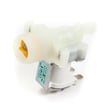
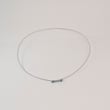
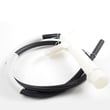
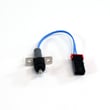
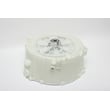
If water pressure and hoses are good but the washer still throws 4E, the water inlet valve can be sticking or electrically failing. On this model, a common replacement is the washer water inlet valve DC62-30314K.
| What you observe | Most likely cause | What to do next |
|---|---|---|
| No water enters at all | Closed faucet, kinked hose, clogged inlet screens | Open valves, straighten hose, clean screens |
| Slow fill on both temps | Low household pressure, partially clogged screens | Check pressure, clean screens again |
| Only hot or only cold fills | One supply issue or one valve solenoid failing | Swap hose sides to test; replace valve if needed |
| 4E comes and goes | Intermittent valve, debris in screens | Clean screens; consider replacing inlet valve |
Why it matters
A washer that cannot fill correctly can stop mid-cycle, leave detergent residue, and strain components as it repeatedly tries to add water. Fixing the water-supply issue quickly helps prevent repeat errors and incomplete cleaning.
Last updated: February 2026
What is the lifespan of a Samsung front load washer?
A Samsung front load washer like model WF448AAE typically lasts 10 to 15 years with normal household use and consistent care. Regular cleaning, correct detergent use (HE), and fixing small leaks or vibration issues early are the biggest factors in reaching the high end of that range.
Typical lifespan and what changes it
Most front-load washers fall into a similar life range, but real-world lifespan depends on how hard the machine works and how well it is maintained.
Common factors that shorten lifespan:
- Frequent overloading or washing heavy items back-to-back
- Excess suds from non-HE detergent (stresses the drain system)
- Ongoing vibration from an unlevel washer
- Door boot moisture and residue buildup (leads to odor, leaks, and wear)
- Ignoring small leaks until they damage bearings or electrical parts
Maintenance that helps you get the full 10 to 15 years
We recommend these habits for Samsung front-load washers:
- Keep the washer level and stable; re-check after moving or flooring changes
- Leave the door slightly open between loads to dry the door boot
- Wipe the door boot and glass regularly, especially after hot or heavily soiled loads
- Run the washer’s tub-clean cycle on a routine schedule listed in the owner's manual
- Use the right amount of HE detergent; more soap is not better
Quick “repair vs. replace” guide
Use this as a practical way to judge whether a repair makes sense.
| If your washer is… | Usually worth doing | Usually a sign to consider replacement |
|---|---|---|
| Under ~8 years old | Fixing leaks, fill problems, vibration | Major tub or bearing work if costs are high |
| 10 to 15 years old | Targeted repairs (hoses, valve, door boot) | Repeated major failures or very costly repairs |
Why it matters
A front-load washer’s most expensive wear areas are the tub, bearings, and drive components. Catching early symptoms (leaks, loud spin, excessive shaking, slow fill) helps you avoid secondary damage and extend the washer’s usable life.
Parts that commonly support a longer lifespan
If you are addressing leaks, fill issues, or vibration on WF448AAE, these are common wear items:
- Washer water inlet valve DC62-30314K (slow fill, no fill, or fill errors)
- Washer door boot DC64-01570A (leaks at the door, tears, persistent odor)
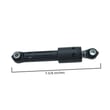
- Samsung washer shock absorber DC66-00470A (banging, walking, out-of-balance symptoms)
Last updated: February 2026
What is the most common problem with Samsung washing machines?
The most common problems we see on Samsung washers like model WF448AAE are spin-related issues (won’t spin out, heavy vibration, or banging) and drain/fill problems (won’t drain, won’t fill, or stops mid-cycle). These are often caused by load balance, installation/leveling, or worn suspension and water/drain components; see the WF448AAE owner's manual for model-specific operating and care guidance.
Most common symptoms and what usually causes them
- Won’t spin out / clothes still wet: unbalanced load, excessive suds, or suspension wear
- Banging, walking, or severe vibration: washer not level, overloaded drum, worn shock absorbers
- Won’t drain / stops with water in tub: restricted drain path, kinked hose, or pump-side blockage
- Won’t fill / fills slowly: supply valves not fully open, clogged inlet screens, or a failing inlet valve
- Leaks at the door: torn door boot or a clamp that has slipped
Quick checks we recommend before replacing parts
- Redistribute the load (mix large and small items) and run a spin-only cycle.
- Confirm the washer is level and solid on the floor; re-level the feet if it rocks.
- Reduce detergent (front-loaders are sensitive to oversudsing) and run a rinse/spin.
- Inspect hoses for kinks and confirm household water valves are fully open.
- Check for visible leaks around the door boot and clamps.
Parts that commonly solve these problems (when checks don’t)
| Symptom | Common fix | Example part for WF448AAE |
|---|---|---|
| Excessive shaking/banging | Replace worn suspension | Samsung washer shock absorber DC66-00470A |
| Won’t fill or fills slowly | Replace inlet valve | Washer water inlet valve DC62-30314K |
| Door-area leak | Replace boot or clamp | Washer door boot DC64-01570A or washer door boot spring clamp DC97-04973B |
| Drain issues | Replace damaged hose | Washer drain hose DC97-15298A |
Error codes can point you to the right system fast
If your washer shows an error code along with the symptom, use our Samsung front load washer error codes guide to narrow it down to fill, drain, or balance-related causes.
Why it matters
Spin, drain, and fill problems are the issues most likely to stop a cycle mid-stream or leave clothes wet. Catching a leveling problem or a worn suspension part early helps prevent repeat out-of-balance events and reduces stress on the tub and door seal.
Last updated: February 2026
Does a Samsung washer have a filter that needs to be cleaned?
Yes. Samsung washers typically have filters that need periodic cleaning; on many front-load models like the Samsung WF448AAE, the main one is the drain pump debris filter, and the water inlet connections also use small screen filters to catch sediment.
Where the filters are (typical for front-load)
- Drain pump debris filter: bottom front area, often behind a small access door or panel
- Water inlet screen filters: inside the inlet valve ports where the fill hoses connect
- Door boot area: not a filter, but it traps lint and moisture and should be wiped dry
For the exact access location and steps for your Samsung WF448AAE, use the WF448AAE owner's manual.
How often we recommend cleaning
| Item | Typical cleaning interval | Clean sooner if you notice |
|---|---|---|
| Drain pump debris filter | Every 1 to 3 months | Slow drain, standing water, odor |
| Inlet screens | Every 6 to 12 months | Long fill times, weak flow |
| Door boot wipe-down | Weekly | Mildew smell, residue on gasket |
Quick drain pump filter cleaning checklist
- Unplug the washer.
- Put towels and a shallow pan under the lower front access area.
- Open the access panel; drain water slowly if a small drain tube is present.
- Unscrew the filter, rinse it, and clear debris from the filter housing.
- Reinstall snugly; run a rinse and spin to confirm no leaks.
Why it matters
A clogged debris filter is a common cause of drain problems, odor, and drain-related error codes. Clean inlet screens help prevent fill issues and protect the inlet valve.
If you are troubleshooting a drain code, use our guide: Samsung front load washer nd error code.
Last updated: February 2026