Owner’s manual
 View engine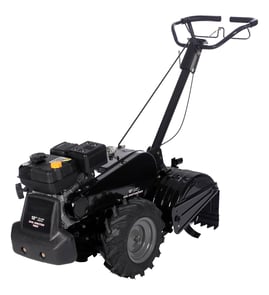



Where is the model number on a tiller?
On the Craftsman rear-tine tiller model 917293492, the model number is printed on a product ID label (a sticker or metal tag) attached to the tiller frame. It’s most often on the tine shield/guard area or near the engine and fuel tank.
Look for a rectangular label with the model number and sometimes a serial number. Check these spots:
- On the tine shield (tine guard) above or behind the tines
- On the main frame rail near the wheels
- Near the engine mounting area
- On or near the fuel tank support or handle support bracket
- On the front of the tiller frame (facing forward)
Use this process so you do not miss a hidden label:
- Turn the engine off and let it cool.
- Brush off dirt and dried mud around the tine guard and frame.
- Use a flashlight and look along both sides of the frame rails.
- Wipe the label gently; numbers can be hard to read under grime.
| What you see on the tag | What it’s used for |
|---|---|
| Model number (example: 917293492) | Matching the correct parts diagrams and parts |
| Serial number | Identifying production run details |
| Brand name (Craftsman) | Confirming manufacturer family |
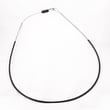
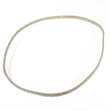
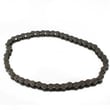
We use the model number to match the exact parts for your rear-tine tiller, such as the correct drive belt, clutch cable, or chain. Even small model differences can change belt length, pulley style, or linkage hardware.
For model-specific label location notes and diagrams, use the 917293492 owner’s manual.
Last updated: January 2026
How often should I change the oil in my tiller?
For the Craftsman rear-tine tiller model 917293492, we change the engine oil after the first few hours on a new or rebuilt engine, then about every 50 hours of use or once per season (whichever comes first). Always change it sooner if the oil looks dark, gritty, or smells like fuel.
- New-to-you tiller or fresh engine work: change oil after the first 5 to 10 hours
- Normal gardening use: every 50 hours
- Seasonal use (low hours): once per year before storage or at the start of the season
- Dusty soil, high heat, heavy loads: every 25 hours
- Anytime oil is contaminated: change immediately
- Park on level ground and let the engine cool.
- Check the dipstick level before every use; keep oil between the marks.
- Drain oil while it is slightly warm (it flows out faster).
- Refill with the oil type and capacity listed in the Craftsman 917293492 owner's manual.
- After refilling, run the engine briefly, shut it off, then recheck the level.
| What you see on the dipstick | What it usually indicates | What to do |
|---|---|---|
| Dark/black oil | Normal wear and heat | Change oil now |
| Gritty feel | Dirt ingestion or poor sealing | Change oil; inspect air filter and seals |
| Gas smell/thin oil | Fuel dilution | Change oil; check carburetor and starting habits |
| Milky oil | Moisture contamination | Change oil; improve storage and warm-up routine |
Fresh oil protects the crankshaft, piston, and bearings from heat and abrasion. On a rear-tine tiller like the 917293492, dirty or low oil is one of the fastest ways to shorten engine life and cause hard starting or power loss.
Last updated: January 2026
How much does a Craftsman rear tine tiller weigh?
A Craftsman rear-tine tiller’s weight depends on the exact model and engine package. For Craftsman model 917293492, the most reliable way to confirm the correct operating weight is to use the specifications section in the 917293492 owner’s manual.
Most Craftsman rear-tine tillers fall into a fairly heavy range because of the gear case, tines, and counter-rotating drivetrain.
- Many rear-tine tillers weigh roughly 150 to 250 lb
- Counter-rotating tine designs often land toward the middle to upper end of that range
- Added accessories (counterweights, bumper assemblies, shields) can increase total weight
- Fuel level and any attached transport wheels can change what you see on a scale
Use these checks so you match the number to how you actually use the tiller:
- Look for “Specifications” or “Product specifications” in the manual
- Compare shipping weight vs operating weight (shipping weight is usually higher)
- If you are weighing it yourself, drain fuel first and remove loose accessories
- Confirm the model number on the ID tag is 917293492 (not a close variant)
| Weight type | What it includes | Why it matters |
|---|---|---|
| Shipping weight | Crate, packing, sometimes fluids | Not useful for lifting into a truck |
| Operating weight | Tiller assembled and ready to run | Best number for handling and transport |
| “As configured” weight | Operating weight plus accessories | Helps if you added counterweights or guards |
Knowing the correct weight helps us choose safe loading ramps, plan transport, and avoid drivetrain damage from improper tie-down points. It also helps when diagnosing traction issues and deciding whether added ballast is needed.
Last updated: January 2026
What tiller is made in the USA?
Mantis tillers are made in the USA; if you are shopping for a U.S.-made tiller while maintaining your Craftsman rear-tine tiller model 917293492, use the 917293492 owner's manual to confirm your current tiller’s specifications and service details.
When customers ask this, they usually want a brand that manufactures domestically and still has strong parts support.
- Mantis tillers are manufactured in the United States.
- Always confirm the exact model and where it is built before buying (manufacturing locations can vary by model year).
- For your existing Craftsman 917293492, we focus on keeping it running with the correct belts, cables, and drive parts.
“Made in the USA” is a purchase decision; “easy to maintain” is what keeps a tiller working season after season. On rear-tine tillers like the Craftsman 917293492, the most common wear items are in the drive and tine engagement systems.
- Drive belt wear can cause slipping or loss of forward drive
- Clutch cable stretch can prevent full engagement
- Chain and sprocket wear can cause noise or jerky tine operation
- Bearings and retainers can loosen and create vibration
| Symptom | Likely area | Example part for 917293492 |
|---|---|---|
| Tiller won’t move or slips under load | Drive system | Husqvarna rear-tine tiller drive belt 591372401 |
| Tines do not engage consistently | Clutch linkage | Tiller clutch cable 532110675 |
| Grinding, popping, or uneven tine drive | Chain drive | Tiller chain, #25-50 532102134 |
A tiller that is built well but hard to service can cost more over time. Matching the correct Craftsman model number (917293492) to the right replacement parts and adjustments helps you get reliable performance, regardless of where a different brand’s tiller is manufactured.
Last updated: January 2026